
A large statement plant is defined as an architectural plant that commands a room through height, leaf scale, and structural presence. The best large statement indoor plant examples, including Bird of Paradise (Strelitzia nicolai), Fiddle Leaf Fig (Ficus lyrata), and Monstera deliciosa, share one quality: they function as living sculptures rather than background greenery. Interior designers and plantscapers recognize that a single plant at 170–200cm creates more visual impact than a collection of smaller plants scattered across a room. Scale is the deciding factor, and choosing the right plant for your space starts with understanding which species deliver that impact most reliably.
1. Top large statement indoor plant examples and what makes them work
The plants below are the most requested dramatic indoor plant choices in residential and commercial interiors. Each one earns its place through a combination of height, leaf character, and tolerance for indoor conditions.
Bird of Paradise (Strelitzia nicolai)
Bird of Paradise is the most recognized focal point plant in modern interiors. It grows beyond 2.5 meters indoors and produces paddle-shaped leaves that split naturally along their edges. That splitting is not damage. Leaf splits are a natural adaptation that allows wind to pass through without tearing the stem. Bird of Paradise needs 10–12 hours of bright, direct sunlight, making south or west-facing windows the ideal placement. Rooms with ceilings above 2.5 meters give this plant the vertical space it needs to reach its full drama.
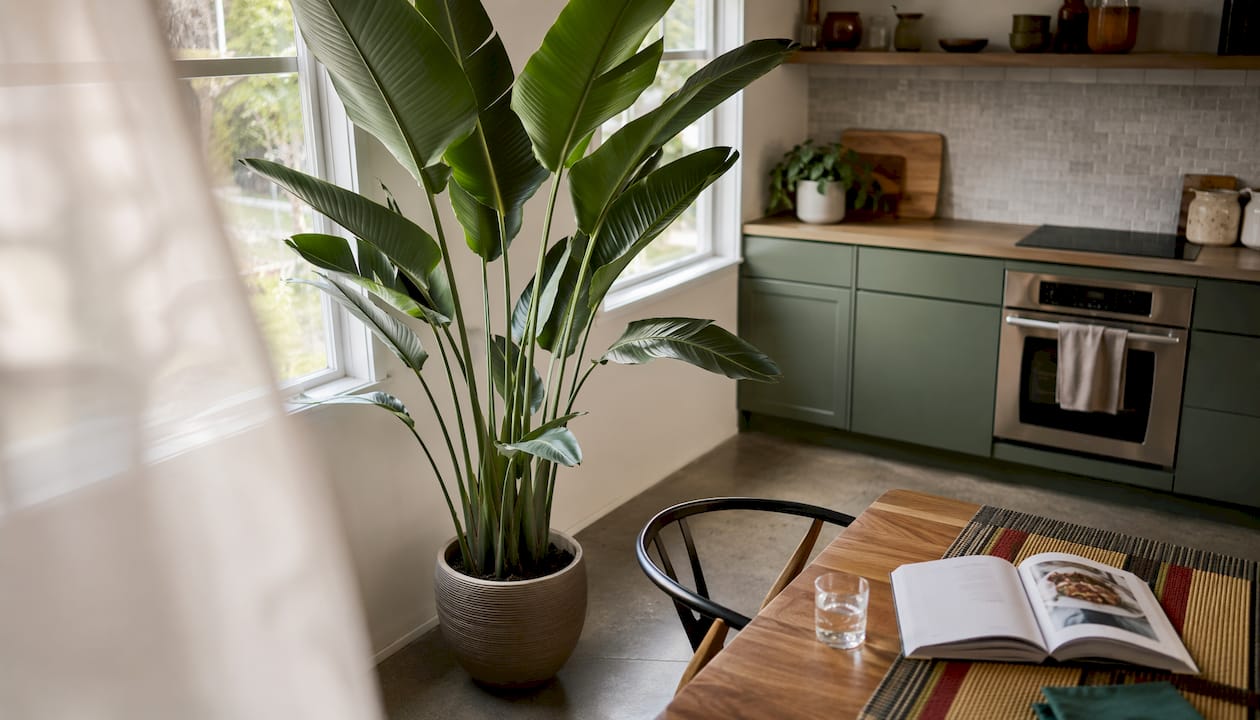
Pro Tip: Rotate your Bird of Paradise a quarter turn every two weeks. The plant is phototropic and will lean toward its light source, so rotation keeps the canopy balanced and the silhouette symmetrical.
Fiddle Leaf Fig (Ficus lyrata)
Fiddle Leaf Fig delivers a tall, single-stem profile with large, violin-shaped leaves that read as bold graphic elements in any room. It reaches 8 feet or more indoors with consistent bright, indirect light. The Fiddle Leaf Fig suits minimalist and modern interiors particularly well because its upright form provides a clean vertical line above furniture. It dislikes drafts and sudden temperature changes, so placement near air conditioning vents or exterior doors shortens its lifespan indoors.
Alocasia Portora
Alocasia Portora is the most dramatic choice for tropical and contemporary interiors. It grows up to 10 feet tall indoors and produces enormous, upward-facing leaves with pronounced ribbing. The leaf structure catches light from multiple angles, making it especially effective in spaces with high ambient light. Alocasia Portora prefers bright, indirect light and consistent humidity, which makes it a natural fit for lobbies, atriums, and open-plan commercial spaces.
Rubber Tree (Ficus elastica)
The Rubber Tree offers a glossy, deep-green leaf that reads as architectural even in low-light conditions. It grows steadily to ceiling height in most interiors and tolerates a wider range of light conditions than Bird of Paradise or Fiddle Leaf Fig. The burgundy variety adds a color contrast that works well in warm-toned or earthy interiors. Rubber Tree is one of the most forgiving big indoor plant ideas for decorators who want maximum visual impact with lower maintenance demands.
Monstera deliciosa
Monstera deliciosa is the defining plant of tropical interior design. Its fenestrated leaves, meaning leaves with natural holes and splits, create a layered visual texture that no other large plant replicates. Monstera grows wide as much as tall, so it works best in corners or open floor areas where its spread can be appreciated. It tolerates medium light, which makes it one of the most versatile large indoor greenery options for spaces that lack direct sun.
2. How to select the right statement plant for your space
Choosing the best large indoor plants for focal points requires matching the plant's physical character to the room's architecture, light, and aesthetic.
- Measure ceiling height first. Plants at 170–200cm suit standard 2.4-meter ceilings. For ceilings above 2.5 meters, choose species like Bird of Paradise or Alocasia Portora that grow taller without losing proportion.
- Assess your light honestly. South and west-facing windows support Bird of Paradise and Fiddle Leaf Fig. North-facing or interior rooms suit Monstera deliciosa and Rubber Tree, which tolerate lower light without declining quickly.
- Match leaf texture to your interior style. Broad, smooth leaves like Rubber Tree and Fiddle Leaf Fig suit minimalist and Scandinavian interiors. Fenestrated or ribbed leaves like Monstera and Alocasia suit tropical, maximalist, or eclectic spaces.
- Consider growth rate and long-term scale. Alocasia Portora grows fast and wide. If your space has fixed dimensions, a slower-growing Fiddle Leaf Fig or Rubber Tree gives you more control over the plant's footprint over time.
- Plan for supplemental lighting. Grow lights preserve plant health in spaces that lack adequate natural light. LED grow lights positioned above the canopy extend the range of plants you can use in darker interiors without compromising their health.
Pro Tip: Before purchasing, hold a tall object, like a floor lamp or a cardboard cutout at your intended plant height, in the spot you have in mind. This physical test reveals whether the scale feels right before you commit.
3. Comparing statement plants by style and care requirements
The table below compares the five best statement plants for indoors across the criteria that matter most to decorators.
| Plant | Height indoors | Light needs | Water frequency | Best interior style | Growth rate |
|---|---|---|---|---|---|
| Bird of Paradise | 2.5m+ | Bright, direct | Moderate | Modern, tropical | Medium |
| Fiddle Leaf Fig | 2.4m+ | Bright, indirect | Low to moderate | Minimalist, Scandinavian | Slow |
| Alocasia Portora | 3m+ | Bright, indirect | Moderate | Tropical, contemporary | Fast |
| Rubber Tree | 2m+ | Low to bright indirect | Low | Earthy, warm-toned | Medium |
| Monstera deliciosa | 1.8m+ wide | Medium, indirect | Low to moderate | Tropical, eclectic | Medium |
Larger plants retain soil moisture longer than smaller potted specimens. That means you water them less often, not more. Decorators who assume big plants need constant watering typically overwater them, which is the leading cause of root rot in indoor specimens. Let the top two inches of soil dry out between waterings for every plant in this list.
4. Best placement and styling tips for dramatic indoor plant choices
Placement determines whether a large plant reads as a focal point or just a large object in the corner. These principles apply across residential and commercial interiors.
- Pull plants away from walls. Placing large plants away from walls allows them to be viewed from multiple angles, which is how they function as architectural focal points rather than background decoration. Think of placement the way you would position a piece of furniture.
- Use plants to frame architectural features. Position a tall Bird of Paradise or Fiddle Leaf Fig beside a fireplace, window, or doorway to draw the eye and add vertical emphasis to the feature.
- Place near seating clusters. Interior designers recommend positioning large statement plants near sofas or seating areas rather than in empty corners. This creates visual interest at the human scale and makes the plant feel integrated into the room rather than isolated.
- Choose pots that complement the plant and the room. A Rubber Tree in a matte black ceramic pot reads as modern. The same plant in a terracotta pot reads as organic and warm. The pot is part of the design, not an afterthought.
- Dust leaves regularly. Large leaves collect dust, which blocks light absorption and dulls the plant's visual impact. Wipe leaves with a damp cloth monthly to keep them glossy and healthy.
- Control humidity for tropical species. Alocasia Portora and Bird of Paradise both benefit from higher humidity. A pebble tray with water beneath the pot or a nearby humidifier keeps tropical statement plants looking their best in dry indoor environments.
Large plants act as living room dividers in open-plan spaces, defining zones without walls. This function makes them especially valuable in commercial interiors like offices, restaurants, and hotel lobbies, where spatial definition matters as much as aesthetics.
Key takeaways
The most effective large statement indoor plants combine architectural height with distinctive leaf character to create focal points that no furniture or artwork can replicate.
| Point | Details |
|---|---|
| Scale drives impact | A single plant at 170–200cm creates more visual impact than multiple smaller plants combined. |
| Match light to species | Bird of Paradise needs direct sun; Monstera and Rubber Tree tolerate lower light conditions. |
| Pull plants from walls | Placement away from walls lets large plants function as true architectural focal points. |
| Water less than you think | Larger soil volumes retain moisture longer, so overwatering is the most common mistake. |
| Pot choice is part of the design | The container style, color, and material directly affect how the plant reads in the room. |
What I've learned from years of placing large plants in real spaces
The most common mistake I see decorators make is treating large plants like oversized versions of small ones. They push them into corners, water them on a schedule, and wonder why the plant looks stressed within a month. Large statement plants behave more like furniture than like houseplants. They need a position in the room, not just a spot.
My preference is always fewer, larger plants over many small ones. Designers consistently recommend this approach because visual clutter undermines the impact of any individual plant. One Bird of Paradise in the right position does more for a room than six small plants arranged on a shelf.
The other thing I've learned is that light is non-negotiable. Decorators often fall in love with a plant that simply cannot survive in their space without help. Supplemental LED grow lights are not a compromise. They are a professional tool, and using them correctly means you can place the right plant in the right position rather than settling for whatever tolerates your light conditions.
Finally, leaf tears and splits on Bird of Paradise are not a problem to fix. They are a feature. Once decorators understand that, they stop worrying and start appreciating the plant's natural character. That shift in perspective is what separates a confident plant stylist from someone who is always second-guessing their choices.
— Nicole
How Greenspace Plants brings statement plants to life in commercial spaces
Large statement plants deliver their full impact only when they are healthy, correctly placed, and consistently maintained. That is a significant commitment for any busy office manager or business owner.
Greenspace Plants specializes in interior plant design for commercial spaces across Toronto, Vancouver, and Calgary. Through the Greenspace+ program, clients receive plant selection, installation, and ongoing maintenance for a fixed monthly fee, with no upfront costs and no long-term commitments. Every plant is guaranteed healthy, and replacements are included. If you want to see what large statement plants look like in real commercial interiors before committing, the Greenspace client lookbook shows completed installations across a range of spaces and styles.
FAQ
What qualifies as a large statement indoor plant?
A large statement indoor plant is any species that reaches 170–200cm or taller indoors and creates an architectural focal point through height, leaf scale, or structural form.
Which large indoor plant is easiest to maintain?
The Rubber Tree (Ficus elastica) is the most forgiving option. It tolerates low to bright indirect light and requires infrequent watering because its larger soil volume retains moisture longer than smaller pots.
Why do Bird of Paradise leaves split?
Leaf splitting in Bird of Paradise is a natural adaptation, not a sign of poor health. The splits allow air to pass through the leaf without damaging the stem, which is how the plant survives wind exposure in its native environment.
How do I keep a large statement plant healthy in a dark room?
Use supplemental LED grow lights positioned above the plant's canopy. Grow lights maintain plant health in spaces that lack sufficient natural light and expand which species you can use in lower-light interiors.
Should large indoor plants be placed against a wall?
Placing large plants flush against walls reduces their architectural impact. Position them away from walls, near seating clusters or architectural features, so they can be viewed from multiple angles and function as true focal points.