
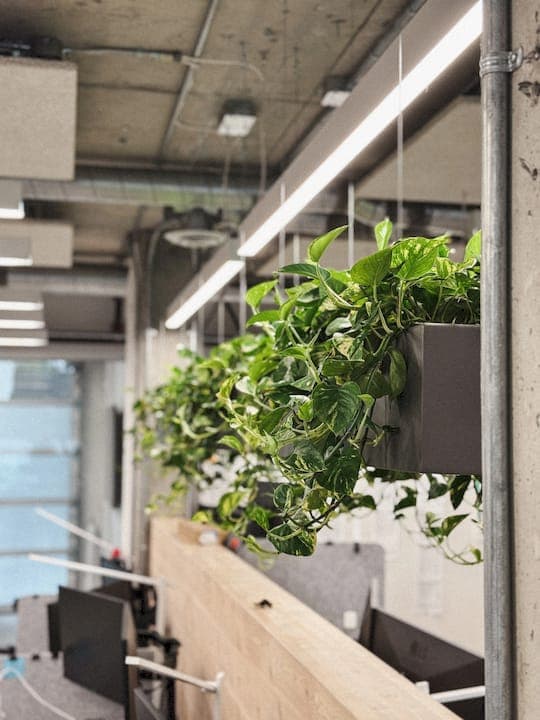
Office greenery productivity benefits are the measurable gains in focus, mood, and efficiency that workers experience when plants are integrated into their workspaces. Research from the University of Exeter confirms a 15% rise in productivity among employees in plant-enriched offices. Separate findings from Washington State University show workers surrounded by plants had 12% faster reaction times on computer tasks. These are not decorating wins. They are performance outcomes backed by peer-reviewed science, and they give office managers a concrete reason to treat greenery as a workplace investment, not an afterthought.
1. What specific productivity benefits do office plants provide?
Plants in the office do more than look good. They change how your brain performs. The University of Exeter studies found that enriched plant environments produce a 15% productivity increase, a gain comparable to what many organizations spend thousands of dollars on training programs to achieve.
The productivity gains show up in several measurable ways:
-
Faster reaction times. Washington State University reported workers near plants completed computer tasks 12% faster. Speed on routine tasks compounds across an eight-hour workday.
-
Stronger concentration. Natural elements reduce mental fatigue, which is the primary reason focus drifts after sustained desk work.
-
Creative problem-solving. Employees in environments rich in natural elements show 15% higher creativity scores, which directly impacts idea generation and complex decision-making.
-
Lower absenteeism. High-quality daylight and plant exposure reduce workplace absenteeism, producing measurable economic benefits for organizations.
Pro Tip: Position desk plants at eye level and within arm’s reach of your primary work surface. Proximity to greenery, not just visual exposure, drives the strongest cognitive benefits.
The pattern across these findings is consistent. Plants reduce the mental friction that slows workers down. Less fatigue means more output, and more output means better results for the whole team.
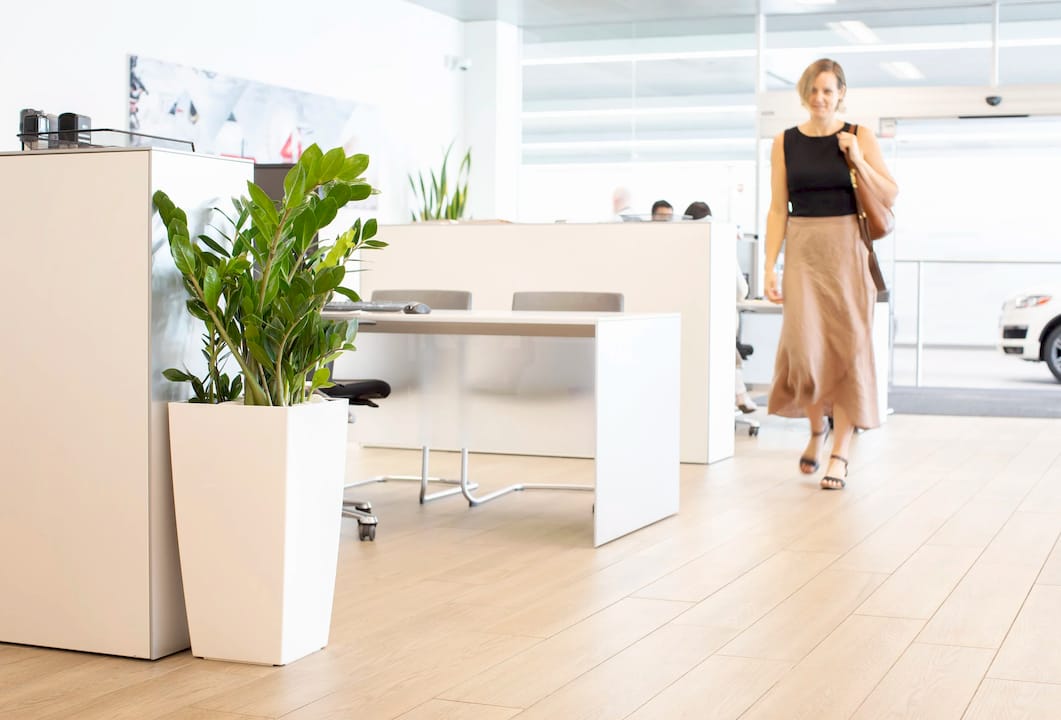
2. How does greenery in the office reduce stress and improve mental well-being?
Two established psychological frameworks explain why plants calm the mind at work. Attention Restoration Theory holds that natural environments replenish depleted cognitive resources. Stress Recovery Theory explains that even brief exposure to nature lowers physiological stress markers. Together, ART and SRT explain why a glance at a plant mid-meeting can reset your focus faster than a coffee break.
The numbers from a University of Technology Sydney study are striking. Introducing indoor plants into office environments reduces:
-
Tension and anxiety by 37%
-
Depression by 58%
-
Fatigue by nearly 40%
These are significant mental health reductions from a passive environmental change. No app, no workshop, no wellness stipend delivers that kind of anxiety reduction at zero behavioral cost to the employee.
Beyond visual exposure, 2026 Mayo Clinic research found that multi-sensory biophilic environments improve cognitive performance and workplace satisfaction more than visual-only plant exposure. The scent of soil, the texture of leaves, and ambient humidity all contribute. This means a single potted plant on a shelf delivers less benefit than a thoughtfully designed plant zone where workers can actually interact with the greenery.
Pro Tip: Encourage employees to water or tend to a shared office plant once a week. The act of caring for a living thing activates mindfulness and deepens the stress-reduction effect beyond passive exposure.
3. Which types of office greenery work best for focus and well-being?
Not all plant arrangements deliver equal results. A 2026 Frontiers in Psychology study found that curvilinear green-wall layouts reduce fatigue and improve attention more effectively than rigid, linear arrangements. Curved, organic forms align with how the brain processes natural environments, which is why they feel less clinical and more restorative.
| Plant type or placement | Primary benefit | Best location |
|---|---|---|
| Desk plants (small, leafy) | Immediate focus support | Individual workstations |
| Green walls (curvilinear) | Fatigue reduction, attention | Open-plan areas, lobbies |
| Communal plant zones | Stress recovery, creativity | Break rooms, collaboration spaces |
| Hanging or trailing plants | Aesthetic lift, mood support | Corridors, meeting rooms |
Research published in J-STAGE also confirms that individual responses to greenery vary. Some employees prefer dense arrangements; others find them distracting. This means quantity and placement must stay adaptable. A fixed, one-size-fits-all layout will underperform compared to a design that accounts for different work zones and personal preferences.
Professional maintenance is not optional here. Plants that are yellowing, dropping leaves, or visibly stressed do the opposite of what healthy plants do. They signal neglect, which undermines the psychological safety that greenery is supposed to create.
4. How does office greenery improve workplace aesthetics?
The visual impact of plants on a workspace is immediate and measurable. Greenery softens hard architectural lines, adds color contrast to neutral office palettes, and creates a sense of depth that flat walls and furniture cannot replicate. These are not subjective observations. They reflect how the human visual system responds to organic forms and natural color ranges.
How office greenery improves aesthetics goes beyond surface appeal. A well-designed plantscape signals to employees and visitors that the organization invests in its environment. That signal affects perception of the brand, the culture, and the quality of work produced there. Talent recruitment and retention respond to this signal directly. Employees with natural elements in their environment show 15% higher wellbeing scores, and wellbeing scores correlate with retention rates.
Green walls in particular transform blank surfaces into living focal points. A professionally designed green wall in a reception area or boardroom communicates intentionality in a way that generic art prints do not. The effect is architectural, not decorative.
5. What role does biophilic design play in workplace productivity?
Biophilic design is the practice of integrating natural elements into built environments to support human health and performance. It is the recognized industry framework behind what most people call “office plants.” LEED and WELL building standards both include biophilic criteria, which means greenery and workplace productivity are now part of formal certification benchmarks, not just interior design preferences.
The distinction between biophilic design and simply buying plants matters. Biophilic design considers light levels, humidity, airflow, plant species selection, and spatial arrangement as a system. A fern placed in a dark corner with no humidity is not biophilic design. It is a dying plant that will soon create the opposite of the intended effect.
Mayo Clinic’s 2026 research reinforces this point. Multi-sensory environments, where plants engage smell, touch, and sound alongside sight, outperform visual-only setups. That means the goal is not to fill a space with greenery. The goal is to create conditions where natural elements actively engage the senses of the people working there.
6. How can office managers integrate greenery for lasting results?
Strategic integration starts before the plants arrive. Engaging design specialists early ensures plant selection fits the environmental factors of your specific space, including light exposure, HVAC airflow, and foot traffic patterns. Skipping this step is the most common reason office greenery fails to deliver lasting benefits.
Here is a practical sequence for managers:
-
Audit your space. Map light levels, humidity zones, and high-traffic areas before selecting any plants.
-
Define zones by function. Choose calming, low-maintenance plants for focus areas. Use larger, statement plants in collaborative or break zones.
-
Plan for maintenance from day one. Poorly planned greenery without a clear maintenance strategy leads to clutter and plant decline, which reduces benefits over time.
-
Integrate plants into the fit-out process. Treating greenery as a core office element, not a post-move addition, guarantees sustained results.
-
Run a pilot program. Start with one or two zones, measure employee feedback after 30 days, then scale what works.
Pro Tip: Indoor plant rental programs let you test different species and arrangements without upfront capital costs. If a plant underperforms in a specific location, it gets swapped out without any loss.
Individual differences in plant perception mean that quantity and placement must stay adaptable. Regular professional plant care maximizes positive effects and prevents the slow decline that turns a wellness asset into a maintenance problem.
7. How does enhancing workspace with greenery affect talent and culture?
Plants affect how people feel about coming to work. That feeling shapes culture, and culture shapes retention. Employees in biophilic environments report higher wellbeing and creativity, and organizations with strong wellbeing cultures attract better candidates. This is a compounding return on a relatively modest investment.
The cultural signal that plants send is worth naming directly. A bare, sterile office communicates that the organization prioritizes function over people. A thoughtfully planted office communicates the opposite. That perception affects how employees talk about their workplace, how they perform in it, and how long they stay.
Enhancing workspace with greenery also supports the growing expectation among workers that employers take mental health seriously. Plants are a visible, daily reminder that the organization has made a physical commitment to employee wellbeing. That visibility matters more than most managers expect.
Key takeaways
Office greenery is a proven performance tool: plants reduce anxiety by up to 37%, increase productivity by 15%, and improve reaction times by 12%, making them one of the highest-return environmental investments an office can make.
| Point | Details |
|---|---|
| Productivity gains are measurable | University of Exeter research confirms a 15% productivity increase in plant-enriched offices. |
| Stress reduction is significant | Plants reduce anxiety by 37% and fatigue by nearly 40%, per University of Technology Sydney findings. |
| Layout and form matter | Curvilinear green-wall arrangements outperform linear layouts for attention and fatigue reduction. |
| Maintenance is non-negotiable | Declining plants reverse the benefits; professional care sustains positive outcomes long-term. |
| Integration beats decoration | Plants added at the design stage deliver lasting results; afterthought greenery underperforms. |
Why I think most offices are still getting this wrong
Most offices treat plants the way they treat motivational posters. They add them once, assume the job is done, and move on. That approach misses the entire point of what the research is telling us.
The offices that see real gains from greenery treat plants as a managed system, not a decoration. They think about light, humidity, species selection, and zone function. They schedule maintenance the same way they schedule IT support. And they involve employees in the process, which deepens the psychological benefit considerably.
The mistake I see most often is quantity without strategy. A manager orders twenty plants, scatters them around the office, and wonders why nothing changes. The research is clear: placement, morphology, and sensory engagement drive the outcomes. A single well-positioned green wall in a break room will outperform twenty random desk plants every time.
The future of office design is moving toward full biophilic integration, where plants are part of the architectural brief from the start. LEED and WELL certification requirements are pushing this direction at the building level. Managers who get ahead of this trend now will have healthier, more productive teams and a stronger case for talent recruitment in a competitive market.
My honest advice: stop thinking about plants as a budget line under “office supplies.” Start thinking about them the way you think about ergonomic chairs or quality lighting. The return on investment is documented, the mechanism is understood, and the barrier to entry is lower than you think.
— Nicole
How Greenspaceplants supports your office productivity goals
If you are ready to move from intention to implementation, Greenspaceplants works with offices across Toronto, Vancouver, and Calgary to design and maintain indoor plantscapes that actually perform.
Their Greenspace+ service covers plant design, installation, regular maintenance, and plant replacements for a fixed monthly fee, with no upfront costs and no long-term commitments. That means you get the full benefit of a professionally managed indoor plant service without the overhead of managing it yourself. For managers who want to see what a well-executed plantscape looks like before committing, the client look-book shows real installations across a range of commercial spaces. Greenspaceplants also offers indoor plant rental programs for teams that want to pilot greenery before scaling.
FAQ
How much can office plants increase productivity?
University of Exeter research shows a 15% productivity increase in offices enriched with plants. Washington State University separately found 12% faster reaction times on computer tasks among workers near greenery.
What types of plants work best for office focus?
Curvilinear green-wall arrangements outperform linear layouts for reducing fatigue and improving attention, according to a 2026 Frontiers in Psychology study. For individual desks, small leafy plants positioned at eye level deliver the strongest cognitive benefit.
Do office plants actually reduce stress?
A University of Technology Sydney study found that indoor plants reduce tension and anxiety by 37%, depression by 58%, and fatigue by nearly 40%. These reductions come from passive environmental exposure, requiring no behavioral change from employees.
How often do office plants need professional maintenance?
Professional maintenance frequency depends on species, light levels, and office conditions, but regular scheduled care is critical. Research published in J-STAGE confirms that plants without consistent professional care decline over time, reversing the wellbeing and productivity benefits they initially provide.
Is biophilic design the same as adding office plants?
Biophilic design is the broader framework that includes plants, light, humidity, airflow, and sensory engagement as a system. Adding plants is one component. Full biophilic design, recognized by LEED and WELL building standards, integrates natural elements into the architectural brief from the start for sustained results.