

Plant neglect in large commercial buildings is defined as the gradual deterioration of indoor plantscapes caused by inconsistent care, poor environmental adaptation, and the absence of structured maintenance protocols. Facility managers across Toronto, Vancouver, and Calgary face this challenge daily, where HVAC systems, variable lighting, and high foot traffic create conditions that defeat casual plant care. The good news is that the most effective ways to prevent plant neglect in large buildings combine proactive scheduling, species-environment matching, and professional oversight. When plants thrive, tenant satisfaction rises and the building’s visual appeal becomes a genuine asset.
What are the key environmental challenges affecting plant health in large buildings?
Large buildings are not neutral environments for plants. They are complex ecosystems of competing microclimates, and environmental factors like HVAC drafts create conditions that most plants were never designed to handle. Understanding these challenges is the first step toward preventing neglect before it starts.
The most damaging factors include:
-
HVAC drafts and dry air. Heating and cooling vents push dry, temperature-inconsistent air directly onto foliage. This causes leaf tip burn, accelerated soil drying, and stress that weakens plants over weeks, not days.
-
Lighting variability. Floor-to-ceiling windows flood perimeter zones with intense light while interior corridors receive almost none. Plants placed without accounting for this gradient decline quickly.
-
Foot traffic and physical disturbance. High-traffic corridors expose plants to accidental knocks, compacted soil from cleaning equipment, and repeated physical stress that damages root systems.
-
Soil compaction and drainage failure. Commercial planters often lack adequate drainage layers. Over time, soil compacts, water pools at the root zone, and root rot sets in silently.
-
Staffing turnover. When the person who “knows the plants” leaves, care continuity breaks down. Without documented protocols, the next person starts from scratch.
These factors combine to create care complexities that go far beyond what a building’s janitorial team can manage. Each plant zone inside a large building effectively has its own microclimate, and each one demands a tailored response.
Pro Tip: Map your building’s HVAC zones and light levels before placing any plants. A 10-minute walk-through with a light meter and a floor plan saves months of troubleshooting later.
How can you implement a proactive plant care schedule to prevent neglect?
The most reliable indoor plant maintenance technique is a structured, recurring care schedule tied to observable plant conditions rather than the calendar. The 2026 industry standard for professional plant care in corporate environments is weekly or bi-weekly servicing. That frequency exists because problems caught early cost a fraction of what full replacements do.
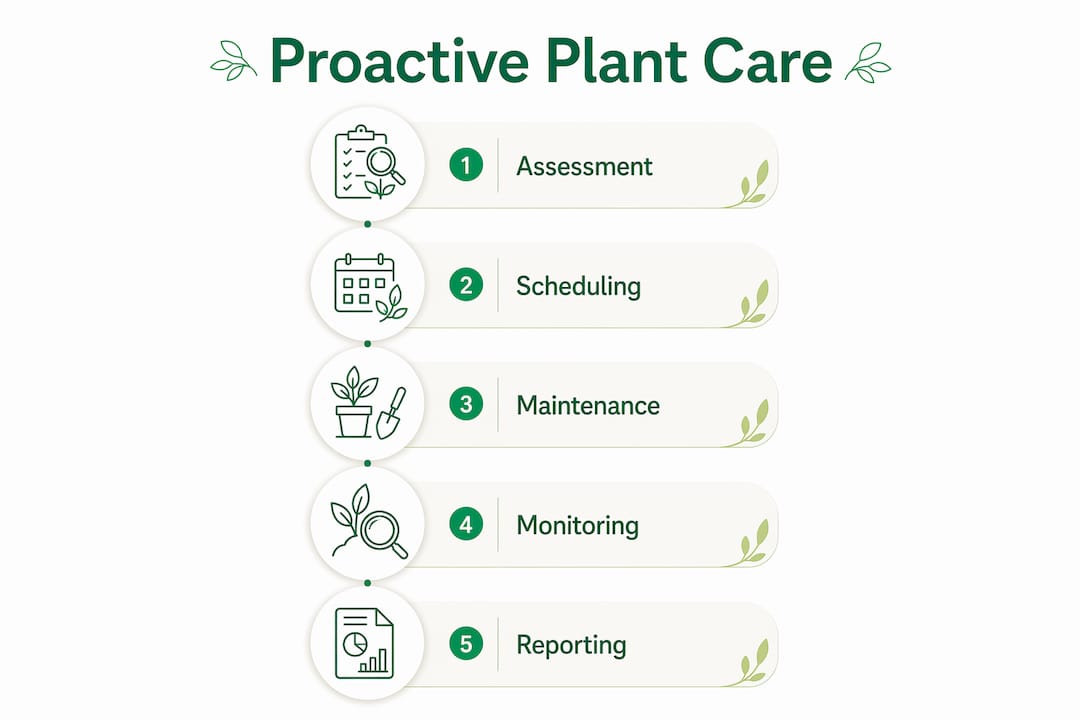
A proactive schedule for large building plant management looks like this:
-
Assess soil moisture before watering. Water only when the top 1–2 inches of soil feel dry, and then water deeply enough to penetrate 5–6 inches into the root zone. This encourages strong, downward root growth rather than shallow roots that dry out between visits.
-
Conduct a visual health check. Look for yellowing leaves, pest activity, leaning growth from phototropism, and signs of root crowding. Document findings rather than relying on memory.
-
Clean foliage and remove debris. Dust accumulation on leaves blocks light absorption and creates habitat for spider mites. Wiping leaves is not cosmetic care. It is functional maintenance.
-
Rotate phototropic species. Plants that lean toward light sources need regular rotation to maintain upright, balanced growth. Neglecting this creates lopsided specimens that look unhealthy even when they are not.
-
Trigger replacement when needed. Professional service providers recommend integrating a full replacement guarantee into facility asset management. When a plant declines beyond recovery, replacing it immediately protects the visual standard of the space.
Plant care belongs in your facility asset management program, not your janitorial checklist. Treating plants as passive decor managed by whoever has a free moment is the single fastest path to a neglected installation.
Pro Tip: Build a simple digital log for each plant zone. Record watering dates, moisture readings, and any health observations. Patterns in that data will tell you what your eyes miss during a busy walk-through.
Which plant species and design choices minimize neglect risk indoors?
The best large building plant management strategy starts at the design phase. Choosing resilient, low-maintenance species matched to your building’s specific light and humidity conditions eliminates a large portion of neglect risk before a single plant is installed.
Species that consistently perform well in commercial indoor environments include:
-
ZZ plant (Zamioculcas zamiifolia). Tolerates low light and infrequent watering. Its waxy leaves resist dust accumulation and its rhizome root system stores water, making it forgiving during missed care visits.
-
Snake plant (Sansevieria trifasciata). Handles HVAC-dry air and low humidity better than almost any other species. It also filters airborne toxins, adding a functional benefit beyond aesthetics.
-
Pothos (Epipremnum aureum). Adaptable to a wide range of light conditions and grows quickly enough that minor damage from foot traffic or pruning is barely noticeable within weeks.
-
Cast iron plant (Aspidistra elatior). Lives up to its name. It tolerates neglect, low light, and temperature fluctuation with minimal visible stress.
Beyond species selection, design choices matter just as much. Place plants away from direct HVAC vents and high-traffic pathways. Use containers with built-in drainage reservoirs to buffer against both overwatering and drought. Select soil blends that include perlite or coarse sand to prevent compaction in planters that cannot be easily repotted. Avoid species with high humidity requirements, such as ferns or calatheas, in buildings where HVAC systems run aggressively.
The table below summarizes how to match species to common large-building conditions:
| Building condition | Recommended species | Key advantage |
|---|---|---|
| Low light, interior corridors | ZZ plant, cast iron plant | Thrives with minimal light |
| HVAC-dry air zones | Snake plant, pothos | Tolerates low humidity |
| High-traffic areas | Snake plant, ZZ plant | Compact, damage-resistant form |
| Bright perimeter zones | Pothos, dracaena | Adapts to indirect bright light |
How can technology and monitoring improve plant health in large buildings?
Technology supports plant care in large buildings, but it does not replace physical inspection. Automated irrigation systems can fail silently, with blocked emitters or faulty sensors killing large plant sections before any visible symptom appears. The building manager who trusts the system without verifying it is setting up a slow-motion failure.
The most effective monitoring approach combines technology with hands-on diagnostics:
-
Soil moisture sensors provide real-time data on moisture levels at the root zone. They catch dry zones that look fine on the surface but are critically dehydrated below.
-
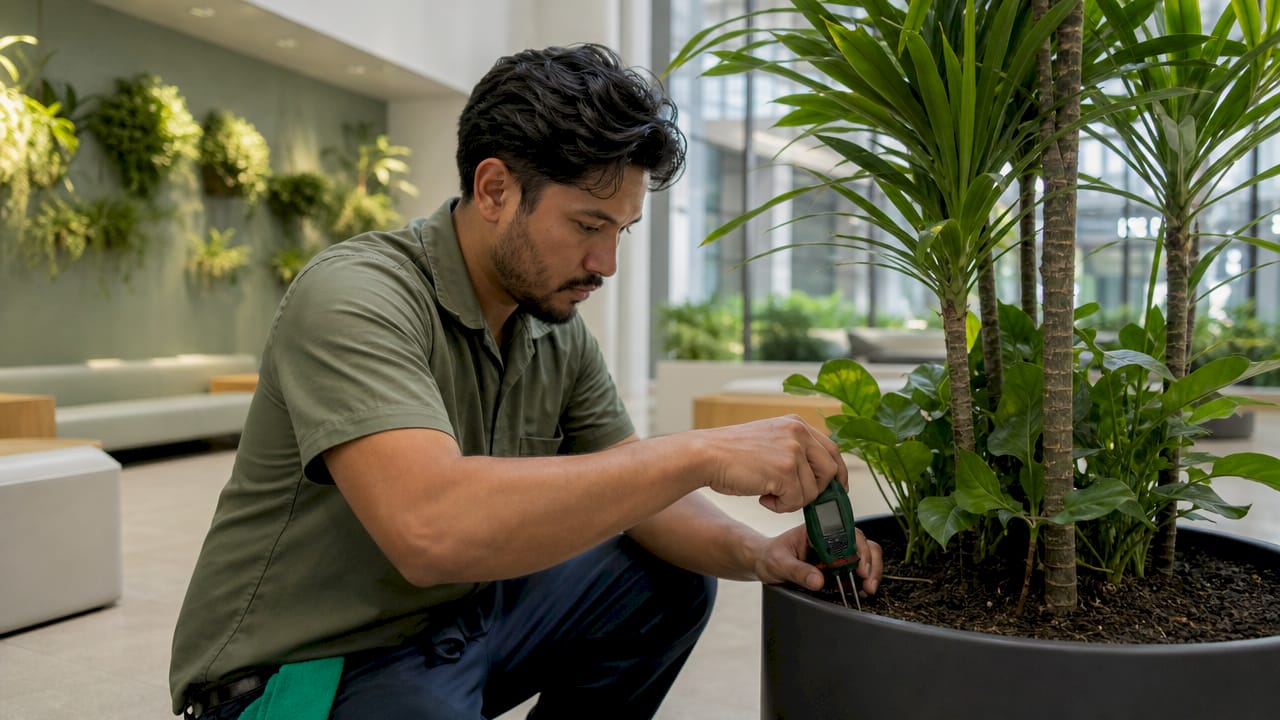
Electronic moisture meters used during weekly visits catch problems earlier than visual inspection alone. Tracking soil moisture trends over time reveals whether a zone is consistently under or overwatered, which points to a systemic problem rather than a one-off event.
-
Monthly irrigation diagnostics. Check flow rates, inspect emitters for blockage, and manually test wet and dry zones. This takes 20 minutes and prevents the kind of failure that costs thousands in replacements.
-
Integrated Pest Management (IPM). IPM is a structured approach that prioritizes humidity adjustment and pruning before reaching for any chemical treatment. It focuses on environmental controls first, reducing the need for pesticides that can harm indoor air quality and trigger tenant health complaints.
Pro Tip: Set a monthly calendar reminder for irrigation system diagnostics. Treat it the same way you treat HVAC filter checks. Both systems fail quietly and both failures are expensive.
What are common mistakes that lead to plant neglect?
Most plant neglect in large buildings does not come from indifference. It comes from well-intentioned practices that do not account for how commercial environments actually work. Recognizing these patterns is how you break them.
The most common mistakes facility managers make include:
-
Fixed-interval watering. Watering every Monday regardless of soil moisture leads to overwatering in cool weeks and underwatering during dry, high-HVAC periods. Adaptive watering based on actual soil conditions is the correct approach.
-
Treating plants as decor, not assets. A neglected plant feature harms professional reputation and tenant perception more than having no plants at all. Plants are visual assets that require the same accountability as any other building system.
-
Reactive chemical pest control. Heavy chemical pesticides cause health complaints among building occupants and often damage the plants they are meant to protect. Proactive IPM prevents infestations from reaching the point where chemicals feel necessary.
-
Skipping replacement protocols. Allowing a visibly declining plant to remain in place while “waiting to see if it recovers” drags down the entire installation’s appearance. A replacement guarantee removes this hesitation.
-
Ignoring microclimate changes. Seasonal HVAC adjustments, new furniture layouts, and window film installations all shift the microclimate around your plants. Care protocols that worked in spring may fail by october if no one reassesses conditions.
Key Takeaways
Preventing plant neglect in large buildings requires structured care schedules, species-environment matching, proactive monitoring, and professional accountability built into facility management from the start.
| Point | Details |
|---|---|
| Schedule care proactively | Weekly or bi-weekly professional servicing is the 2026 industry standard for commercial plant health. |
| Match species to conditions | ZZ plants and snake plants outperform sensitive species in HVAC-heavy, low-light commercial environments. |
| Monitor beyond visual checks | Soil moisture sensors and electronic meters catch decline before visible symptoms appear. |
| Apply IPM over chemicals | Integrated Pest Management uses environmental controls first, protecting air quality and plant health. |
| Treat plants as building assets | Replacement guarantees and asset-level accountability prevent visual decline from harming tenant satisfaction. |
What I’ve learned about plant neglect that most guides won’t tell you
After working with facility managers across large commercial properties, I’ve noticed a pattern that almost no one talks about openly. The buildings with the worst plant neglect are rarely the ones with the smallest budgets. They are the ones where plant care was never assigned to anyone with real accountability.
Plants in large buildings get neglected because they sit in a gray zone between facilities and aesthetics. Janitorial teams water them when they remember. Facilities managers assume someone else is handling it. The result is a slow decline that nobody owns until the plants look embarrassing. Proper plant maintenance is an asset protection strategy, and it costs a fraction of what full installation replacement does.
The other thing I’ve seen consistently is that facility managers underestimate how much the building itself changes the care equation. A plant that thrives in one zone of your building may struggle two corridors away because of a single HVAC vent. Plant neglect is often a failure to adapt to building-specific environmental changes, not a failure of effort. That distinction matters because it changes the solution entirely.
My advice to any facility manager reading this: stop treating plant care as a soft amenity and start treating it as a maintenance contract item. Assign it, schedule it, document it, and hold someone accountable for it. The plants will reflect that decision within weeks.
— Nicole
Greenspaceplants: professional plant care built for large buildings
Facility managers who want healthy, thriving indoor plants without the guesswork have one reliable option: a professional maintenance program designed specifically for commercial scale.
Greenspaceplants serves commercial properties across Toronto, Vancouver, and Calgary with its Greenspace+ program. For a fixed monthly fee, clients receive expert plant design, installation, regular maintenance visits, and full plant replacements with no upfront costs and no long-term commitments. Every visit follows the proactive care standards described in this article, from soil moisture testing to IPM-based pest prevention. If you are ready to see what a professionally maintained indoor plant care program looks like in practice, or want to explore indoor plant rental programs that remove the ownership burden entirely, Greenspaceplants is the place to start.
FAQ
How often should plants in large buildings be serviced?
The 2026 industry standard for professional plant care in corporate environments is weekly or bi-weekly servicing. That frequency allows technicians to catch moisture issues, pest activity, and environmental stress before they cause visible decline.
What are the best low-maintenance plants for commercial buildings?
ZZ plants, snake plants, pothos, and cast iron plants are the top choices for large commercial environments. These species tolerate HVAC-dry air, low light, and inconsistent care better than most alternatives.
Why is fixed-interval watering a problem for large buildings?
Fixed-interval watering ignores actual soil moisture conditions, leading to overwatering in cool periods and underwatering when HVAC systems run hard. Watering based on soil moisture readings, specifically when the top 1–2 inches feel dry, produces far better results.
What is Integrated Pest Management and why does it matter indoors?
Integrated Pest Management is a structured approach that prioritizes environmental controls like humidity adjustment and pruning before using any chemical treatments. It protects indoor air quality and reduces the health complaints that heavy pesticide use triggers in occupied commercial spaces.
How does professional plant care protect a building’s asset value?
A neglected plant installation harms tenant perception and professional reputation more than having no plants at all. Professional care with a replacement guarantee maintains the visual standard of the space and protects the investment made in the original installation.