
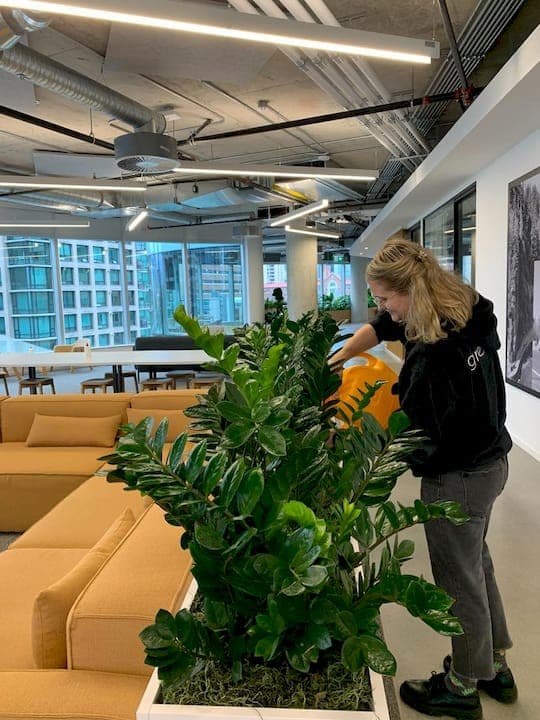
Live plants are defined as one of the highest-return investments an office can make, delivering measurable gains in air quality, employee health, and commercial property value. The question of why offices invest in live plants has a clear, research-backed answer: plants reduce absenteeism, lift productivity, and signal a healthy workspace to both employees and clients. Biophilic design has moved from an aesthetic choice to a strategic financial lever in commercial real estate. Greenspaceplants works with office planners and business owners across Toronto, Vancouver, and Calgary to turn that research into real results.
Why offices invest in live plants: the core business case
The financial logic is direct. Personnel costs represent roughly 90% of total business expenses, which means any intervention that reduces sick days or sharpens focus pays back fast. Office plants do both. Research shows that a well-executed plant program can return its full investment within 12 months by cutting absenteeism and raising output. That payback window is shorter than most office furniture upgrades.
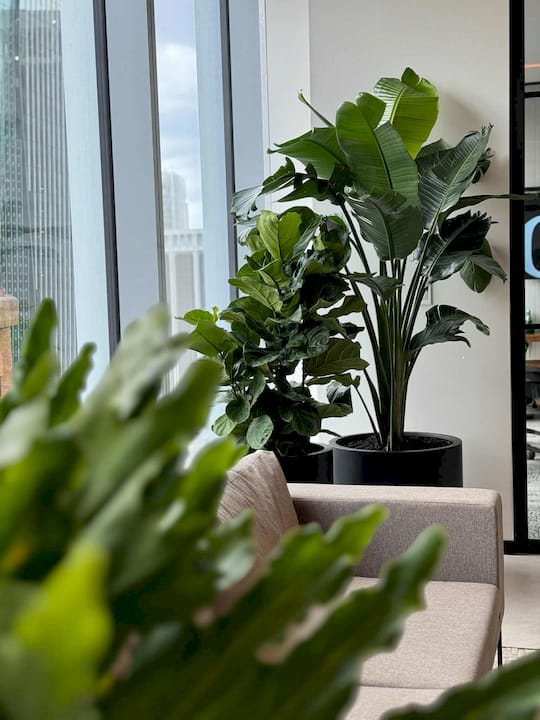
The property angle is equally compelling. Buildings that incorporate biophilic design with indoor plants carry 7–8% higher property valuations compared with conventional properties. For commercial landlords and owner-occupiers alike, that premium is a concrete number to put in front of a finance committee. Green infrastructure also lowers vacancy rates and strengthens lease terms, making it a durable asset rather than a one-time decoration spend.
Plants also affect how a space feels to the people inside it. Workspaces with natural elements score 15% higher on employee well-being and show up to a 6% productivity increase. Those numbers translate directly into output, retention, and the kind of employer brand that attracts talent in a competitive market.
How do live plants improve office air quality and employee health?
Indoor air quality is the most underestimated factor in office performance. Most commercial buildings recirculate air that carries volatile organic compounds (VOCs) from furniture, carpets, and cleaning products. Plants absorb those compounds through their leaves and root systems.
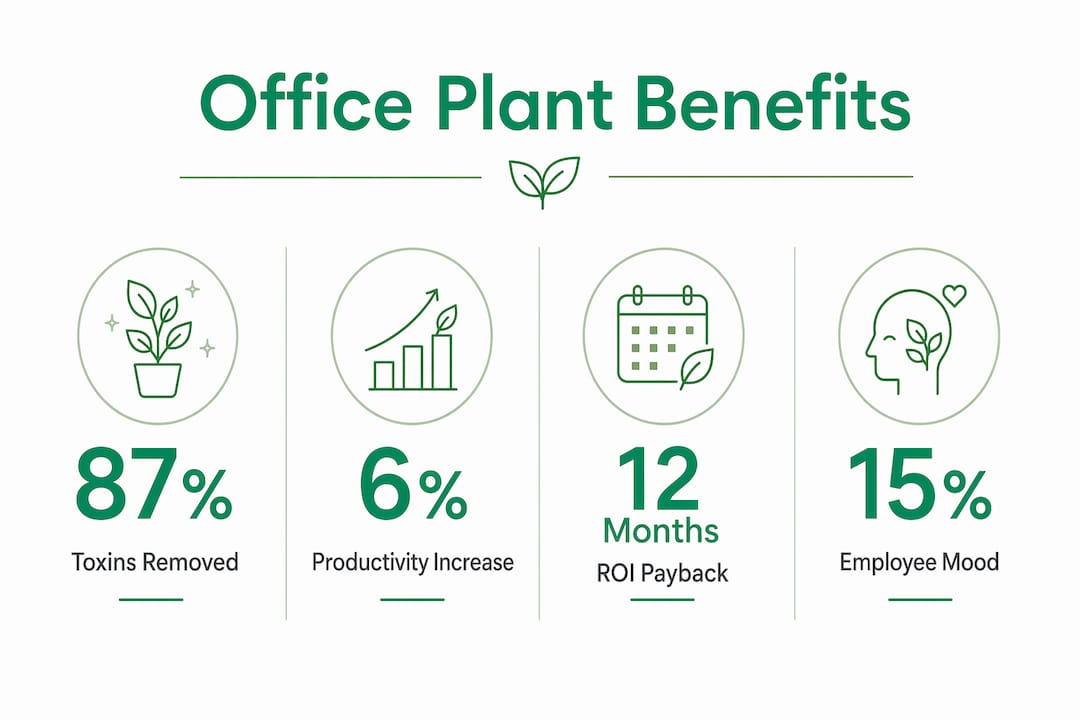
NASA research established that indoor plants can remove up to 87% of airborne toxins within 24 hours. That figure applies under controlled conditions, but even in a busy open-plan office, a well-placed collection of plants measurably reduces pollutant levels. Cleaner air means fewer headaches, less fatigue, and lower rates of respiratory discomfort among staff.
The stress response is equally well documented. Plants lower cortisol levels and produce psychological benefits including improved mood and stronger creative thinking. Cortisol reduction is not a soft benefit. It directly affects decision quality, interpersonal communication, and sustained concentration across a workday.
Effective air-purifying species for office environments include:
-
Peace lily (Spathiphyllum): filters benzene and formaldehyde, tolerates low light
-
Snake plant (Sansevieria trifasciata): releases oxygen at night, extremely low maintenance
-
Spider plant (Chlorophytum comosum): removes carbon monoxide and xylene, fast-growing
-
Pothos (Epipremnum aureum): handles irregular watering, effective against VOCs
-
ZZ plant (Zamioculcas zamiifolia): drought-tolerant, thrives in indirect light
Each of these species suits the typical office environment where natural light is limited and watering schedules are inconsistent.
What are the financial and productivity benefits of office plants?
The productivity case for office plants is stronger than most business owners realize. Plants improve focus and memory by up to 20%, which is a performance gain that compounds across a team of 50 or 500 people. A 20% memory improvement in a knowledge-work environment is not trivial. It affects the quality of analysis, writing, and problem-solving every single day.
Here is how the financial return stacks up across four dimensions:
-
Reduced absenteeism. Healthier air and lower stress mean fewer sick days. With personnel costs at 90% of expenses, even a small reduction in absenteeism covers the cost of a full plant program.
-
Higher output per employee. A 6% productivity increase in a team of 20 people is equivalent to gaining one additional full-time contributor without hiring.
-
Lower turnover costs. Employees who rate their workspace as healthy and attractive stay longer. Replacing a mid-level employee typically costs 50–200% of their annual salary.
-
Property premium. For commercial property owners, biophilic design is a direct line to higher valuations and stronger tenant demand.
“Biophilic design has evolved into a strategic financial lever for tenant retention, brand equity, and revenue in commercial real estate. Green infrastructure is no longer a nice-to-have. It is a measurable competitive advantage.”
The one-year payback window is the number that tends to shift the conversation in budget meetings. Plants are not a cost center. They are an investment with a documented return.
Best practices for integrating and maintaining live plants in office spaces
Matching plant species to environmental conditions is the single most critical decision in any office plant program. The most common failure is placing light-dependent species in windowless corridors or conference rooms with no natural light. Plants need 8–12 hours of appropriate light to thrive. Without it, they decline quickly, which wastes budget and undermines the aesthetic you were trying to create.
Pro Tip: Before selecting any species, map your office for light zones. South-facing windows support high-light plants like fiddle-leaf figs. North-facing or interior spaces call for low-light species like pothos or ZZ plants. For truly windowless areas, preserved moss or quality artificial greenery deliver the visual benefit without the maintenance burden.
Professional maintenance goes well beyond watering. A proper care cycle includes:
-
Leaf cleaning: Dust accumulates on leaves and blocks photosynthesis. Wiping leaves monthly keeps plants healthy and visually sharp.
-
Pruning: Removing dead or yellowing growth redirects the plant’s energy and maintains a clean appearance.
-
Pest monitoring: Early detection of spider mites, fungus gnats, or scale insects prevents infestations from spreading across multiple plants.
-
Soil amendments: Periodic fertilization and soil aeration support root health, especially in containers with limited drainage.
-
Rotation: Phototropic plants lean toward light sources. Rotating pots quarterly keeps growth even and prevents lopsided specimens.
Professional plant maintenance extends plant lifespan significantly and sustains the aesthetic quality that justifies the investment. Treating plant care like core infrastructure, with scheduled cycles and inventory tracking, reduces waste and lowers long-term cost of ownership. High-performing facilities teams use exactly this approach.
How do plants elevate office aesthetics and tenant experience?
Plants transform sterile commercial interiors into spaces that feel genuinely alive. That shift is not subjective. Tenants and employees consistently rate plant-filled spaces as more inviting, more comfortable, and more reflective of a high-quality employer. The role of plants in commercial real estate has expanded from lobby decoration to a core element of tenant experience strategy.
The table below shows how plant integration affects key dimensions of office and commercial property performance:
| Dimension | Without plants | With professional plant integration |
|---|---|---|
| Employee well-being score | Baseline | Up to 15% higher |
| Focus and memory performance | Baseline | Up to 20% improvement |
| Property valuation | Baseline | 7–8% premium |
| Tenant retention | Standard | Stronger, linked to green amenities |
| Air toxin levels | Elevated VOCs | Reduced by up to 87% in 24 hours |
Biophilic design signals organizational values. A client walking into a well-planted reception area reads the space as one that cares about detail, health, and quality. That impression shapes purchasing decisions and partnership conversations before a single word is spoken. For commercial property owners, green infrastructure directly supports leasing velocity and the ability to command premium rents.
Successful plant installations tend to share three characteristics: species chosen for the actual light conditions of the space, a maintenance program that keeps plants looking their best year-round, and placement that creates spatial rhythm rather than random clustering. A single large specimen plant in a reception area reads differently than a row of small pots on a windowsill. Intentional placement is what separates a professional plantscape from a well-meaning but underwhelming attempt.
Key takeaways
Live plants in offices deliver a documented return on investment through healthier air, higher productivity, lower absenteeism, and stronger commercial property valuations.
| Point | Details |
|---|---|
| Air quality impact | Plants remove up to 87% of indoor air toxins within 24 hours, reducing headaches and fatigue. |
| Productivity gains | Biophilic workspaces show up to 20% better focus and memory, plus a 6% productivity increase. |
| Financial payback | Plant programs can return their full investment within 12 months by cutting absenteeism. |
| Property value | Biophilic design adds a 7–8% premium to commercial property valuations. |
| Maintenance is non-negotiable | Professional care, including pest monitoring, pruning, and leaf cleaning, sustains both plant health and ROI. |
What I’ve learned after years of watching office plant programs succeed and fail
The offices that get the most out of their plant investment treat greenery the way they treat their HVAC system: as infrastructure that requires scheduled attention, not a decoration that takes care of itself. I’ve seen beautifully designed plantscapes deteriorate within six months because no one owned the maintenance. The plants looked neglected, and the intended effect flipped. Instead of signaling a healthy, well-run workplace, dying plants signal neglect.
The second pattern I’ve noticed is the lighting mismatch problem. Business owners see a beautiful fiddle-leaf fig in a design magazine and order six of them for a north-facing boardroom. Within three months, those plants are struggling. The fix is simple: match the species to the actual environment, not the aspirational one. Low-light champions like snake plants and pothos are genuinely attractive. You do not need to sacrifice aesthetics to be practical.
The third insight is about outsourcing. Office managers are not plant clinicians. They are managing people, budgets, and operations. Asking them to also monitor for spider mites and remember fertilization schedules is a recipe for neglect. The offices that maintain thriving plantscapes almost always use a professional service. The cost is predictable, the plants stay healthy, and the business gets the full benefit without the distraction.
Plants aligned with a clear wellness and branding strategy deliver the strongest results. When the plant program connects to a stated commitment to employee health, it reinforces that message every single day. That alignment is what turns a line item into a genuine business asset.
— Nicole
How Greenspaceplants supports your office plant investment
Greenspaceplants delivers professional indoor plant design and installation for commercial spaces across Toronto, Vancouver, and Calgary. The Greenspace+ program covers everything under one fixed monthly fee: design, installation, regular maintenance, and plant replacements, with no upfront costs and no long-term commitment.
That means your plants stay healthy, your space looks its best, and your team gets the full air quality and productivity benefits without anyone on your staff spending time on plant care. Whether you need a single reception feature or a full-floor interior plant service, Greenspaceplants handles the details so you can focus on running your business. Explore the Greenspace client look-book to see what a professional plantscape looks like in real commercial spaces.
FAQ
How quickly do office plants improve air quality?
Indoor plants can remove up to 87% of airborne toxins within 24 hours under optimal conditions. In a typical office, consistent plant coverage produces measurable air quality improvements within days of installation.
Do live plants actually increase employee productivity?
Research shows workspaces with natural elements achieve up to a 6% productivity increase and a 20% improvement in focus and memory. Those gains are consistent across knowledge-work environments where concentration and output quality matter most.
What is the ROI timeline for investing in office plants?
Office plant programs can pay back their full investment within 12 months. The return comes primarily from reduced absenteeism and higher output, given that personnel costs represent roughly 90% of total business expenses.
Which plants work best in low-light office spaces?
Snake plants, pothos, ZZ plants, and peace lilies all perform well in low-light conditions. For truly windowless areas, preserved moss or high-quality artificial greenery deliver the visual benefit without the risk of plant decline.
Is professional plant maintenance worth the cost?
Professional maintenance, covering leaf cleaning, pest monitoring, pruning, and soil care, extends plant lifespan and sustains the aesthetic quality that drives the business benefits. Without it, even well-chosen plants decline and the investment is lost.