
Certain indoor plants are proven to lower CO2 levels through photosynthesis, making them a practical tool for improving air quality in homes and offices. A 2026 study published in Scientific Reports found that Cordyline fruticosa removed 36.78% of CO2 among tested species, followed by Syngonium podophyllum, Epipremnum aureum, and Chlorophytum comosum. Plants with dense foliage and high photosynthetic activity absorb the most CO2. Industry guidance recommends starting with 1–2 medium plants per 100 square feet for modest air quality gains. The best plants for reducing carbon dioxide indoors combine strong CO2 uptake with low maintenance, making them realistic choices for busy households and commercial spaces alike.
1. Cordyline fruticosa: the top CO2 absorber
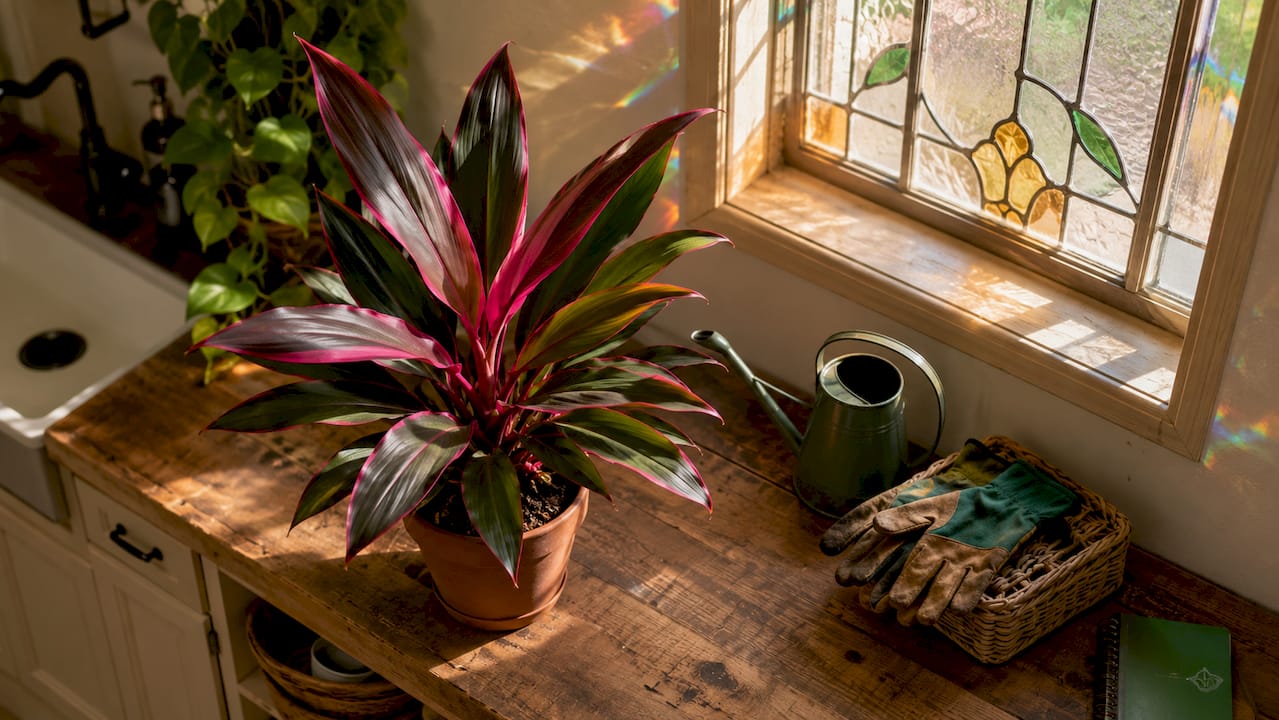
Cordyline fruticosa leads all tested indoor plants with a CO2 removal rate of 36.78%. That figure comes from a controlled 2026 study, making it the most scientifically supported choice for air-cleaning indoor plants. Beyond CO2, it also removes volatile organic compounds (VOCs), which are common in offices with new furniture or fresh paint.
Cordyline thrives in bright, indirect light and prefers consistently moist soil. Its broad, colorful leaves maximize the leaf surface area available for gas exchange. For commercial spaces, it doubles as a striking design element.
2. Syngonium podophyllum: the particulate matter specialist
Syngonium podophyllum ranks second for CO2 reduction at 31.27% removal efficiency. What sets it apart is its performance on airborne particles. The same 2026 study found it achieved 100% removal of PM2.5 and PM10 particulate matter. That means it cleans both gases and fine dust from indoor air simultaneously.
Syngonium grows well in low to medium light, making it suitable for interior offices without direct window access. It prefers humid conditions and benefits from regular misting. Its arrowhead-shaped leaves grow quickly, which supports sustained photosynthetic activity.
3. Epipremnum aureum (pothos): the resilient performer
Pothos ranks third for CO2 absorption at 25.91% removal efficiency. It is one of the most forgiving houseplants available, tolerating low light, irregular watering, and temperature fluctuations. That resilience makes it a reliable air-cleaning plant even when care is inconsistent.
Pothos grows rapidly in trailing or climbing form, producing large amounts of leaf surface area over time. More leaf area means more photosynthesis and more CO2 uptake. It suits shelves, hanging baskets, and desk corners equally well.
4. Chlorophytum comosum (spider plant): the beginner's best friend
Spider plant achieves 24.24% CO2 removal and ranks among the easiest houseplants for carbon dioxide reduction to maintain. It produces offshoots called "spiderettes" that can be propagated into new plants, letting you expand your indoor greenery at no extra cost. Spider plants also remove formaldehyde and xylene from indoor air.
This plant thrives in indirect light and tolerates occasional neglect. It is non-toxic to pets and children, making it a safe choice for family homes. Its arching, striped leaves add visual interest to any room.
5. Snake plant (Sansevieria trifasciata): the nighttime CO2 reducer
The snake plant uses CAM photosynthesis, a process that allows it to absorb CO2 at night rather than during the day. Most plants close their stomata after dark, stopping gas exchange. Snake plants keep working around the clock, making them uniquely suited to bedrooms.
Snake plants are nearly indestructible. They tolerate low light, infrequent watering, and dry air. Their upright, sword-shaped leaves take up minimal floor space while still contributing to air quality improvement.
6. Peace lily (Spathiphyllum): the shade-tolerant cleaner
Peace lily performs well in low-light conditions where many other air-cleaning plants struggle. It absorbs CO2 through photosynthesis and also filters ammonia, benzene, and formaldehyde from indoor air. Its broad, dark green leaves support active gas exchange even in dim rooms.
Peace lily blooms periodically, adding aesthetic value alongside its air-purifying function. It prefers moist soil and high humidity, making it a natural fit for bathrooms or kitchens. One caution: peace lily is toxic to cats and dogs, so placement matters in pet-friendly homes.
7. Rubber plant (Ficus elastica): the large-leaf powerhouse
Rubber plants produce large, waxy leaves that maximize the surface area available for CO2 absorption. Larger leaves mean more stomata, which are the tiny pores through which plants exchange gases. A mature rubber plant in a well-lit room contributes meaningfully to indoor CO2 reduction.
Rubber plants prefer bright, indirect light and well-draining soil. They grow tall quickly, which makes them effective as statement plants in open-plan offices or living rooms. Regular leaf cleaning removes dust that blocks stomata and reduces photosynthetic efficiency.
8. Boston fern (Nephrolepis exaltata): the humidity-loving filter
Boston fern is one of the most effective air-purifying plants for humid environments. Its dense, feathery fronds create a large combined leaf surface area, supporting active CO2 uptake throughout the day. It also removes formaldehyde and xylene from indoor air.
Boston ferns require consistent moisture and high humidity. They suit bathrooms, kitchens, or any space with a humidifier nearby. Without adequate humidity, fronds dry out and photosynthetic activity drops sharply.
How to maximize CO2 reduction through placement and care
Plant placement determines how much CO2 your plants actually absorb. Avoid stagnant corners and position plants near windows, vents, or areas with natural airflow. CO2 must reach leaf surfaces for gas exchange to occur, and still air limits that contact.
Grouping plants together creates a shared microclimate with higher humidity and more active gas exchange. Grouped plants enhance photosynthesis by improving the local environment around each plant. A cluster of three to five plants near a window outperforms the same plants scattered across a room.
Key placement and care practices include:
- Clean leaves regularly. Dust blocks stomata and reduces CO2 uptake. Wipe large leaves with a damp cloth monthly.
- Rotate pots every two to four weeks. Even light exposure prevents phototropic leaning and keeps all leaves photosynthetically active.
- Water consistently. Underwatering stresses plants and reduces their ability to absorb CO2.
- Use quality potting mix. Healthy soil supports root function, which drives overall plant health and photosynthetic capacity.
Pro Tip: Supplement natural light with a full-spectrum grow light during winter months. Low light is the single biggest factor that limits CO2 absorption in indoor plants.
For guidance on indoor plant placement design, a structured approach helps you get the most from each species.
What plants can realistically do for indoor CO2 levels
Plants are not a replacement for ventilation. Ventilation is the primary method for reducing indoor CO2 to safe levels. A meaningful reduction in CO2 through plants alone would require a quantity of greenery that is impractical in most homes or offices.
"Houseplants offer psychological benefits and modest air cleaning, but they cannot replace ventilation and filtration as the primary tools for indoor air quality management. The distinction between passive houseplants and active botanical biofilters is one that science makes clearly."
That said, plants do contribute. They absorb CO2 continuously during daylight hours, add humidity, and reduce airborne particulates. Research consistently shows that indoor plants improve wellbeing and perceived air quality, even when measurable CO2 reductions are modest.
The practical takeaway: treat plants as a complement to good ventilation, not a substitute. Open windows when possible, use air filtration where needed, and let your plants do the rest.
Practical tips for selecting and caring for CO2-absorbing plants
Choosing the right plant for your space starts with honest assessment of your light conditions. A Boston fern in a dark hallway will not absorb CO2 effectively. Match species to the actual light, humidity, and temperature of the room.
Start with 1–2 medium plants per 100 square feet as a baseline for modest air quality improvement. Scale up as you gain confidence in plant care. More healthy plants always outperform fewer neglected ones.
Key selection and care guidelines:
- Prioritize soil health. Healthy soil microbial activity can increase pollutant removal significantly compared to leaf surface alone. Use a quality potting mix and refresh it annually.
- Check pet safety. Spider plants, pothos, and Boston ferns are generally safe for pets. Peace lily and snake plant are toxic to cats and dogs.
- Inspect plants before buying. Stressed or root-bound plants from a nursery will underperform from day one.
- Set a simple maintenance schedule. Water, rotate, and clean leaves on a fixed weekly or biweekly routine.
Plant stress from poor light or neglect directly reduces photosynthesis and CO2 uptake. A neglected plant does not purify air. It simply occupies space.
Pro Tip: Repot plants every one to two years into slightly larger containers with fresh soil. Root-bound plants in depleted soil absorb far less CO2 than healthy, well-rooted ones.
Key Takeaways
The most effective plants for reducing indoor CO2 are those with dense foliage, high photosynthetic activity, and consistent care, used alongside proper ventilation for meaningful air quality results.
| Point | Details |
|---|---|
| Top CO2 absorber | Cordyline fruticosa removed 36.78% of CO2 in 2026 scientific testing. |
| Placement matters | Group plants near windows and airflow sources to maximize gas exchange. |
| Plants complement ventilation | Plants reduce CO2 modestly; ventilation remains the primary air quality tool. |
| Soil health multiplies results | Healthy soil microbial activity significantly boosts pollutant removal beyond leaf surface alone. |
| Start with the right density | Use 1–2 medium plants per 100 square feet as a practical starting point. |
Why I think most people set themselves up for disappointment with indoor plants
People buy a snake plant or a pothos expecting measurable air quality results within weeks. When they don't notice a difference, they conclude that plants don't work. The real issue is expectation management, not plant performance.
What I've found after working with indoor plant installations across commercial spaces is that plants deliver their best results when they're healthy, well-placed, and part of a broader approach to air quality. A single pothos in a poorly ventilated conference room won't move the needle on CO2. A thoughtfully designed grouping of Cordyline, Syngonium, and spider plants near a window, maintained consistently, absolutely will contribute.
The psychological benefit is real and underrated. Spaces with healthy greenery feel fresher and more comfortable, even when instruments show only modest CO2 changes. That perception matters for productivity and wellbeing. Research supports the connection between plants and workplace productivity, and I've seen it firsthand in office environments.
My honest advice: combine plants with good ventilation habits, choose species matched to your actual light conditions, and commit to basic maintenance. That combination delivers results that a single neglected plant never will.
— Nicole
How Greenspace Plants can help you build a healthier indoor environment
Selecting the right CO2-absorbing species and keeping them healthy long-term takes more than good intentions. Greenspace Plants designs and maintains professional indoor plantscapes for commercial spaces across Toronto, Vancouver, and Calgary, with a focus on species that genuinely improve air quality and aesthetics.

Through the Greenspace+ program, you get plant design, installation, regular maintenance, and replacements for a fixed monthly fee, with no upfront costs or long-term commitments. Every plant stays healthy because our team handles the care. If you're ready to bring proven air-improving greenery into your workspace, explore our indoor plant care services or browse our indoor plant rental programs to find the right fit for your space.
FAQ
Which indoor plant removes the most CO2?
Cordyline fruticosa removes the most CO2 among tested indoor plants, achieving a 36.78% removal rate in a 2026 Scientific Reports study. It also removes VOCs, making it a strong all-around air-purifying choice.
Can houseplants meaningfully reduce indoor CO2 levels?
Plants reduce CO2 modestly during daylight hours, but a meaningful reduction requires more plants than most spaces can accommodate. Ventilation remains the primary and most effective method for managing indoor CO2.
What plant absorbs CO2 at night?
The snake plant uses CAM photosynthesis to absorb CO2 at night, unlike most plants that only exchange gases during daylight. This makes it particularly useful in bedrooms.
How many plants do I need for better indoor air quality?
A practical starting point is 1–2 medium plants per 100 square feet. Scaling up with healthy, well-placed plants increases the cumulative air quality benefit over time.
Does soil quality affect how much CO2 a plant absorbs?
Healthy soil microbial activity significantly increases a plant's overall pollutant removal capacity compared to leaf surface alone. Refreshing potting mix annually and using quality soil supports sustained CO2 absorption.