
How managed plant service works: the process at a glance
A managed plant service covers everything from the first site visit to the ongoing care that keeps your greenery looking its best, week after week. It is not simply a watering schedule. It is a structured, professional program that treats your indoor plants as the business assets they are.
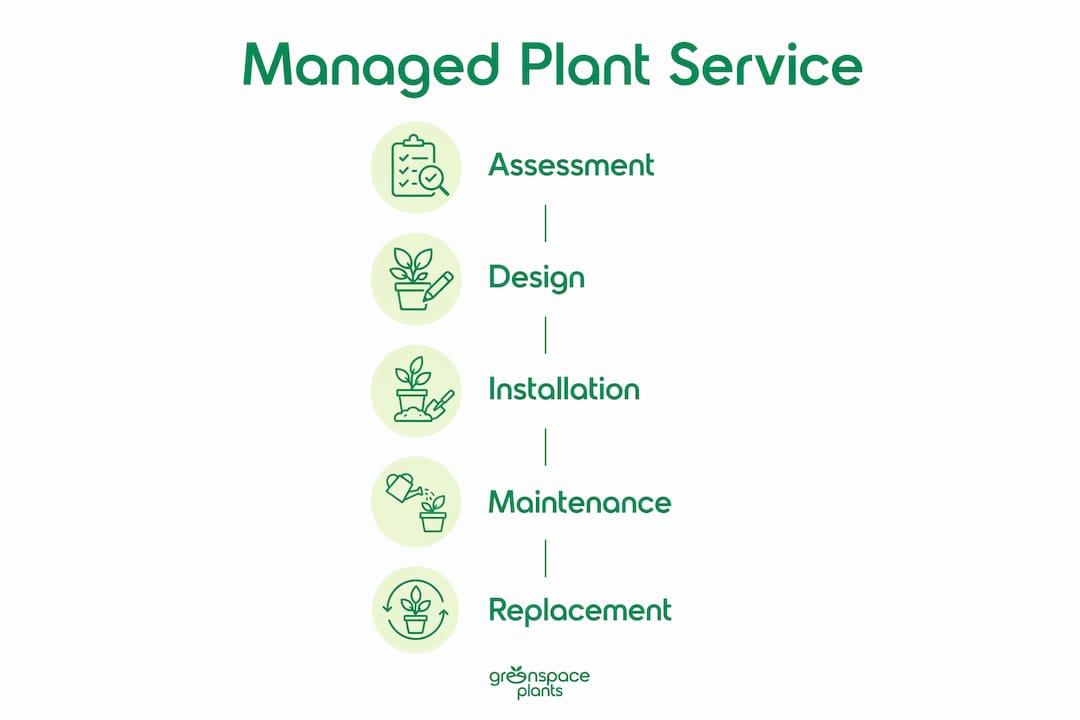
Here is what the process looks like from start to finish:
- On-site consultation: A technician assesses light levels, traffic patterns, HVAC conditions, and available space before a single plant is selected.
- Custom plant design and installation: A tailored plant scheme is developed and installed to suit your environment, brand aesthetic, and maintenance goals.
- Scheduled maintenance visits: Technicians return on a weekly or bi-weekly basis to perform professional care tasks.
- Routine care tasks: Each visit covers watering, pruning, pest monitoring, moisture control, and foliage cleaning.
- Plant replacement: Any plant that declines beyond recovery is replaced at no extra cost under the terms of your service contract.
Why professional plant care is an asset protection strategy
Treating your indoor plants as assets rather than décor changes how you think about the cost of care. When a plant dies from overwatering by untrained staff, you pay twice: once for the lost plant and again for its replacement, plus delivery and installation. A managed service converts that unpredictable exposure into a fixed monthly expense.
Professional technicians do far more than water. They use data-driven active management with condition scoring and digital logs to catch problems before they become costly. A dying plant in your lobby signals neglect to every visitor who walks through the door. Professional vendors also carry liability insurance, protecting you if a water leak or a heavy planter causes damage during a maintenance visit. Outsourcing also consolidates vendor management into a single contract, eliminating multiple invoices for soil, fertilizer, and labor.
What should a plant service contract include?
A well-written contract is the foundation of any reliable plant maintenance program. Vague agreements lead to inconsistent care, surprise costs, and disputes over who is responsible when a plant declines.
Every solid plant service contract should cover:
- Scope of work: Total plant count, locations, species, container types, and any irrigation systems included.
- Maintenance tasks and frequency: Watering, pruning, grooming, foliage cleaning, fertilization, and pest control schedules clearly defined.
- Replacement guarantees: Timelines for replacing declining plants (typically 7–14 days) and any exceptions such as intentional damage or extreme conditions.
- Access requirements: Technicians need reliable access during scheduled hours. Denied access can void plant health guarantees and may trigger charges for an additional visit.
- Performance standards: Service Level Agreements (SLAs) covering plant health thresholds, pest-free standards, and response times for urgent issues.
- Communication and reporting: Digital or on-site service logs, defined points of contact, and escalation procedures.
Pro Tip: Before signing, ask your provider to define "acceptable plant appearance" in writing. Vague language like "plants will look healthy" is unenforceable. Request specific standards: no visible pests, no yellowing beyond a defined threshold, and a named replacement window.
How Greenspace Plants delivers managed plant care
Greenspace Plants offers a fully managed indoor plant service called Greenspace+, built around one straightforward idea: your plants should always look great, and you should never have to think about why.

| Service Feature | What It Includes | Client Outcome |
|---|---|---|
| Design and installation | Custom plant scheme tailored to your space | Cohesive, professional aesthetic from day one |
| Fixed monthly fee | No upfront costs, no long-term lock-in | Predictable budget, zero financial surprises |
| Scheduled maintenance | Watering, pruning, pest control, foliage cleaning | Consistently healthy, vibrant plants |
| Plant replacement guarantee | Declining plants replaced at no extra charge | Protected investment, no unexpected costs |
| Trained technicians | Certified horticultural professionals on every visit | Expert-level care, not guesswork |
Our technicians treat each visit like a health check. They use moisture metering, Integrated Pest Management (IPM), and species-specific soil amendments to keep every plant performing at its best. Because we handle plant care maintenance end to end, your facilities team never has to source replacement plants, manage a separate pest control vendor, or track a watering schedule.
Quick-reference checklist for decision makers
Managed plant care programs follow a consistent structure that protects your investment and keeps your space looking polished. Here is what every reliable service should deliver:
- Starts with a professional on-site evaluation covering light, traffic, and environmental conditions.
- Delivers a tailored plant design and installation matched to your space and brand.
- Includes regular technician visits for watering, pruning, pest management, and foliage cleaning.
- Backed by a service contract that specifies visit frequency, appearance standards, and replacement guarantees.
- Provides a single fixed cost that eliminates unpredictable replacement and labor expenses.
- Protects asset value by catching plant health issues early, before they become visible problems.
How plant programs adapt to different business types
No two commercial spaces have the same needs. A hotel lobby with soaring ceilings and dramatic natural light calls for a completely different plant palette than a law firm's interior conference rooms with no windows at all.
Reputable providers customize plant selection, container style, and maintenance frequency based on your industry, foot traffic, and brand identity. A restaurant may prioritize lush, tropical species that create atmosphere, while a financial services office might favor structured, low-profile plants that project calm authority. Spaces with limited natural light are typically served with shade-tolerant species such as ZZ plants, pothos, or cast iron plants, while high-traffic reception areas may benefit from rotating seasonal displays that keep the entrance feeling fresh.
Sustainability practices in managed plant services
Responsible plant service providers build environmental thinking into every stage of their work. This goes beyond choosing plants that happen to be low-maintenance.
Eco-conscious programs typically use Integrated Pest Management (IPM) protocols, which rely on targeted, non-toxic treatments rather than broad-spectrum chemical sprays. Soil health is maintained with organic amendments and slow-release fertilizers that reduce chemical runoff. Plant selection itself is a sustainability decision: species chosen for their adaptability to indoor conditions require less water, fewer interventions, and produce less waste over time. Some providers also source plants from certified nurseries and use recyclable or biodegradable container materials.
Technology integration in modern plant care
The most forward-thinking managed plant programs now use technology to move from reactive maintenance to genuinely proactive care. Smart soil sensors can track moisture levels, temperature, and light exposure in real time, flagging conditions that would stress a plant before any visible symptoms appear.
Digital condition scoring logs the health of every plant individually, creating a record that technicians review before each visit. Live dashboards give facilities managers a clear view of plant status across multiple locations without requiring a physical walkthrough. This shift from simple maintenance to active management with data is what separates a professional program from a basic watering service.
What does managed plant service cost?
Pricing for commercial plant care programs varies based on plant count, visit frequency, space size, and whether installation is included. Most providers structure their fees in one of two ways.
The first is a fixed monthly fee that bundles design, installation, maintenance, and replacements into a single predictable charge. This model suits facilities managers who want budget certainty and no surprise invoices. The second is a per-visit or itemized model, where installation is billed separately and maintenance is charged by visit frequency and plant count. This approach offers flexibility but can produce variable monthly costs.
Greenspace Plants operates on the fixed monthly model through Greenspace+, with no upfront costs and no long-term commitment required. For most commercial clients, this structure is the cleaner choice: one invoice, one vendor, and a guaranteed outcome.
Emergency and seasonal care services
Plants face their greatest stress during seasonal transitions. Heating systems that run hard through winter dry out soil faster than summer conditions, and reduced daylight hours slow photosynthesis in species that depend on consistent light. A professional managed service adjusts watering volumes, fertilization schedules, and plant placement proactively as seasons shift, rather than waiting for visible decline.
Emergency care covers situations outside the normal maintenance cycle: a pest outbreak, a plant damaged by a building event, or a sudden environmental change like a failed HVAC unit. Providers with strong service agreements include defined response times for urgent issues, typically within 24–72 hours. That response window is worth confirming in writing before you sign any contract.
Greenspace Plants: fixed-fee plant care with no long-term commitment
Greenspace Plants is the straightforward alternative to managing plant care in-house or piecing together separate vendors for design, installation, and upkeep.
Through Greenspace+, you get a complete indoor plant design and maintenance program for a single fixed monthly fee, with no upfront investment and no lock-in period. Our trained horticultural technicians handle every visit, every replacement, and every pest issue, so your team never has to. We serve commercial spaces across Toronto, Vancouver, and Calgary, from corporate offices and hotel lobbies to restaurants and co-working spaces. If you want to see what a tailored plant program looks like for your space, request a consultation and we will put together a proposal based on your layout, light conditions, and aesthetic goals.
Key Takeaways
A managed plant service works by combining expert site assessment, tailored plant design, scheduled professional maintenance, and contract-backed replacement guarantees to protect your investment and keep commercial spaces consistently vibrant.
| Point | Details |
|---|---|
| Process starts with assessment | An on-site consultation evaluates light, traffic, and environment before any plant is selected or installed. |
| Contracts define everything | Scope, visit frequency, appearance standards, and replacement timelines should all be specified in writing. |
| Fixed fees protect budgets | A single monthly fee converts unpredictable replacement costs into a stable, foreseeable operating expense. |
| Technology improves outcomes | Digital condition scoring and smart sensors shift care from reactive maintenance to proactive plant management. |
| Greenspace Plants | Greenspace+ delivers design, installation, maintenance, and replacements for a fixed monthly fee with no upfront cost or long-term commitment. |