
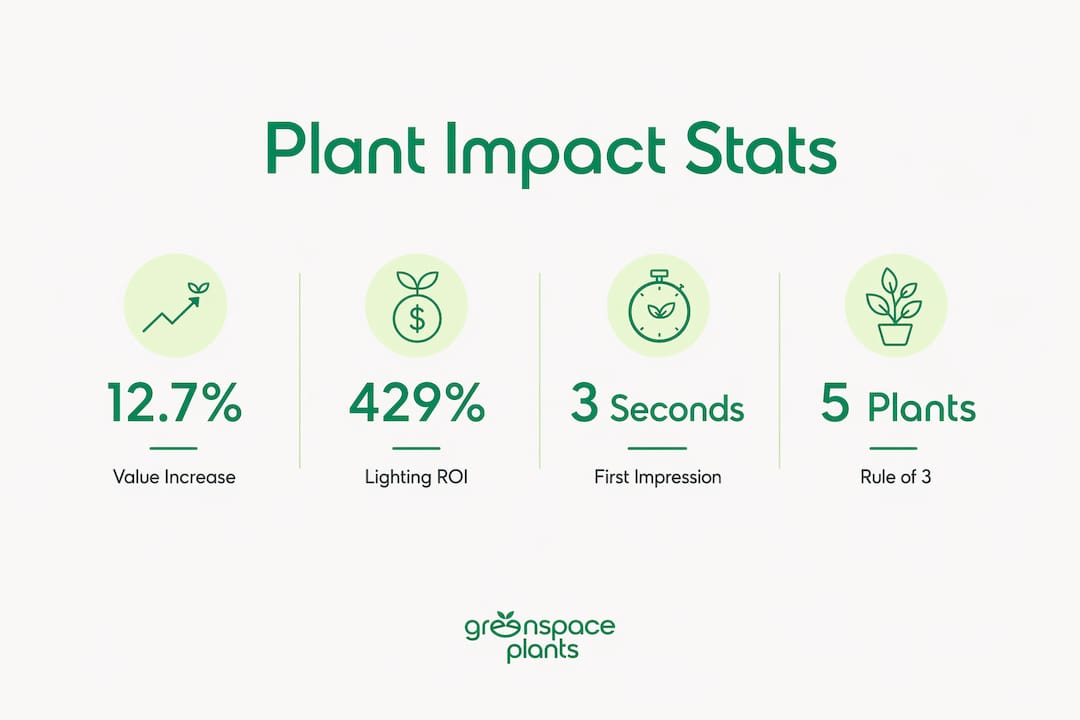
Plants are the single most powerful visual tool a property owner has for shaping how buyers, tenants, and visitors perceive a space before they ever step inside. The role of plants in property first impressions goes far beyond decoration. Greenery signals care, communicates quality, and triggers emotional responses that directly influence perceived value. Research confirms that quality landscaping can increase a property's perceived value by 5.5–12.7%, and in some cases up to 30% when conditions are significantly improved. That is not a cosmetic benefit. That is a financial one.
How do plants directly impact curb appeal and perceived property value?
The impact of landscaping on property value is measurable and well-documented. A $400,000 home can see an approximate $40,000 perceived value uplift from proper landscaping alone. That number reflects how quickly and powerfully the human brain assigns worth based on exterior cues.
First impressions form within 10 seconds of viewing a property's exterior. Buyers and visitors establish a mental price ceiling almost instantly, and landscaping is the primary driver of that calculation. Between 71% and 97% of real estate agents agree that curb appeal is critical to a successful sale. That level of professional consensus is rare in real estate.
The return on investment from specific plant-related projects is striking:
- Routine lawn care yields up to 217% ROI
- Planting beds return up to 421% on investment
- Outdoor lighting delivers up to 429% ROI
These figures put landscaping ahead of many interior renovations in pure financial return. A kitchen remodel rarely pays back at 421%. A well-designed planting bed often does.
The importance of curb appeal is not just about aesthetics. It is about the story your property tells before anyone opens a door. A clean, lush entry communicates that the owner is attentive. A neglected yard communicates the opposite, and buyers mentally add repair costs to their offer.
Pro Tip: Before listing or leasing a commercial property, invest in planting beds and lawn care first. These two categories consistently outperform other exterior upgrades in both buyer perception and measurable ROI.
What psychological mechanisms make plants effective first impression tools?
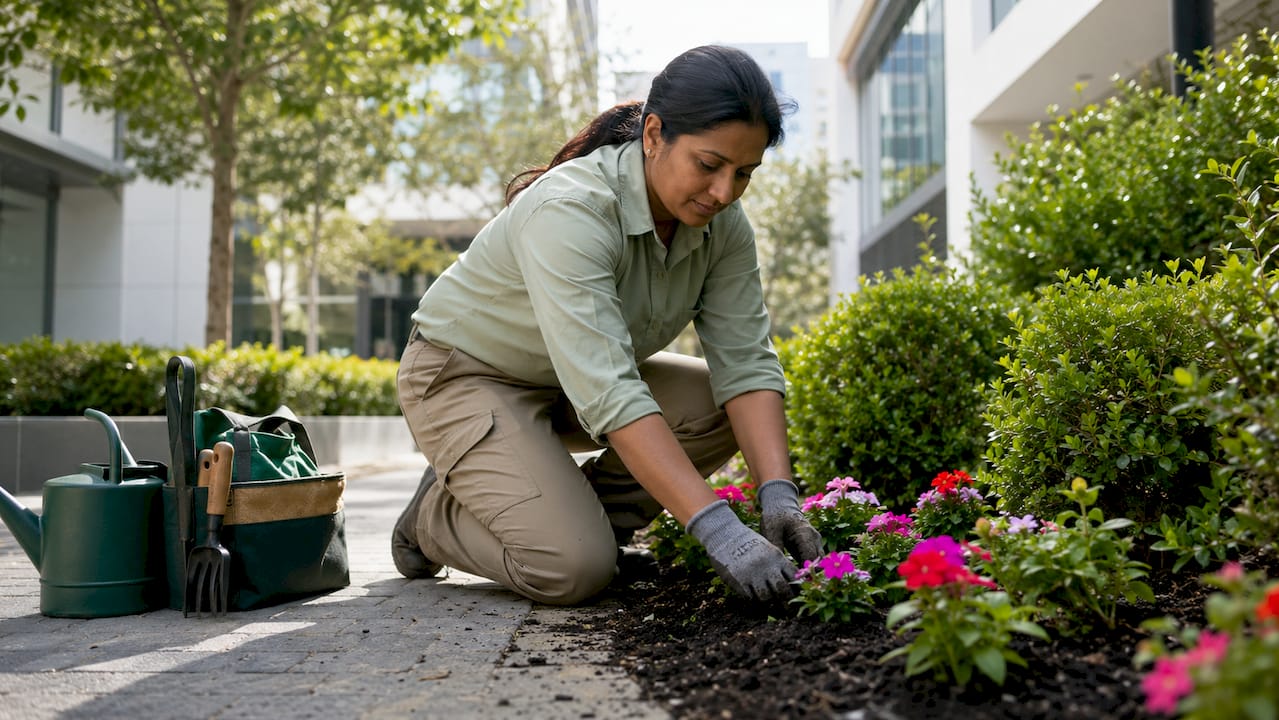
Plants work on the brain in ways that go deeper than visual preference. Color and spatial hierarchy in plant design guide emotional responses and direct visitor focus subconsciously. Warm-toned flowering plants near an entrance create a welcoming signal. Cool greens and structured hedges communicate calm and order. These are not accidental effects. They are design principles with psychological grounding.
Well-maintained plantings also function as trust signals. A clean, landscaped entry tells buyers and tenants that the property has been cared for consistently. It removes the suspicion of hidden problems. Neglected landscaping does the opposite: it raises doubt and lowers price willingness before a single conversation happens.
Spatial hierarchy matters too. When plants are layered and pathways are clearly defined, visitors feel guided rather than confused. That sense of order reduces anxiety and increases comfort. A property that feels easy to navigate from the outside feels trustworthy from the inside.
"The primary goal of landscaping is to support and enhance the architecture, not overwhelm it. Simplicity drives value. Overplanting creates visual chaos that undermines the very impression you are trying to build."
Avoiding overcrowding is as important as planting at all. Too many species, too many colors, and too many competing focal points create a yard that feels chaotic rather than curated. The brain reads chaos as neglect, even when the opposite is true.
What expert landscaping techniques maximize plant impact on first impressions?
Professional landscaping follows a set of design principles that separate polished results from well-intentioned but ineffective ones. Applying these principles gives your property a finished, intentional look that buyers and visitors recognize immediately, even if they cannot name why.
Layering for depth and professionalism
Layering plants by height creates visual depth and a sense of professional design. The standard approach places tall trees at the back, medium shrubs in the middle, and low groundcovers at the front. This stratification is what separates a DIY yard from a professionally designed one. It also reduces maintenance challenges by giving each plant adequate light and space.
The rule of 3 for visual rhythm
Repeating 3–5 plant varieties in clusters creates a calm, intentional visual rhythm. This principle, known as the Rule of 3, prevents the visual noise that comes from planting one of everything. It also simplifies maintenance, since you are managing fewer species in larger groups. Buyers perceive repetition as care and intention.
Lighting as a first impression extender
Path and entrance lighting extends a positive first impression beyond daylight hours. Evening showings, late arrivals, and nighttime drive-bys all benefit from well-placed lighting. It signals safety, adds a premium feel, and highlights the plants you have already invested in. Lighting is consistently underused and consistently high-return.
Here is a quick comparison of landscaping techniques by impact level:
| Technique | Visual Impact | Maintenance Demand | ROI Category |
|---|---|---|---|
| Layered planting | High | Medium | Long-term value |
| Rule of 3 clusters | High | Low | Immediate perception |
| Seasonal color plants | Medium | Medium | Buyer emotion |
| Path and entrance lighting | High | Low | Evening impressions |
| Defined pathways | Medium | Low | Spatial clarity |
Pro Tip: Choose one or two seasonal flowering plants and repeat them in clusters of three along your entry path. This single change creates rhythm, color, and a sense of deliberate care without requiring a full redesign.
How do plants work differently in commercial versus residential settings?
The benefits of greenery in real estate apply to both property types, but the strategy shifts depending on who you are trying to impress and what you want them to feel.
Residential and commercial properties require different planting approaches to optimize appeal and maintenance. Here is how those differences play out in practice:
Residential priorities:
- Warm, personality-driven plantings that reflect the homeowner's character
- Seasonal color near the front door to create an inviting focal point
- Lawn health as the baseline signal of property care
- Cottage-style or structured gardens depending on architectural style
Commercial priorities:
- Functional, safe plant arrangements that do not obstruct sightlines or signage
- Low-maintenance species that look polished year-round without constant intervention
- Planters and green walls near entrances to create a welcoming, professional feel
- Consistent, repeatable plant choices that reinforce brand identity
The psychological goal differs too. Residential buyers want to feel at home. Commercial tenants and clients want to feel confident. Plants serve both goals, but the species, scale, and placement shift accordingly.
For commercial property managers, the live plant ROI extends beyond curb appeal into interior environments. A building that feels alive and well-tended from the outside, and continues that experience inside, creates a consistent trust signal throughout the entire visitor experience.
| Property Type | Key Plant Goal | Recommended Approach |
|---|---|---|
| Residential | Warmth and personality | Seasonal color, layered beds, lawn care |
| Commercial | Professionalism and safety | Low-maintenance species, planters, green walls |
| Mixed-use | Dual appeal | Structured greenery with welcoming focal points |
Pro Tip: For commercial entries, choose two or three species that look good in all seasons and repeat them consistently. Predictability reads as professionalism in a commercial context.
Key Takeaways
Plants are the highest-return exterior investment a property owner can make, combining measurable value uplift with psychological trust signals that influence buyer and visitor decisions within seconds.
| Point | Details |
|---|---|
| Plants raise perceived value | Quality landscaping increases perceived property value by 5.5–12.7%, sometimes reaching 30%. |
| First impressions form fast | Buyers establish a mental price ceiling within 10 seconds of viewing a property's exterior. |
| ROI exceeds most renovations | Planting beds return up to 421% and outdoor lighting up to 429% on investment. |
| Design principles matter | Layering, the Rule of 3, and lighting separate professional results from DIY outcomes. |
| Strategy varies by property type | Residential plantings prioritize warmth; commercial plantings prioritize function and consistency. |
What I have learned from watching plants change how people feel about a space
After working with property owners and business managers across Toronto, Vancouver, and Calgary, one pattern stands out clearly: the properties that make the strongest first impressions are rarely the ones with the most plants. They are the ones with the most intentional plants.
I have seen beautifully renovated commercial lobbies lose their impact because the exterior entry was bare or cluttered. And I have seen modest residential properties command strong buyer interest simply because the front beds were clean, layered, and consistent. The plants themselves were not expensive. The thinking behind them was what made the difference.
Lighting is the most undervalued element in this conversation. Property owners invest in plants and then let them disappear at dusk. A single well-placed uplighter on a feature tree, or path lights along an entry walkway, extends the impression you have worked to build into every hour of the day.
Seasonal planning is the other gap I see consistently. A planting scheme that looks great in june can look tired by september. Building in at least one seasonal rotation, even just swapping out annual color plants, keeps the property looking intentional year-round. That consistency is what sustains the trust signal over time, not just during a single showing or visit.
The simplest advice I can offer: plant less than you think you need, and maintain it better than you think you have to. That combination outperforms every elaborate design I have ever seen.
— Nicole
How Greenspace Plants brings expert plant design to your property
If you manage a commercial space and want the kind of plant presence that creates a strong, lasting first impression, Greenspace Plants makes that straightforward. We design, install, and maintain indoor and outdoor plantscapes for offices, restaurants, and commercial properties across Toronto, Vancouver, and Calgary.
Our Greenspace+ service covers everything for a fixed monthly fee: plant selection, installation, regular maintenance, and replacements when needed. No upfront costs, no long-term commitments, and no guessing about whether your plants are healthy. You can explore our indoor plant rental programs or browse our patio and outdoor plant services to find the right fit for your property. We handle the plants so you can focus on everything else.
FAQ
How much can landscaping increase a property's value?
Quality landscaping increases perceived property value by 5.5–12.7%, with improvements reaching up to 30% in cases where the exterior was significantly upgraded.
How quickly do buyers form a first impression of a property?
Buyers form a first impression within 10 seconds of viewing a property's exterior, making curb appeal the fastest-acting factor in buyer perception.
What landscaping project has the highest ROI?
Outdoor lighting delivers up to 429% ROI, followed closely by planting beds at 421%, making both strong priorities for property owners focused on value.
What is the Rule of 3 in landscaping?
The Rule of 3 means repeating 3–5 plant varieties in clusters throughout a landscape to create visual rhythm, reduce chaos, and signal intentional design to buyers and visitors.
Do plants matter as much for commercial properties as residential ones?
Plants matter equally for commercial properties, but the goal shifts from warmth to professionalism. Commercial entries benefit from low-maintenance, consistent plantings that signal safety and reinforce brand credibility.