
Place one low-light, low-maintenance plant at the top-right corner of your monitor and follow a twice-monthly care check to get the real benefits of desk greenery without adding effort to your day. That's the whole plan. Here's how to execute it:
- Pick one plant from this shortlist: snake plant, pothos, ZZ plant, peace lily, spider plant, small succulent, heartleaf philodendron, or a compact herb like lavender.
- Place it within your direct sightline, not across the room. Research from the University of Readingclean%20version%20FINAL%20with%20tables%20and%20figures%20included.pdf) confirms that plants in your immediate workspace produce stronger perceived productivity gains than plants placed only in break rooms.
- Set a reminder every two weeks to check soil moisture, wipe leaves, and rotate the pot a quarter turn.
Snake plants and ZZ plants need almost nothing. Pothos and philodendrons are slightly thirstier but still forgiving. Herbs need the most attention and the brightest light.
Table of Contents
- Which desk plants work best for your space?
- What will desk plants actually do for you — and what they won't
- Pet safety, allergies, and office etiquette for desk plants
- How much does it cost, and what are your maintenance options?
- Key Takeaways
- What we've learned from greening commercial desks
- Useful sources and further reading
- Greenspace Plants brings professional greenery to your office
Which desk plants work best for your space?
Not every plant survives a windowless cubicle, and not every desk has room for a trailing pothos. The table below maps the eight most recommended office desk plants against the dimensions that actually matter for a desk setup.
| Plant | Light tolerance | Maintenance | Desk scale | Pet-safe? | Air/humidity effect |
|---|---|---|---|---|---|
| Snake plant (Dracaena trifasciata) | Low to bright indirect | Very low | Medium–tall | Toxic to cats/dogs | Modest humidity boost |
| Pothos (Epipremnum aureum) | Low to bright indirect | Low | Trailing/compact | Toxic to cats/dogs | Mild VOC absorption |
| ZZ plant (Zamioculcas zamiifolia) | Low to medium | Very low | Medium | Toxic to cats/dogs | Minimal |
| Peace lily (Spathiphyllum spp.) | Low to medium indirect | Low–medium | Small–medium | Toxic to cats/dogs | Mild humidity boost |
| Spider plant (Chlorophytum comosum) | Medium to bright indirect | Low | Small–medium | Pet-friendly | Mild air improvement |
| Succulents (Haworthia/echeveria) | Bright indirect | Very low | Very small | Generally pet-friendly | Minimal |
| Heartleaf philodendron | Low to bright indirect | Low | Trailing/compact | Toxic to cats/dogs | Mild VOC absorption |
| Herbs (rosemary, lavender) | Bright indirect to full | Medium–high | Small | Generally pet-friendly | Scent/humidity |
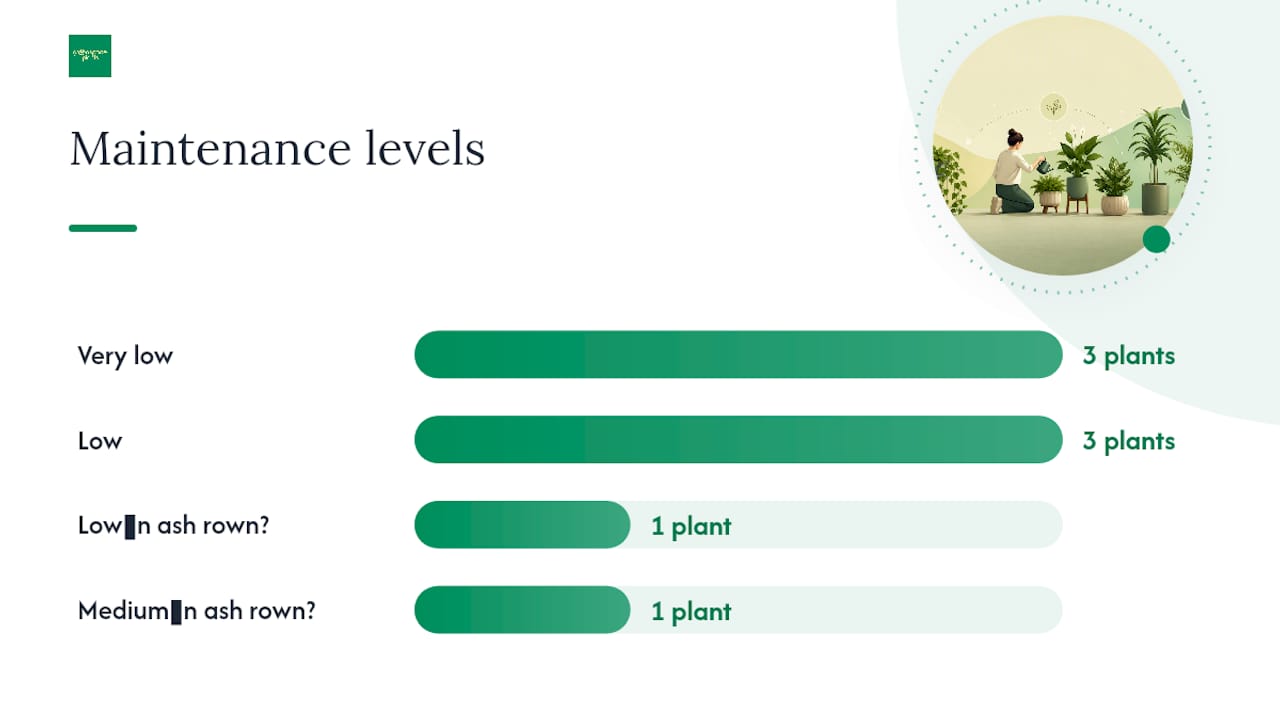
A few things stand out here. Succulents and Haworthia are the only group that genuinely thrives under a south-facing window with direct afternoon sun. Peace lilies and spider plants are the safest bets for shared offices with pets or allergy-sensitive colleagues. Herbs look appealing but demand the most consistent light and water of any plant on this list.
What will desk plants actually do for you — and what they won't
Desk plants reliably improve perceived air quality, mood, and comfort. Large-scale air-purifying claims are more limited than popular articles suggest.
Three field experiments in the U.K. and the Netherlands found that offices enriched with plants showed improved perceived air quality, concentration, and workplace satisfaction compared with lean offices. A multi-site Dutch field study reported reduced complaints about dry air, improved sense of privacy, and greater workspace attractiveness after plants were introduced, with some effects strengthening over months.
What the research actually shows: A systematic review found VOC reductions of 50–70% for specific compounds in some lab studies. Real-world offices are larger and better-ventilated than lab chambers, so the practical air-cleaning effect of one or two desk plants is modest. The stronger, more consistent benefits are perceptual and psychological.
A 2024 PLOS ONE study found that different biophilic planting styles produce different emotional responses: tropical designs tended to increase positive mood, while Japanese-style greening reduced negative emotions. Cognitive performance differences were limited after short exposures, but mood effects were measurable.
Realistic expectations for your desk:
- Perceived air quality and comfort improve, especially in dry or stuffy offices.
- Mood and sense of calm tend to improve, particularly with lush tropical species.
- Concentration benefits are real but modest and build over weeks, not days.
- Significant VOC removal requires many plants in a sealed environment, not one pothos.
- Plants will not cure allergies and may aggravate them if soil grows mold.
To track your own results, do a simple weekly check-in: rate your perceived air quality, focus, and comfort on a 1–5 scale. A basic humidity sensor ($10–$20 at most hardware stores) lets you confirm whether your plants are actually raising moisture levels.
Pet safety, allergies, and office etiquette for desk plants
Check pet-safety and your workplace policy before placing any plant in a shared space. The ASPCA maintains a searchable toxic-plant database that covers cats, dogs, and horses by species name.
Safety checklist for shared offices:
- Toxic to pets: Snake plant, pothos, ZZ plant, peace lily, heartleaf philodendron. Keep these out of reach or avoid them entirely in pet-friendly offices.
- Generally pet-friendly: Spider plant, Haworthia, echeveria, rosemary, lavender.
- Allergy-aware choices: Avoid flowering plants with heavy pollen (peace lily blooms can trigger reactions). Spider plants and ZZ plants are among the least allergenic options.
- Label your plants in open-plan pods so colleagues know what they are and whether they're toxic.
For open-office environments, a few etiquette rules keep plants from becoming a facilities issue:
- Ask your facilities team before adding plants. Some buildings prohibit soil-based plants due to pest or water-damage concerns.
- Keep plants within your assigned desk footprint. Trailing vines that extend into a neighbor's space are a common complaint.
- Own your maintenance. If a plant dies or attracts pests, it becomes a shared problem fast.
How much does it cost, and what are your maintenance options?
You can start a desk plant setup for $30–$75, covering one or two plants, basic pots with saucers, and a bag of potting mix. That's the DIY entry point. A monthly professional maintenance service runs higher, but it removes the guesswork entirely.
Implementation timeline:
Maintenance options compared:
- Professional plantscape service: A full-service provider handles design, installation, regular maintenance, and plant replacement under a single monthly agreement. For businesses managing multiple desks or open-plan floors, this is the most reliable path to consistent indoor plant health.
Greenspace Plants offers exactly this through its Greenspace+ program: a fixed monthly fee covers design, installation, ongoing maintenance visits, and plant replacements with a healthy-plant guarantee. No upfront costs, no long-term lock-in. For office managers overseeing a full floor, that structure is far more practical than tracking individual plant care across dozens of desks. See the plant rental service overview for details on how the program works.
Key Takeaways
Placing one or two plants directly at your desk, not just in a break room, produces the most consistent improvements in perceived air quality, comfort, and focus.
| Point | Details |
|---|---|
| Start at your desk | Plants in your immediate workspace outperform break-room plants for perceived productivity and comfort. |
| Match plant to light | Test your shadow before buying: sharp shadow = bright indirect, faint shadow = low light, no shadow = grow light needed. |
| Water less than you think | Overwatering is the top cause of desk-plant failure; most plants need water every 1–3 weeks, not daily. |
| Benefits are real but perceptual | Field studies confirm mood, comfort, and perceived air quality improve; dramatic VOC removal requires far more plants than a desk setup provides. |
| Greenspace Plants for offices | Greenspace+'s fixed monthly service covers design, installation, maintenance, and replacements across commercial spaces in Toronto, Vancouver, and Calgary. |
What we've learned from greening commercial desks
The most common mistake we see in commercial installs isn't choosing the wrong plant. It's placing plants where they look good on a floor plan rather than where workers actually sit.
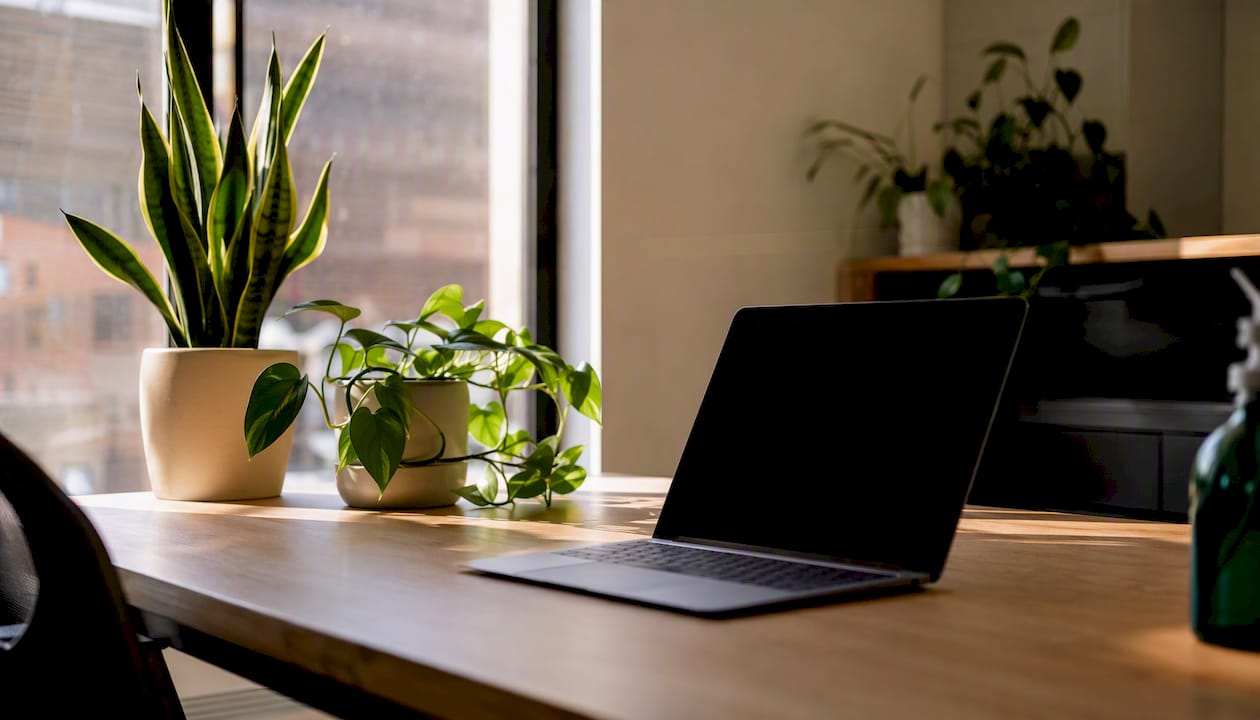
A biophilic design audit should start with sightlines, not aesthetics. Where does each person's eye rest during a focused work session? That's where the plant goes. A snake plant behind a monitor that nobody faces is decoration. The same plant placed within a worker's natural field of view is a genuine wellbeing intervention.
We've also seen the lean-office argument used to resist plants entirely, with managers citing tidiness or brand standards. The field evidence runs the other way: greened offices consistently outperform lean ones on perceived air quality and concentration, even when the plant density is modest. A modest number of plants relative to workstations was enough to show measurable effects in some experiments.
For businesses, the maintenance question is where most DIY programs collapse. A single plant on a home desk is manageable. Thirty plants across an open-plan floor, maintained by whoever remembered to water them last, is a liability. That's the gap Greenspace Plants' Greenspace+ program was built to close: professional care, guaranteed healthy plants, and no burden on your team. We also collaborate closely with interior designers to make sure plant placement supports the broader spatial vision, not just fills empty corners. See how we work with designers for examples of that process.
Start small. Prioritize your sightline. Then scale when you see the difference.
Useful sources and further reading
The studies and resources below support the claims in this article. Each is linked to its original source.
- Effects of indoor plants on office workers: a field study in multiple Dutch organizations — PMC
- Enhancing employees’ performance and well-being with nature exposure embedded office workplace design — ScienceDirect
- Biophilic Design in the Workplace Guide | Microhabitat
- Best office plants for new year | Gardening Know How
For commercial plant design, installation, and ongoing maintenance, visit Greenspace Plants.
Greenspace Plants brings professional greenery to your office
Managing a single desk plant is straightforward. Managing a full office floor's worth of plants, consistently, without pulling your team away from their actual work, is a different challenge. Greenspace Plants solves that for commercial spaces in Toronto, Vancouver, and Calgary through its Greenspace+ program: one fixed monthly fee covers plant design, professional installation, scheduled maintenance visits, and guaranteed plant replacements. No upfront purchase, no long-term commitment, and no dead plants quietly embarrassing your reception area.
The interior plant services we provide are built around the same placement principles this article covers: plants where people actually sit, species matched to real light conditions, and care schedules that hold up over months, not just the first week after install. If you're an office manager, property manager, or interior designer ready to add greenery that stays healthy, request a consultation to get started.