
The most direct path to genuinely low-maintenance office plants is a full-service plantscaping subscription: a provider handles design, installation, scheduled maintenance visits, and guaranteed plant replacements, so your staff never touches a watering can. Request a pilot or quote from a provider offering an all-inclusive program like Greenspace+ to get started today. Field experiments confirm that plants improve perceived air quality and concentration within weeks, making the business case straightforward.
Key Takeaways
A full-service plantscaping subscription is the only reliable way to keep commercial office plants genuinely low-maintenance, because it transfers day-to-day care, replacement risk, and pest management entirely to the vendor.
| Point | Details |
|---|---|
| Low-maintenance = managed service | A plantscaping subscription (design, install, maintenance, replacements) removes plant care from staff entirely. |
| SLA and replacement guarantee | Require documented visit frequency and a written replacement policy before signing any contract. |
| Humidity and wellbeing benefits | Plants reduced cough and fatigue complaints in comparative office studies, indicating measurable wellbeing improvements. |
| Payback on vertical greening | A modeled vertical green installation with moderate sick-leave reductions can reach profitability within a few years. |
| Greenspace Plants next step | Request a no-cost site survey through Greenspace+ to pilot the all-inclusive program in your space. |
Table of Contents
- What "low-maintenance office plants" really means for commercial buyers
- Why the business case for office greenery is stronger than most managers expect
- What a full-service plantscaping program actually delivers
- How providers keep commercial installations genuinely low-maintenance
- Understanding pricing models and what drives your cost
- How to evaluate and choose the right plantscaping provider
- How Greenspace Plants delivers on the Greenspace+ promise
- Your 7-step checklist to request a pilot or quote
- What most managers get wrong about office plant programs
- Greenspace+ takes the work off your team's plate
- Sources
What "low-maintenance office plants" really means for commercial buyers
For a business decision-maker, "low-maintenance" has nothing to do with which species survives neglect. It means a managed commercial plantscaping program that removes day-to-day plant care entirely from your staff's responsibilities.
The core service elements that convert any plant into a low-upkeep asset for your facility are:
- Site survey and design tailored to your lighting, HVAC, and traffic patterns
- Professional installation with appropriate planters, irrigation, and placement
- Scheduled maintenance visits on a documented SLA cadence
- Guaranteed plant replacements when a specimen declines, at no extra charge
- Integrated Pest Management and seasonal refreshes built into the contract
Greenspace Plants delivers exactly this through Greenspace+: a fixed monthly subscription covering design, installation, ongoing maintenance, and guaranteed replacements, with no upfront costs and no long-term lock-in. It is the clearest example of the model described above.
Why the business case for office greenery is stronger than most managers expect
The benefits go well beyond aesthetics. Three field experiments in commercial offices found that enriching a lean office with plants improved perceived air quality, concentration, and objective productivity measures, with effects observable within weeks and sustained over months. That is a meaningful return on a recurring monthly service fee.
Humidity is the underappreciated mechanism. Indoor plants raise relative humidity, and a drier office correlates with more respiratory complaints. Studies cited in MDPI research on vertical indoor greening reported that foliage plants reduced cough complaints by around 37% and fatigue complaints by around 30% in comparative office settings.
A modeled example in the same MDPI paper found that vertical green installations of a moderate size with small sick-leave reductions can reach profitability within a few years.
For property managers, the tenant-experience angle is equally compelling. A cost-benefit analysis of commercial greening confirmed that greening is generally a feasible investment, with maintenance and plant-replacement costs as the primary variables affecting net present value. Control those two line items through a well-structured contract, and the economics hold. For a deeper look at productivity ROI, the numbers are worth reviewing before your next budget cycle.
What a full-service plantscaping program actually delivers
Knowing what to expect in a contract prevents scope creep and vendor misunderstandings. A well-structured program covers:
- Initial site survey assessing light levels, humidity, foot traffic, and planter placement options
- Custom design specifying plant selections, planter styles (standard, premium, luxury, or custom), and layout
- Professional installation including planter assembly, soil media, and initial plant conditioning
- Scheduled maintenance visits with documented frequency (weekly for large green walls, bi-weekly or monthly for smaller grouped arrangements, per professional maintenance guidance)
- Replacement guarantee covering any plant that declines between visits
- Pest management using Integrated Pest Management protocols
- Photo-logged inspection reports and an inventory record after each visit
- Seasonal refreshes to keep the installation looking current
The Landscape Ontario interior landscaping guide warns that infrequent service directly shortens plant lifespan. Visit frequency is not a soft preference; it is a hard operational variable that belongs in your SLA.
Pro Tip: Require a written replacement guarantee and a communication log for every maintenance visit before signing any contract. These two documents are your primary protection against a vendor who visits infrequently and replaces plants only when you complain.
How providers keep commercial installations genuinely low-maintenance
The "low-maintenance" outcome is engineered before a single plant enters your building. Providers who do this well make deliberate choices at three levels.
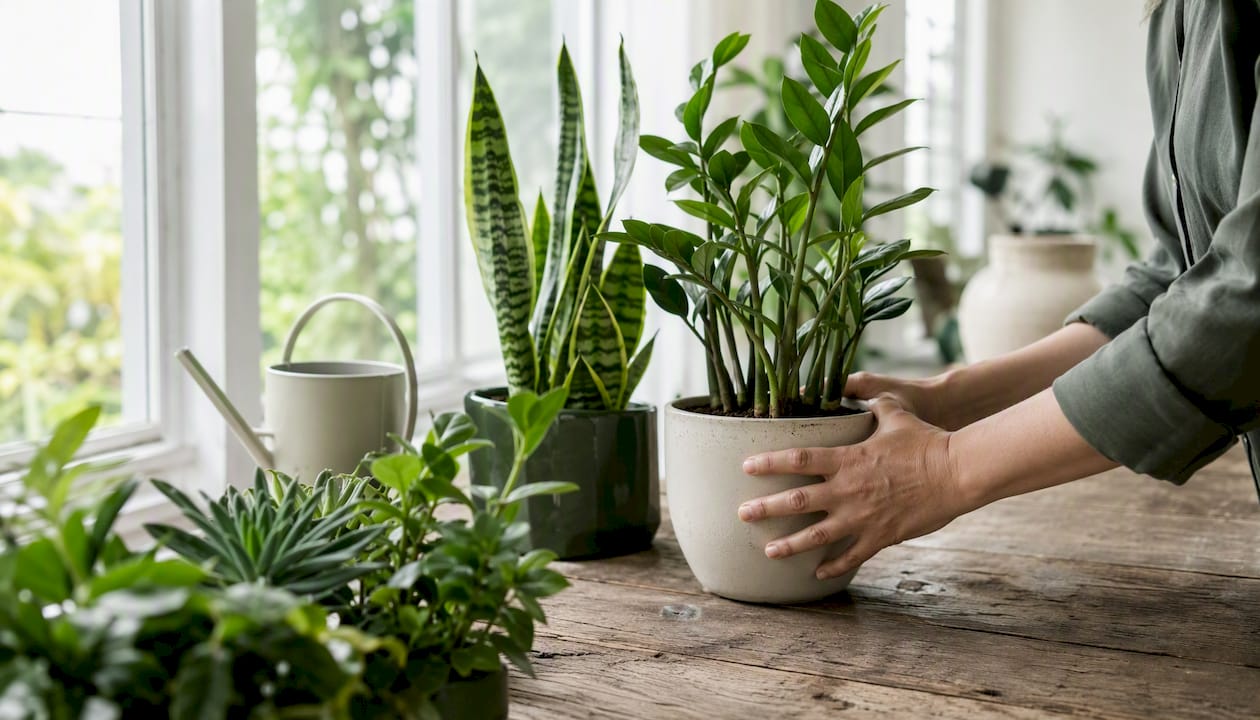
Plant selection is the first lever. Hardy, slow-growing species with drought-tolerant foliage and natural pest resistance require fewer touchpoints between scheduled visits. Choosing the wrong species for your light conditions is the single fastest way to inflate replacement costs.
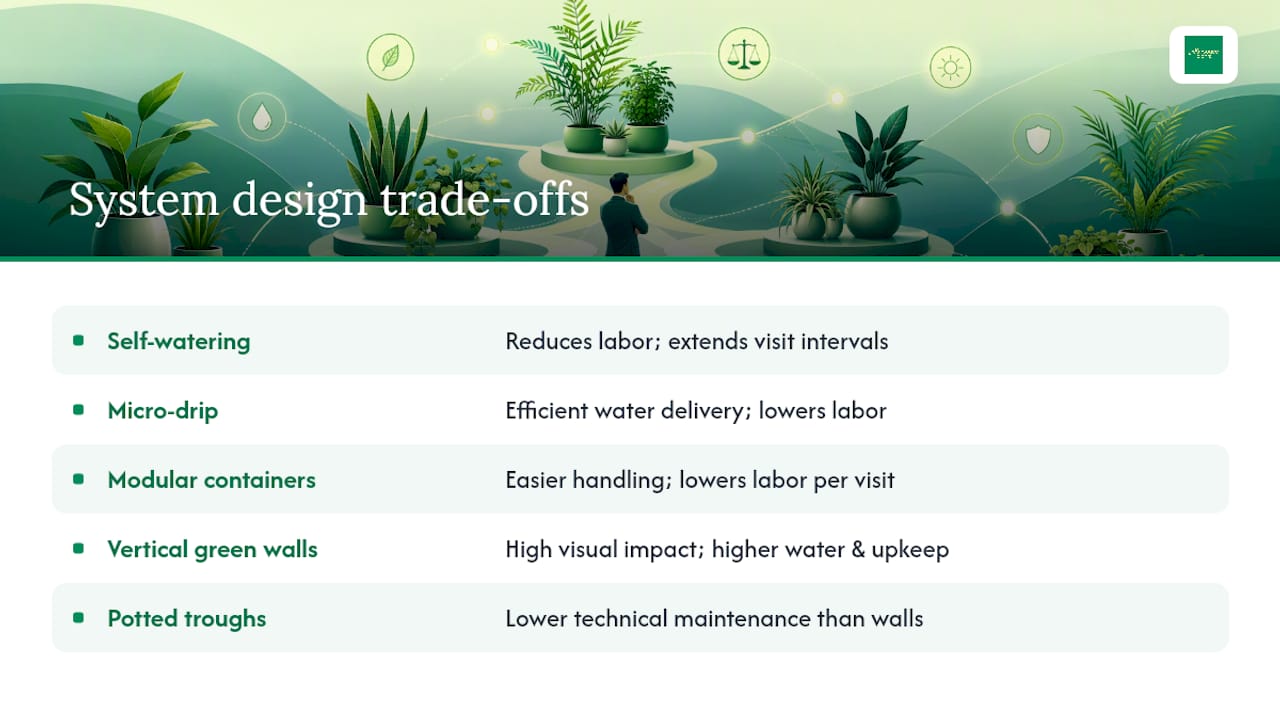
System design is the second. Self-watering planters, micro-drip irrigation, and modular containers reduce the labor required per visit and extend the interval between interventions. Vertical green walls deliver high visual impact per square foot of floor space, though they carry higher technical maintenance costs than potted trough systems. The MDPI vertical greening study noted that certain wall-system types consume more water and require more specialized upkeep, a trade-off worth discussing with your provider during the design phase.
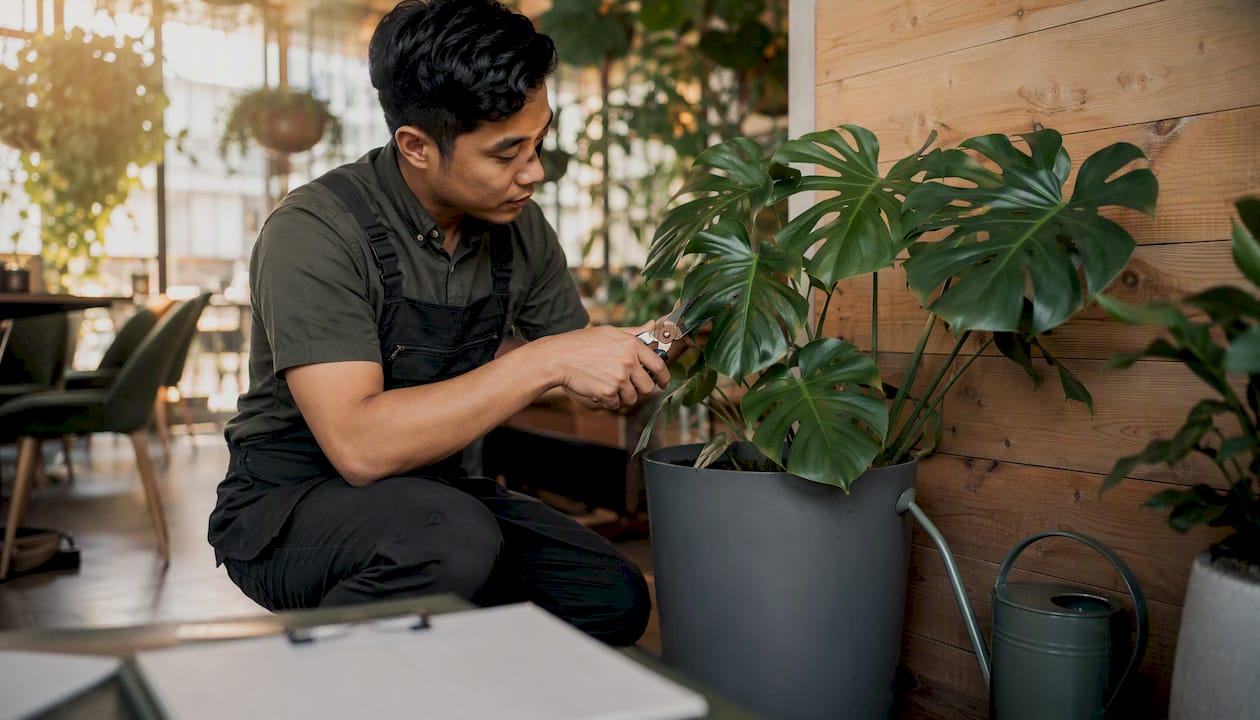
Preventive operations are the third. Scheduled pruning, proactive fertilizer dosing, and photo-logged inspections catch problems before they become replacements. A plant clinician who documents every visit is not just watering; they are running a proactive health program that keeps your replacement rate low and your costs predictable.
Pro Tip: Ask your provider what their average plant-replacement rate is per 100 specimens per year. A well-run program with good species selection and preventive care should keep that figure low. A high replacement rate is a direct signal of poor species selection or infrequent visits.
Understanding pricing models and what drives your cost
Two pricing shapes dominate the commercial plantscaping market.
All-inclusive monthly subscription (the Greenspace+ model): a fixed fee covers design, installation, maintenance, and replacements. No upfront capital outlay, predictable operating expense, and the vendor absorbs replacement risk. This is the right structure for most office and retail managers.
One-time purchase with optional maintenance: you own the plants and planters outright, then pay separately for maintenance visits. Lower monthly cost on paper, but replacement risk sits with you, and the cost-benefit research identifies maintenance labor and plant replacement as the most NPV-sensitive variables. Underestimating those costs is the most common budget error in commercial greening.
Key cost drivers to discuss with any vendor:
- Square footage of greened area and number of planter positions
- Planter tier (standard vs. premium vs. custom fabricated)
- Green wall vs. potted trough installation (walls carry higher technical maintenance)
- Irrigation system complexity
- Travel and labor for your specific location
- Replacement warranty level and response-time SLA
For guidance on scaling greenery across large commercial spaces, installation complexity is the dominant cost variable at enterprise scale.
How to evaluate and choose the right plantscaping provider
A vendor who looks good in a brochure may deliver inconsistent service once the contract is signed. Use this checklist to compare proposals on operational substance.
Credentials and operations to verify:
- Horticultural staff qualifications and training protocols
- Proof of liability insurance and bonded status
- Documented SLA with specific visit frequencies and response times
- Photo-reporting and inventory system for each maintenance visit
- Written replacement guarantee with defined response window
- Client portfolio with before-and-after photos from comparable commercial spaces
- References from current clients in your industry or building type
Questions to ask during the proposal stage:
- What is your average time to replace a failed plant after notification?
- How do you handle pest outbreaks between scheduled visits?
- Can we start with a pilot installation before committing to a full program?
- What does your maintenance visit documentation look like?
Red flags that should end the conversation:
- Vague or verbal-only replacement policy
- No client portfolio or before-and-after photos
- No written SLA with defined visit frequency
- Inability to provide proof of insurance
- No photo-logging or reporting after visits
The Landscape Ontario user guide specifically recommends requesting a maintenance schedule, warranty details, and a communication log as core procurement protections. Treat those three documents as non-negotiable before signing.
How Greenspace Plants delivers on the Greenspace+ promise
Greenspace Plants built Greenspace+ to answer every item on the checklist above. Here is what the program includes:
- Custom design and installation for offices, restaurants, retail spaces, showrooms, and managed properties
- Scheduled maintenance visits by trained plant technicians with photo-logged reports after every call
- Guaranteed plant replacements at no additional charge when a specimen declines
- Planter options across standard, premium, luxury, and custom-fabricated tiers
- Moss walls and green walls for high-impact vertical installations
- Fixed monthly fee with no upfront costs and no long-term commitment required
Pro Tip: Request a pilot installation in one zone of your space before rolling out to the full floor. A four-to-six-week pilot gives you real data on visit frequency, replacement rate, and staff response before you commit to a broader program.
Greenspace Plants serves commercial clients across Toronto, Vancouver, and Calgary. View the client look-book for before-and-after portfolio evidence across office, restaurant, and retail environments.
Your 7-step checklist to request a pilot or quote
- Define your scope. Identify the zones you want greened, approximate square footage, and any specific aesthetic or branding requirements.
- Schedule a site survey. Share floor plans, photos, and information on existing lighting, HVAC, and hours of operation with your shortlisted vendors.
- Request the SLA in writing. Ask for documented visit frequency, response time for plant failures, and what the replacement guarantee covers.
- Confirm insurance and credentials. Verify liability insurance, bonded status, and horticultural staff qualifications before advancing any vendor.
- Review the portfolio. Ask for before-and-after photos from spaces comparable to yours in size and use type.
- Request pilot terms. Negotiate a four-to-six-week pilot in one zone with clear success metrics before committing to a full program.
- Sign the trial or subscription. Once the pilot validates the service model, convert to a full subscription with the SLA terms already negotiated.
Minimum documentation to collect before signing: site photos, floor plan, hours of operation, existing lighting levels, and HVAC specifications. These give your provider everything needed to design a program that stays genuinely low-maintenance from day one.
What most managers get wrong about office plant programs
The conventional wisdom says the hard part is choosing the right plant. After working with commercial clients across offices, restaurants, and retail spaces, we see the opposite: species selection is the easy part. The hard part is the contract.
Most plant programs fail not because a pothos died, but because the replacement policy was vague, the visit frequency was too low, or no one documented what happened between calls. A vendor who visits monthly and replaces plants only when a client complains is not running a maintenance program. They are running a reactive cleanup service.
The research supports a proactive model. Field experiments show that plant benefits appear within weeks of installation and sustain over months, but only when the installation stays healthy. A declining plant does not just look bad; it erodes the wellbeing and air-quality benefits you paid for.
Our advice: spend less time debating species and more time auditing the SLA. A well-written replacement guarantee and a documented visit schedule are worth more to your facility than any individual plant choice.
Greenspace+ takes the work off your team's plate
Greenspace Plants offers a concrete alternative to managing plant upkeep internally: a fixed monthly indoor plant rental program that covers everything from design through guaranteed replacements, with no capital outlay and no long-term commitment.
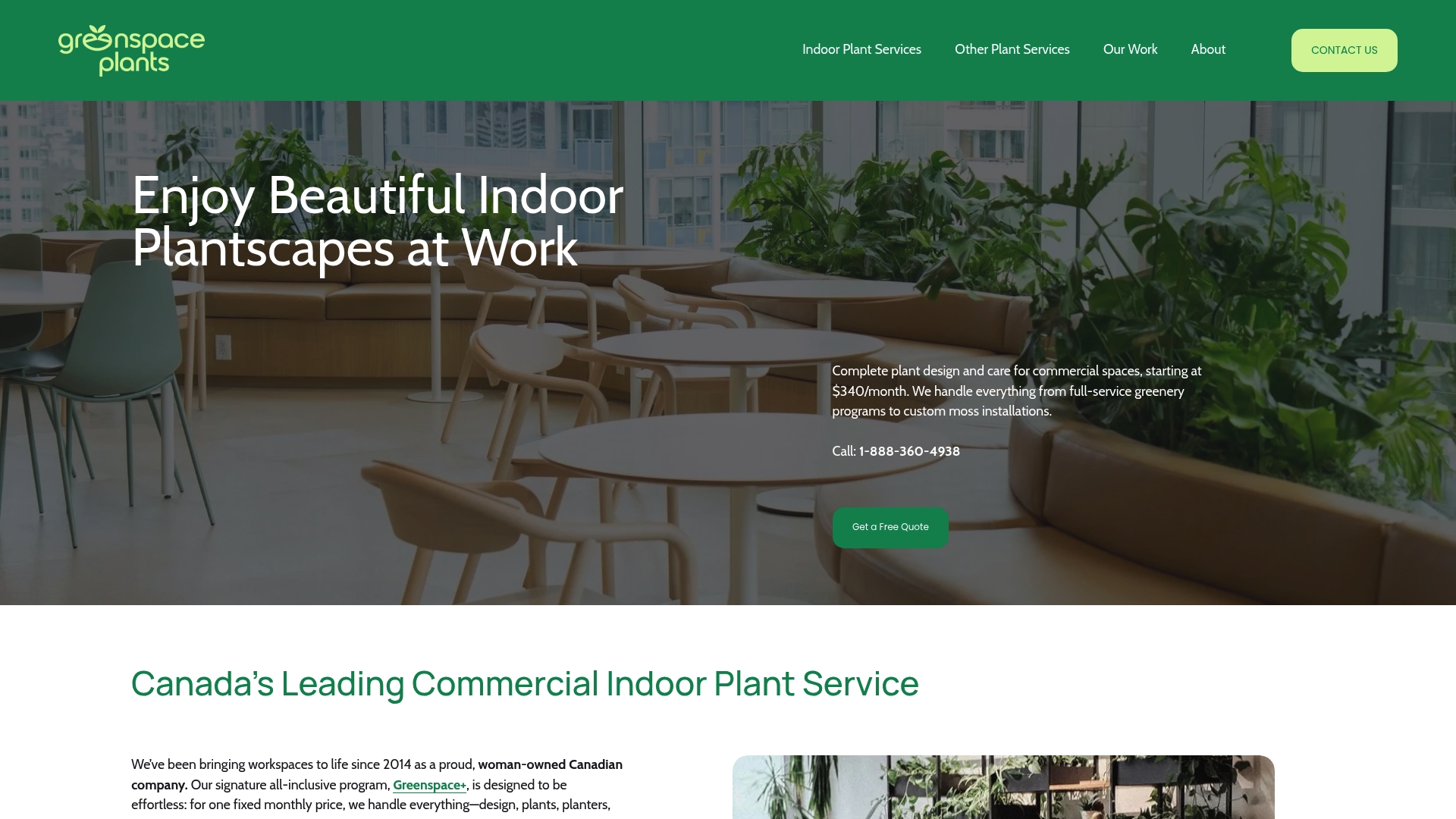
Your team gets a professionally maintained, always-healthy installation. We handle every scheduled visit, every replacement, and every pest issue before you notice it. For offices, restaurants, and retail spaces across Toronto, Vancouver, and Calgary, Greenspace+ removes plant maintenance from your facilities checklist entirely.
Ready to see what it looks like in your space? Request a pilot or quote and we will schedule a site survey at no cost.
Sources
The following sources informed this article and are worth reviewing for procurement decisions:
- Indirect Economic Effects of Vertical Indoor Green in the Context of Reduced Sick Leave in Offices
- Evaluating the economic sustainability of commercial complex greening based on cost-benefit analysis: A case study of Singapore’s Shaw center
- The Relative Benefits of Green Versus Lean Office Space: Three Field Experiments
- Interior landscaping user guide – Landscape Ontario