
Moss walls need very little maintenance if they're preserved, and consistent environmental care if they're living. That's the whole answer in one sentence, but it's worth unpacking because the two types get confused constantly, and treating one like the other is the fastest way to ruin an installation.
Preserved moss, the type in most offices, restaurants, and homes, has been stabilized with a glycerin-based solution and no longer needs water, sunlight, or soil. It typically holds its color and texture for 3 to 10 years depending on the moss species and how well it's protected from humidity swings and direct light, according to manufacturer lifespan data from BEMOSS. Living moss walls are a different animal entirely. They're still metabolizing, still photosynthesizing, and still need the humidity, light, and moisture that kept them alive in the forest.
Here's what to do in the next 48 hours if you're not sure what you're dealing with or whether you've been caring for it correctly:
- Check whether anything has been misting or watering the wall. If so, and the moss feels dry and papery to the touch, it's likely preserved, and you need to stop watering immediately.
- Look for direct sunlight hitting any section of the wall. UV exposure is the number one cause of premature fading in preserved installations.
- Place a hygrometer near the wall for a few days. Preserved moss tolerates a wide humidity range, but living moss wants stable air, generally in the 50–70% range.
Key Takeaways
Preserved moss walls need dry cleaning and stable humidity, not water, while living moss walls need consistent humidity, light, and watering to stay healthy for years.
| Point | Details |
|---|---|
| Never water preserved moss | Water washes away preservatives and dyes and can cause mold or permanent color loss. |
| Watch humidity, not just looks | Keep preserved walls in 40 to 60% humidity and living walls in a stable 50 to 70% range. |
| Dust dry, not wet | Use a cool hair dryer, soft brush, or low-suction vacuum, never sprays or damp cloths. |
| Diagnose before you fix | Trace mold, fading, or shedding back to humidity, light, or ventilation before patching anything. |
| Call a pro for large damage | Widespread fading, backing failure, or spreading mold call for Greenspace Plants' maintenance program. |
Table of Contents
- Moss Wall Maintenance Checklist for Daily, Weekly, and Seasonal Care
- Preserved Versus Living Moss Walls: Why the Difference Changes Everything
- How to Care for a Preserved Moss Wall Without Damaging It
- Caring for a Living Moss Wall: Humidity, Light, and Watering
- Troubleshooting Common Moss Wall Problems
- What Moss Wall Maintenance Tools and Repairs Actually Cost
- When to Call a Professional for Moss Wall Repair
- What We See Go Wrong With Moss Walls, and the One Habit That Fixes It
- Book a Professional Moss Wall Assessment With Greenspace Plants
- Frequently Asked Questions About Moss Wall Maintenance
- Sources
Moss Wall Maintenance Checklist for Daily, Weekly, and Seasonal Care
You don't need a maintenance manual to keep a moss wall looking good. You need a rhythm. Here's the cadence we recommend to clients, broken down by how often you should actually be looking at the wall versus doing something to it.
Daily or weekly (a glance, nothing more):
- Scan for obvious color changes, especially yellowing or a chalky, bleached patch near windows or light fixtures.
- Check for visible dust buildup, which shows up faster in high-traffic hallways and near HVAC vents.
- Confirm no one has decided to "water it" out of habit. This happens more often than you'd think, especially with new staff or well-meaning cleaning crews.
Monthly or quarterly (a closer look):
- Do a gentle dust removal pass using dry methods only (details below).
- Read your hygrometer and log the number if you're tracking trends.
- Inspect the backing and edges for lifting, warping, or gaps, which usually signal moisture intrusion behind the panel.
Seasonal adjustments:
- Winter heating dries indoor air fast, which is actually fine for preserved moss but can stress living installations. Increase humidifier output near living walls when your thermostat kicks on for the season.
- Summer HVAC changes shift airflow patterns. Walk the room and feel for a direct vent blast hitting the wall. If it does, redirect the vent or reposition the installation.
Pro Tip: Never place a humidifier directly facing a moss wall, even a living one. The goal is ambient humidity in the room, not a localized moisture blast that soaks one section of the panel and leaves the rest dry. Aim it across the room instead.
Preserved Versus Living Moss Walls: Why the Difference Changes Everything
The single biggest mistake we see is someone treating a preserved wall like a houseplant, or a living wall like static décor. The care requirements aren't just different, they're nearly opposite.
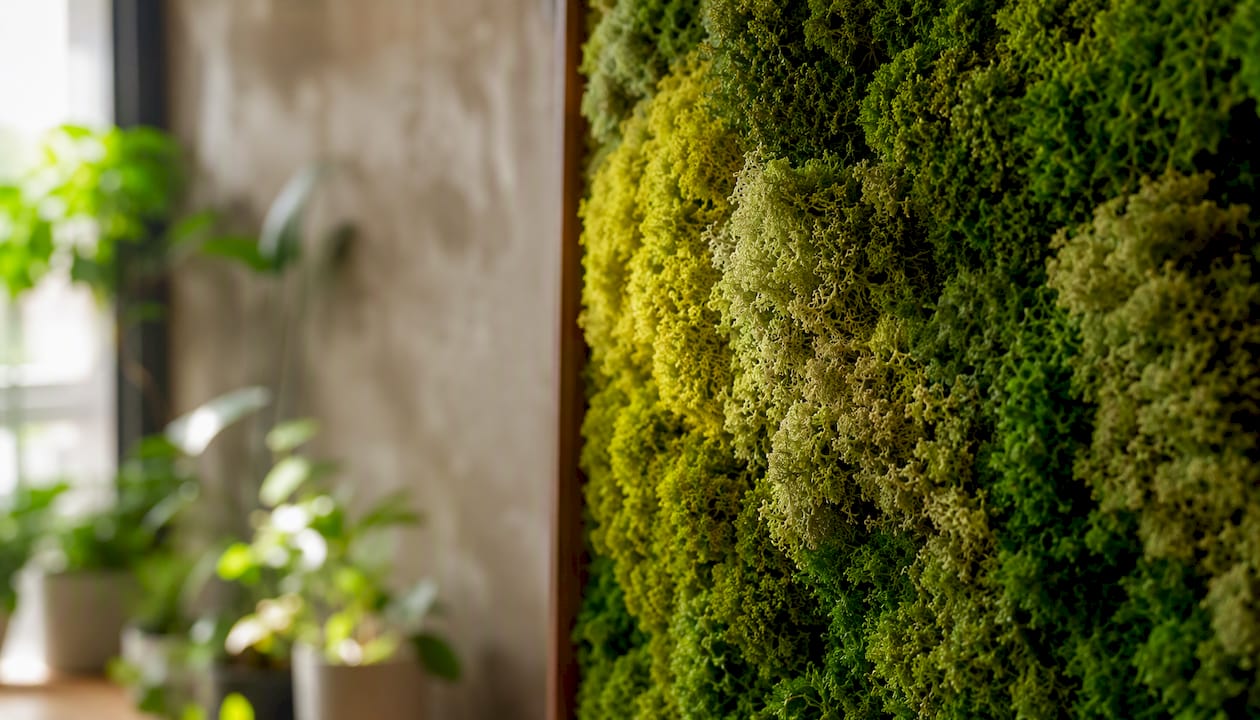
Preserved moss has gone through a stabilization process that replaces the moisture inside plant cells with a glycerin solution. Mosses are non-vascular plants that normally absorb moisture directly from the surrounding air, which is exactly why living moss depends so heavily on humidity. Once preserved, that mechanism is essentially switched off. The moss no longer takes in ambient moisture, which is also why reintroducing water causes problems instead of helping.
| Factor | Preserved moss | Living moss |
|---|---|---|
| Watering | Never | Regular misting or substrate watering |
| Light needs | Avoid direct sun; ambient light is fine | Bright indirect or full-spectrum grow light |
| Humidity tolerance | Wide range, ideally 40 to 60% | Narrow range, ideally 50 to 70% |
| Maintenance frequency | Quarterly to annual dusting | Weekly monitoring, ongoing care |
| Visible lifespan | 3 to 10 years depending on species | Indefinite with consistent care, but fragile to neglect |
If you inherited a wall and don't know which type it is, touch it. Preserved moss feels dry, slightly springy, and stays exactly the same shade day to day. Living moss feels cool and faintly damp, and you'll notice subtle color shifts as light and humidity change through the week. When in doubt, do not mist it. You can always add water later if it turns out to be living; you can't undo water damage on preserved moss.
How to Care for a Preserved Moss Wall Without Damaging It
Preserved moss maintenance is almost entirely about what you don't do. Water is the enemy here, full stop, because it can wash away the preservative solution and the dyes that give the moss its color and flexibility.
Placement matters more than most people realize. Keep preserved walls away from direct sunlight, heating vents, radiators, and any area with steam exposure, like the wall directly outside a commercial kitchen or a spa treatment room. Indoor humidity between 40% and 60% keeps preserved moss supple; anything drier for extended periods can make it brittle.
Safe cleaning methods:
- Use a cool setting hair dryer held a foot or two away to blow dust off the surface. Never use heat, which can accelerate fading.
- Run a soft-bristle brush lightly across the surface for stuck-on dust or cobwebs.
- If you have a handheld vacuum, use the lowest suction setting with a brush attachment, and never let the nozzle make direct contact with the moss.
Skip anything wet. No spray bottles, no damp cloths, no steam cleaners. Dry cleaning methods are the only safe option for preserved installations, and that rule doesn't bend for stubborn dust.
Pro Tip: If a section has been accidentally misted, don't panic and don't try to dry it with more heat right away. Isolate that section from airflow disruption, let it air dry naturally, and check it again in 48 hours. Reaching for a hair dryer on a wet spot can spread moisture into the backing.
Small shedding and bald patches are repairable without replacing an entire panel:
- Gather a small amount of matching preserved moss and a craft-safe adhesive (many installers use a low-VOC hot glue or a specialized moss adhesive).
- Trim the damaged area lightly to create a clean edge rather than a ragged one.
- Apply a thin layer of adhesive to the backing, not the moss itself.
- Press the replacement moss into place and hold for the manufacturer's recommended set time.
- Blend the edges with your fingers so the patch doesn't read as an obvious seam.
Fading is a slower problem, and it's mostly UV driven. If a wall gets partial sun exposure, expect the sun-facing section to fade faster than the rest, sometimes within a year or two, versus the 4 to 10 year range you'd otherwise expect depending on species. Dye touch-ups can restore color, but they're a job best left to someone who's matched moss tones before. A full panel replacement is usually only necessary when large sections have both faded and become physically brittle at the same time.
Caring for a Living Moss Wall: Humidity, Light, and Watering
Living moss walls are lower maintenance than most tropical houseplants, but they're not maintenance-free, and the margin for error on humidity is tighter than people expect.
A humidifier with a built-in sensor is worth the money here, because it holds a steady range instead of blasting moisture in cycles. For a small office nook, a compact humidifier is usually enough; a full wall in an open lobby may need a commercial-grade unit or a ducted humidity system.
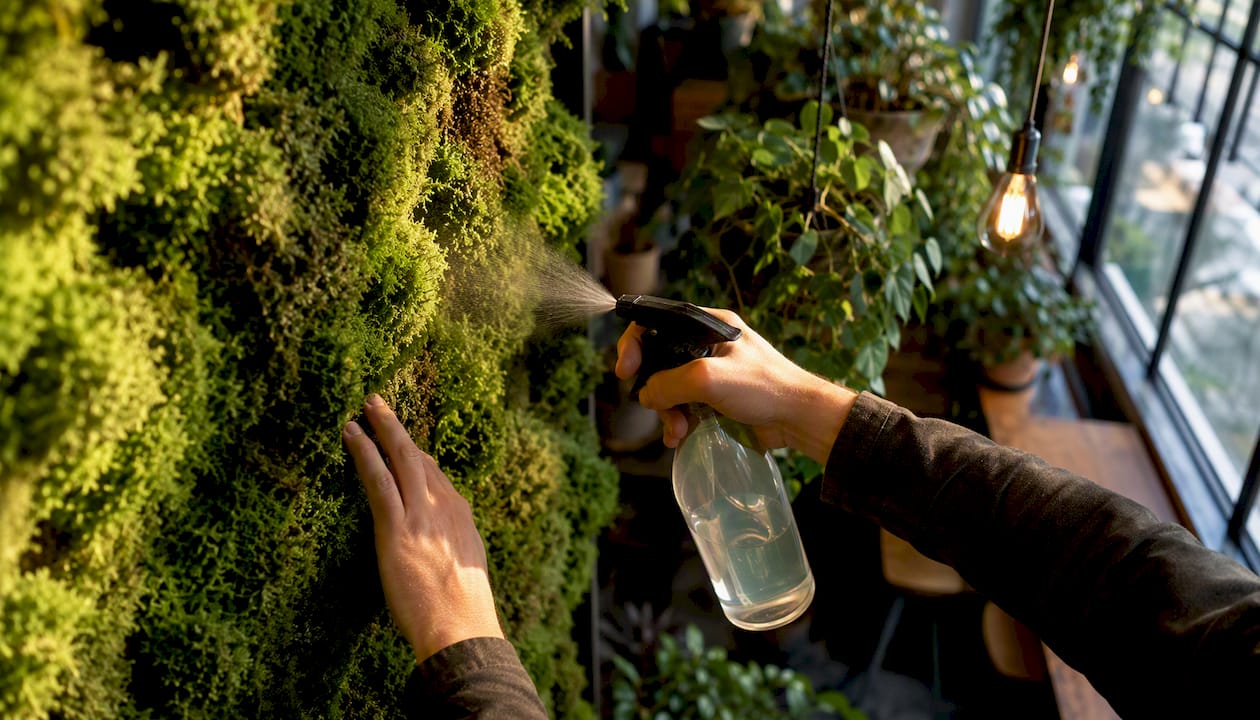
Watering follows a specific rhythm, not a schedule you improvise. Foliar misting with a soft, fine sprayer works for surface moisture, but the substrate underneath also needs periodic watering to keep root structures (where present) healthy. Erratic watering, heavy one week and skipped the next, stresses living moss more than consistently light watering does.
Light needs are moderate but non-negotiable. Bright, indirect natural light works well near a north or east-facing window. Where natural light isn't available, a diffused full-spectrum LED grow light on a timer replicates the cycle moss needs without scorching it the way a standard incandescent bulb would.
Equipment worth having on hand:
- A hygrometer, placed at moss height, not just anywhere in the room.
- A humidifier with a humidity sensor rather than a manual dial.
- A soft-mist sprayer for foliar watering, never a hard jet stream.
- A gentle, diffused LED grow light if natural light is limited.
Check humidity and moisture levels weekly at minimum. Living walls reward consistency far more than they reward intensity, so a light weekly touch beats an intense monthly overhaul every time.
Troubleshooting Common Moss Wall Problems
Most moss wall problems trace back to one of four things: humidity, light, ventilation, or physical damage to the backing. Working through them in that order usually gets you to the right fix fast.
Mold or a musty smell almost always means excess moisture, which points squarely at over-watering on a preserved wall or poor airflow behind a living one. The fix for preserved moss is immediate: stop any water source, increase airflow around the affected section, and isolate damp backing so mold doesn't spread to healthy moss nearby.
Bleaching or fading points to UV exposure. The fix is either relocating the wall out of direct light or adding UV-filtering film to a nearby window if relocation isn't possible.
Crispy, brittle moss usually means low humidity or heat exposure, often from a nearby vent or radiator. Reposition the source of heat or the wall itself, and give it a few weeks to recover before assuming it's beyond saving.
Shedding or loose panels can be cosmetic (a few loose strands from normal handling) or structural (a section of backing pulling away from the frame). Small shedding gets patched with the repair method described earlier. A loose panel edge, especially one that's been that way for weeks, usually needs a professional look before it worsens.
A quick diagnostic order to follow:
- Check humidity levels first, since both extremes cause visible symptoms.
- Check light exposure, especially any change in furniture or window treatments nearby.
- Check ventilation and vent placement.
- Inspect the backing and mounting hardware last, since backing failure is the most labor-intensive fix.
If the issue is confined to a small area and the backing is intact, patch it yourself. If you're seeing widespread color loss, a spreading musty smell, or backing that's visibly separating from the wall, that's when a full revival or replacement conversation becomes worth having.
What Moss Wall Maintenance Tools and Repairs Actually Cost
DIY moss wall upkeep is genuinely inexpensive if you're just maintaining a healthy wall, and it gets more expensive fast the moment you're repairing damage that could have been prevented.
Tools worth owning:
- A basic digital hygrometer, generally under $20.
- A cool-setting hair dryer or a small handheld air blower, often already owned.
- A hand vacuum with a brush attachment, roughly $30 to $60 for an entry-level model.
- Craft-safe adhesive suited for moss repair, a few dollars per tube.
- Replacement preserved moss by the square foot for patch repairs, priced by the supplier and typically sold in small kits for spot fixes.
Time estimates run short for routine care: a full dusting pass on a residential-sized wall takes maybe 15 to 20 minutes, a monthly inspection is closer to five minutes, and a small patch repair usually takes under an hour including adhesive set time.
Commercial spaces carry a different calculus. High foot traffic and constantly cycling HVAC systems mean dust and wear accumulate faster in public settings than in a quiet home office, which is why many installers build annual maintenance into the original project scope rather than treating it as an afterthought. A single annual professional touch-up on a commercial wall is almost always cheaper than letting fading or shedding go unaddressed until a full panel replacement becomes the only option.
When to Call a Professional for Moss Wall Repair
DIY care covers most day-to-day upkeep, but a few situations genuinely call for a professional, and knowing the line between the two saves both money and frustration.
Call a professional when you notice large-area fading across most of the wall rather than one isolated patch, when the backing has failed enough that panels are visibly lifting away from the mounting surface, or when mold has spread beyond a small, easily isolated section. Commercial spaces above a certain square footage also benefit from scheduled service simply because the labor of a full inspection and dust removal on a large wall isn't a quick weekend task, and in a lobby or restaurant, uptime and appearance matter every single day, not just when someone finally notices.
What a professional visit typically includes:
- A full inspection of the wall's surface, backing, and mounting hardware.
- Dusting with proper lift equipment for walls too tall to reach safely from a stepladder.
- Dye touch-ups to blend faded sections back into the surrounding moss.
- Partial panel replacement where damage is beyond a simple patch.
- Seasonal conditioning adjustments tied to your building's heating and cooling cycles.
Before hiring anyone, ask a few direct questions: What's the response time if something looks wrong between scheduled visits? Does the service include a healthy-plant or healthy-moss guarantee? Is dye matching included, or billed separately? A good plant maintenance provider will answer these without hesitation, because a real maintenance program is built around exactly these scenarios.
What We See Go Wrong With Moss Walls, and the One Habit That Fixes It
The three mistakes we see most often with moss walls all come from good intentions. Someone waters a preserved wall because it "looks a little dry." Someone places it directly under a vent because that's where the wall space happened to be. Someone lets dust build up for months because nobody assigned the task to anyone specific.
All three trace back to one gap: nobody walked the wall regularly with a clear checklist in hand. The habit that prevents almost every call we get about a "dying" moss wall is genuinely simple: a five-minute monthly walk-by with a hygrometer and a flashlight, checking for dryness, dust, and direct light exposure. That's it. It's not glamorous advice, but it's the difference between a wall that needs a quick dusting and one that needs a full section replaced.
On the commercial side, our annual maintenance programs are built almost entirely around touch-ups rather than full replacements, because catching fading or minor shedding early means a dye refresh or a small patch does the job. Full-panel swaps are rare when a wall has been on a consistent inspection schedule. We generally recommend a professional program once a wall serves a public-facing space, since the traffic and HVAC variability there simply outpaces what a once-a-year glance can catch.
Book a Professional Moss Wall Assessment With Greenspace Plants
If reading through repair steps, humidity ranges, and dust removal techniques has you thinking "I'd rather someone else handle this," that instinct is exactly what our maintenance programs exist for. Greenspace Plants designs, installs, and maintains moss walls for offices, restaurants, and retail spaces across Toronto, Vancouver, and Calgary, and our team already knows the difference between a cosmetic fix and a real structural problem before it becomes an expensive one.

Our service includes full inspections, professional dusting with proper lift equipment for tall installations, minor repairs, dye touch-ups to keep color consistent across a panel, and seasonal conditioning tied to how your building's HVAC actually runs. For a business, a scheduled annual visit is almost always more cost-effective than reactive repairs, since catching fading or shedding early keeps a wall on the "touch-up" side of the ledger instead of the "replace the panel" side. It also means nobody on your staff needs to become a moss-care expert on top of their actual job.
If your moss wall is part of a larger interior plantscape you're planning or maintaining, our team can fold it into a single service visit rather than treating it as a separate line item. Ready to see what a maintenance plan would look like for your space? Request an assessment through Greenspace Plants and we'll walk your installation with you before recommending anything.
Frequently Asked Questions About Moss Wall Maintenance
Does a preserved moss wall need any water at all? No. Preserved moss has been stabilized and no longer absorbs or needs moisture the way living moss does. Watering it can cause mold and strip the dyes that give it color.
How often should I clean a moss wall? Residential preserved walls generally need dusting once a quarter to once a year, while commercial installations in high-traffic areas often need attention every few months due to faster dust accumulation.
Can a faded moss wall be restored? Often yes, through a dye touch-up if the moss itself is still structurally intact. Full replacement is only necessary when large sections have both faded significantly and become brittle.
What's the biggest mistake people make with moss wall care? Misting or watering a preserved wall out of habit. It's the single most common cause of mold and color damage in installations that would otherwise last years with zero water at all.
How long does a preserved moss wall actually last? Depending on species and environmental exposure, expect roughly 3 to 10 years before noticeable fading or texture changes, with direct sunlight and humidity swings shortening that range considerably.
Sources
- Moss — Wikipedia