

Large-leaved tropicals, ferns, and clusters of plants like pothos or Boston fern do the most to raise moisture right around them. That's the honest answer. But plants alone rarely raise whole-room humidity in any reliable, measurable way — a room humidifier remains the only method that consistently works at scale.
Here's the practical first move: buy a digital hygrometer, check your baseline relative humidity (RH) for a few days, and decide from there.
- Best natural humidifiers: Boston fern, areca palm, pothos, peace lily
- First action: measure RH before buying anything
- Backup plan: a humidistat-controlled humidifier when readings stay below 30%
A peer-reviewed study on office plant environments found tested plants released between roughly 35 and 58 grams of water per plant per day, but most of that moisture escaped through normal air exchange rather than staying in the room. Plants help. They just don't work miracles.
Key Takeaways
Large-leaved tropicals and ferns add measurable local moisture, but only a humidistat-controlled humidifier reliably raises whole-room humidity.
| Point | Details |
|---|---|
| Measure before buying | Use a digital hygrometer for a week to learn your room's real baseline RH. |
| Prioritize humidifiers | A humidistat-controlled unit is the only method proven to raise whole-room RH reliably. |
| Match species to conditions | Pothos and philodendron tolerate dry rooms; calathea and maidenhair fern need supplemental humidity. |
| Use grouping as a supplement | Clustering plants raises local RH by 5 to 10 percent, not whole-room levels. |
| Consider professional matching | Greenspace Plants pairs species to measured site humidity through its Greenspace+ maintenance program. |
Table of Contents
- 12 Houseplants That Help With Indoor Humidity Control
- How Evapotranspiration Actually Raises Room Moisture
- Humidifiers vs. Grouping vs. Pebble Trays: What Works
- Matching Plants to Your Room's Real Humidity
- Placement, Watering, and Avoiding Fungal Problems
- How Professional Plantscapers Approach Humidity and Species Selection
- What the Research Actually Supports
- Get Humidity-Appropriate Plants Without the Guesswork
- Sources
12 Houseplants That Help With Indoor Humidity Control
Some of these plants pull real weight. Others get recommended out of habit and don't belong on a humidity-focused shopping list at all. Here's an honest rundown, ranked roughly by how much they contribute versus how easy they are to keep alive.
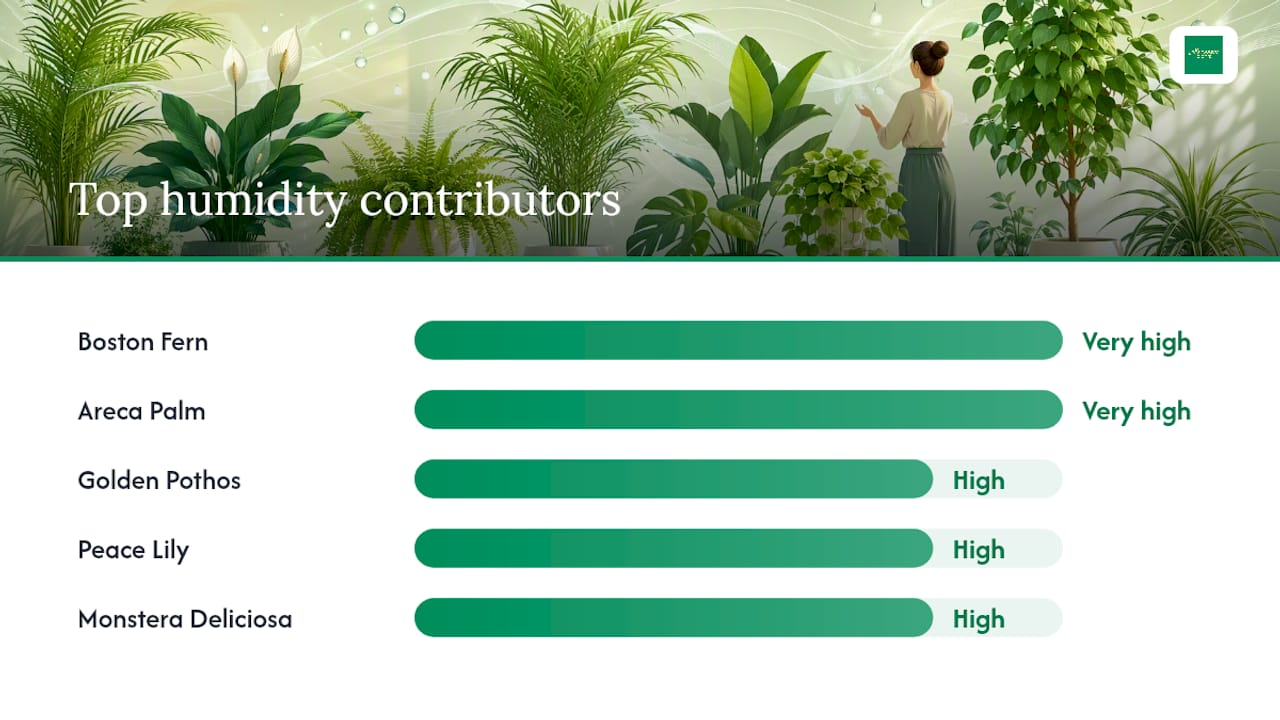
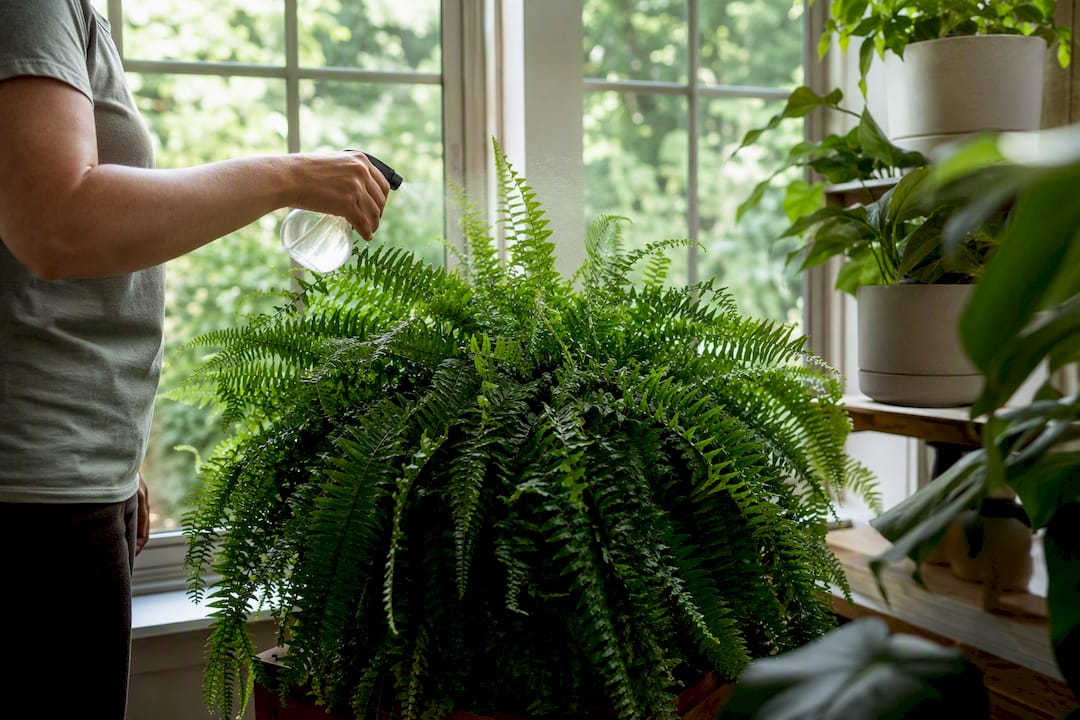
1. Boston Fern (Nephrolepis Exaltata) Dense fronds and a large total leaf surface make this one of the strongest evapotranspiration performers on any list. It wants bright, indirect light and consistently damp (not soggy) soil. Bathrooms with a window are close to ideal.
2. Areca Palm (Dypsis Lutescens) A mature areca palm carries enough foliage to function almost like a small living humidifier in a bright room. Give it filtered sun and steady watering, and keep it away from cold drafts near doors or windows.
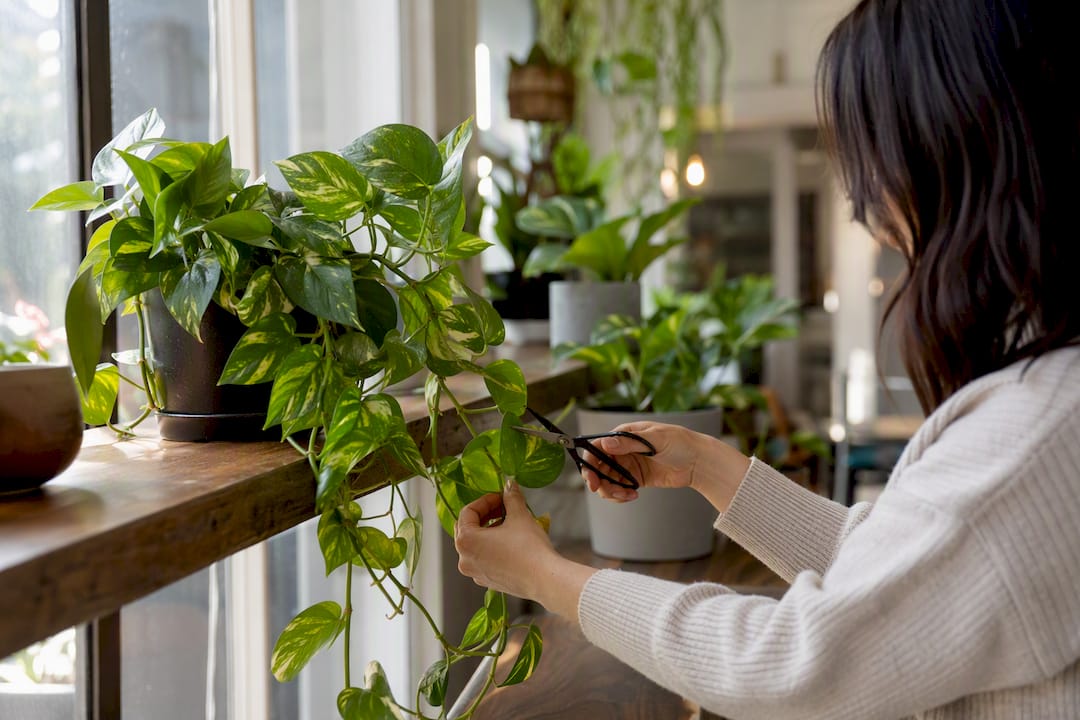
3. Golden Pothos (Epipremnum Aureum) In the ScienceDirect study, Epipremnum posted some of the highest transpiration rates of any species tested. It tolerates low light, forgives inconsistent watering, and still pulls its weight on humidity. For beginners, this is close to the safest bet on the list.
4. Peace Lily (Spathiphyllum Spp.) Big, glossy leaves and a habit of visibly wilting when thirsty make this plant almost self-diagnosing. It thrives in medium to low light and adds a steady trickle of moisture through transpiration. Keep it out of direct sun, which scorches the leaves fast.
5. Rubber Plant (Ficus Elastica) Thick, broad leaves give it decent leaf-area contribution, though its waxy cuticle slows transpiration compared to thinner-leaved tropicals. Bright indirect light and a wipe-down of dusty leaves every few weeks keeps it performing.
6. Monstera Deliciosa The huge, split leaves add meaningful surface area for moisture release, and this plant has become a design favorite for good reason. It wants bright, indirect light and a chance to dry slightly between waterings.
7. Philodendron Spp. Fast growers with plenty of leaf mass, philodendrons tolerate a wide range of indoor conditions. Trailing varieties do especially well grouped together near a window, where their combined foliage creates a small, noticeably damper pocket of air.
8. Spider Plant (Chlorophytum Comosum) Not a heavyweight contributor individually, but it's nearly indestructible and multiplies fast into "pups" you can pot separately. A cluster of three or four spider plants in one room adds up.
9. Calathea (Calathea Spp.) This one flips the script: calathea needs humidity more than it provides it. Dry air causes crispy, curling leaf edges within days. Treat this as a humidity-sensitive plant that benefits from grouping or a nearby humidifier, not a source of ambient moisture.
10. Maidenhair Fern (Adiantum Spp.) Even more demanding than calathea. Maidenhair fern drops fronds fast in dry air and generally performs best in a bathroom, a terrarium, or near a dedicated humidifier. It's gorgeous and genuinely difficult outside those conditions.
11. Snake Plant (Dracaena Trifasciata) Flag this one the opposite direction: snake plant tolerates dry air well and has a comparatively low transpiration rate. It's a smart choice for rooms you don't intend to humidify, not a tool for raising RH.
12. Jade Plant (Crassula Ovata) A succulent through and through, jade plant actually prefers drier conditions and can develop root and stem rot in consistently humid, damp soil. Keep it out of your "humidity plant" shopping cart entirely.
Pro Tip: Don't buy a single showpiece plant and expect a humidity fix. Five or six mid-sized tropicals clustered near one window will out-humidify one giant Monstera sitting alone across the room.
How Evapotranspiration Actually Raises Room Moisture
Plants release water vapor through tiny pores called stomata, mostly on the underside of their leaves, in a process called evapotranspiration. Water travels up from the roots, evaporates at the leaf surface, and exits into the surrounding air. More leaf surface area generally means more water released, which is why a fern with hundreds of fronds outperforms a single-stemmed succulent.
The ScienceDirect office study measured this directly: individual plants emitted a measurable amount of water per day, with seasonal variation showing lower emission in winter and higher in summer, with Epipremnum leading and Sansevieria trailing well behind. That sounds like a lot until you consider room volume.
- A typical bedroom exchanges its entire air volume with the outside multiple times per hour through gaps, vents, and doors.
- Most of the moisture a plant releases leaves with that exchanged air before it ever raises the room's overall RH reading.
- Air exchange rate affects ambient humidity far more than plant count does, according to the same research.
Warm, tightly sealed, low-ventilation rooms are where plants make the most visible dent. Drafty or well-ventilated rooms dilute the effect almost completely.
Humidifiers vs. Grouping vs. Pebble Trays: What Works
Ranking these by actual, measurable effect on room-level RH changes the conversation fast. Practical humidity guides consistently find one method in a category of its own.
| Method | Effect on Room RH | Best Use Case |
|---|---|---|
| Ultrasonic humidifier with humidistat | Strong, reliable, room-wide | Any room below target RH, especially with sensitive tropicals |
| Grouping plants together | Modest, localized (a small percentage increase nearby) | Small clusters or plant shelves |
| Closed terrarium or glass cabinet | Strong, but contained to that enclosure | Calathea, maidenhair fern, other humidity specialists |
| Pebble tray | Marginal, very local | Supplementing a single pot, not a room |
| Misting | Brief, surface-level only | Cosmetic dust removal, not humidity control |
A mid-sized ultrasonic model can move a closed bedroom from around 30% to 50 to 60% RH within one to two hours, depending on tank size and how airtight the room is. Grouping and terrariums matter for sensitive species, but they're supplements, not substitutes.
- Combine grouping with a humidifier for humidity specialists like calathea and maidenhair fern.
- Skip pebble trays and misting as your primary strategy. They look productive without doing much.
- Accept tolerant species like snake plant or jade in rooms you won't actively humidify.
Matching Plants to Your Room's Real Humidity
Start by measuring, not guessing. A digital hygrometer placed at plant height for at least a week tells you what you're actually working with, morning and evening.
- Record your baseline RH. Most homes sit somewhere between 25% and 45% during heating season.
- Compare against plant needs. Practical humidity bands put tropical specialists at 60 to 80%, common tropical foliage at 50 to 70%, and tolerant houseplants at 30 to 50%.
- Decide your strategy. Below 30% and craving tropicals, plan on a humidifier from day one rather than fighting the room.
- Run through a quick checklist: room size, heating or air conditioning intensity, pets that might chew leaves, and how much weekly maintenance you're honestly willing to do.
Pro Tip: If your hygrometer reads under 30% and you're set on calathea or maidenhair fern, buy the humidifier before the plant, not after the first casualty.
Placement, Watering, and Avoiding Fungal Problems
Adding humidity or clustering plants changes the risk profile in your home, and a few placement habits keep that risk low.
- Keep pots away from heat vents, radiators, and drafty entryways. Both extremes stress plants and swing local humidity unpredictably.
- Bathrooms and kitchens work well for humidity lovers only if there's enough natural or supplemental light. A steamy, dark bathroom just grows mold.
- Match watering to your new humidity level. A humidifier running nearby means slower soil drying, so cut back frequency and confirm pots have real drainage.
- Check leaf undersides periodically for pests, and avoid letting foliage sit wet overnight. Constant leaf moisture without airflow invites fungal spotting.
Pro Tip: A small oscillating fan on low, running a few hours a day near a dense plant cluster, cuts fungal risk dramatically without undoing your humidity gains.
How Professional Plantscapers Approach Humidity and Species Selection
Commercial plant programs don't guess at species selection. Greenspace Plants matches foliage to a building's actual measured light and humidity conditions, not to what looks best in a catalog photo, because a mismatched plant becomes a maintenance headache and a replacement cost within months.
In a dry, HVAC-heavy office lobby, a professional palette leans toward tolerant species like pothos and philodendron. In a humid restaurant kitchen pass-through, a design team might add a small enclosed display or humidifier to protect a calathea feature planting rather than force it to survive open air.
That's the working model behind Greenspace+: pick the right plant for the site first, then support it with the right equipment.
What the Research Actually Supports
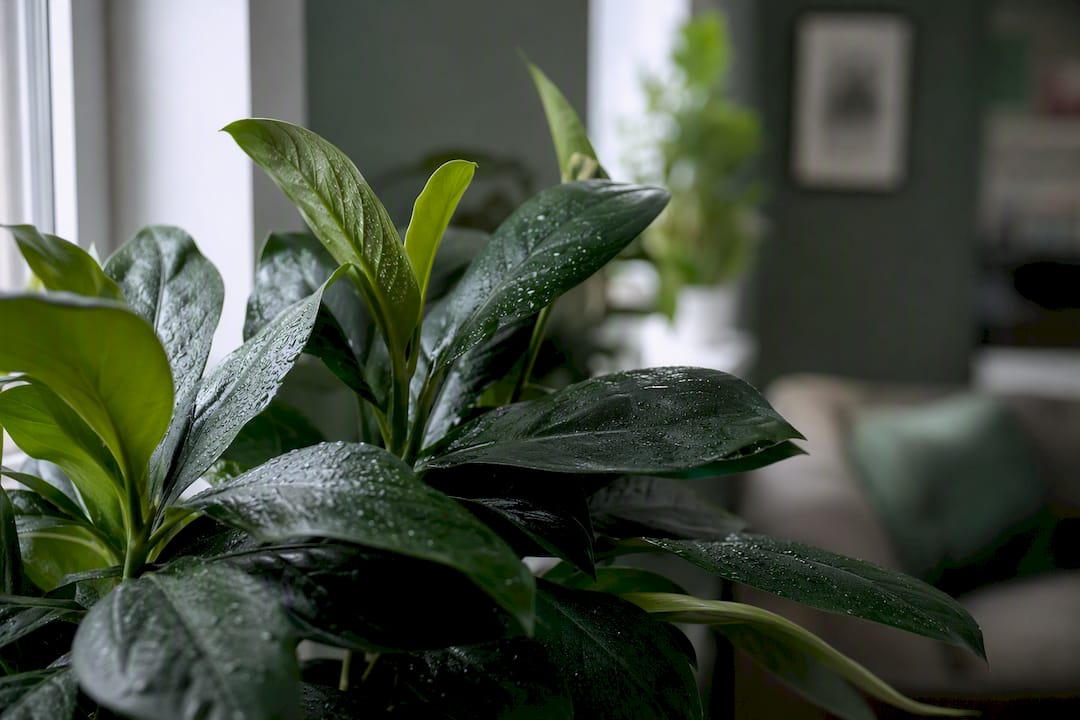
The evidence here is clearer than most home-and-garden advice admits. Plants contribute real, measurable moisture to a room. The ScienceDirect research proves that.
Conventional advice leans hard on pebble trays and misting because they feel active and low-cost. They're mostly theater. Extension research backs a far less exciting but more honest sequence: measure first, match species to your actual numbers second, and buy a humidifier third if the gap is real.
The plant enthusiasts who succeed long-term aren't the ones chasing the most exotic species. They're the ones who bought a $15 hygrometer before they bought a $40 calathea, and who accepted that some rooms just call for a snake plant instead of a fern that needs babying. Measurement beats mysticism every time.
— Nicole
Get Humidity-Appropriate Plants Without the Guesswork
Matching species to your building's real humidity and light, then keeping them alive through every season, takes more ongoing attention than most office managers or restaurant owners have time for. That's exactly what Greenspace+ handles: design, installation, maintenance, and plant replacement for one fixed monthly fee, with no upfront cost and no long-term contract locking you in.
If your space runs dry from HVAC or bright but humidity-sensitive from an open kitchen, Greenspace Plants builds the palette around your actual conditions rather than a generic plant list. Explore the indoor plant maintenance program or browse indoor plant rental options to get a quote tailored to your space's light and humidity readings.
Sources
- Humidity and houseplants — Penn State Extension
- The impact of plants on the humidity of naturally-ventilated office indoor environments — ScienceDirect
- Humidity for indoor plants — IndoorPlantCare
- Humidity for houseplants — GrowYourPlant