
Which plants work best in restaurant entrance areas?
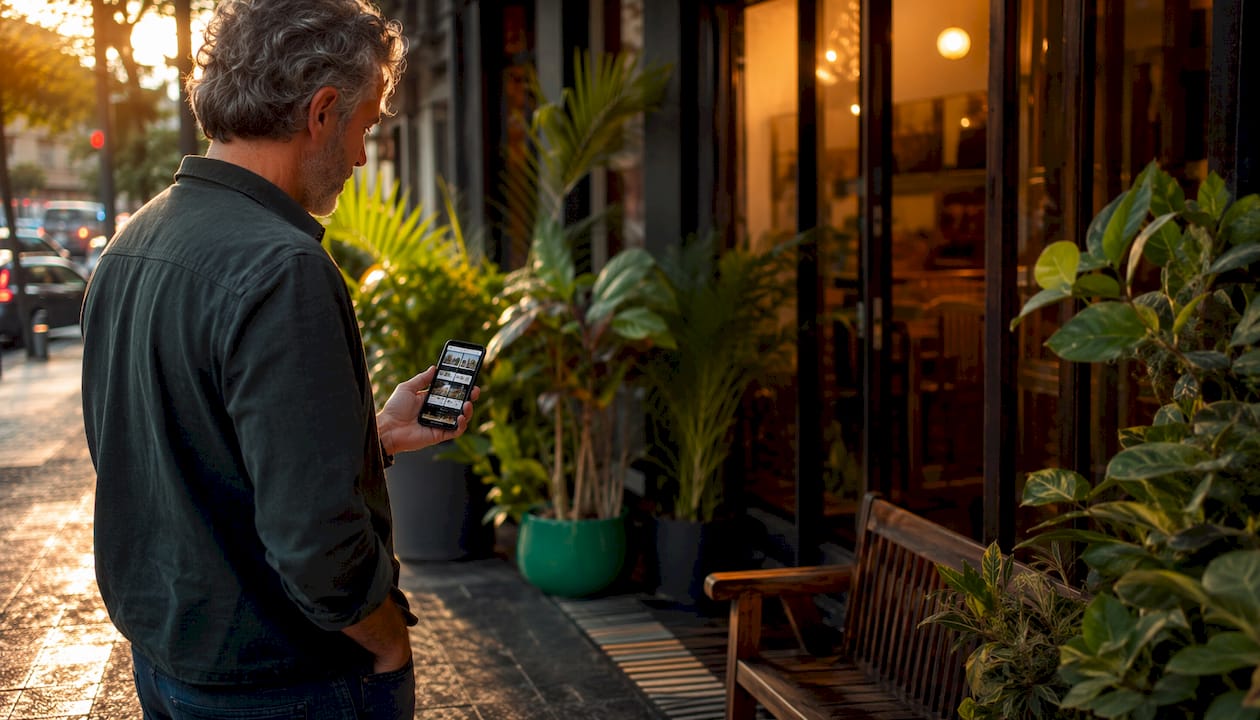
The strongest entrance plants combine visual presence with genuine resilience. Bird of Paradise, Fiddle Leaf Fig, Snake Plant, Calamondin Tree, Rubber Tree, Dracaena Marginata, Audrey Ficus, Yucca Cane, Peace Lily, and ZZ Plant are the ten species we recommend most consistently for U.S. restaurant entrances. Each one earns its place through a specific combination of aesthetic impact, tolerance for restaurant conditions, and manageable care demands.
Here is a quick-reference breakdown of what each brings to an entrance:
- Bird of Paradise (Strelitzia reginae): Dramatic, paddle-shaped leaves that read as sculptural from across a room. Needs bright indirect light and weekly watering. Ideal for large, airy entryways.
- Fiddle Leaf Fig (Ficus lyrata): A designer favorite for its bold, glossy leaves and vertical silhouette. Sensitive to drafts, so position it away from the door swing.
- Snake Plant (Dracaena trifasciata): The most forgiving plant on this list. Thrives in low-light conditions and handles temperature swings without complaint.
- Calamondin Tree (Citrofortunella microcarpa): A compact citrus tree that adds fragrance and color. Works beautifully in Mediterranean or farm-to-table concepts.
- Rubber Tree (Ficus elastica): Glossy burgundy foliage that commands attention near a doorway. Water only when the top inch of soil dries out.
- Dracaena Marginata: Slender, architectural stems with red-edged leaves. Handles low humidity and inconsistent watering better than most statement plants.
- Audrey Ficus (Ficus benghalensis): A more forgiving alternative to the Fiddle Leaf Fig, with velvety leaves and a relaxed, organic shape. Resilient enough for restaurant entrance conditions.
- Yucca Cane: Spiky, desert-modern silhouette. Nearly indestructible in bright spaces and a natural fit for Southwestern or industrial concepts.
- Peace Lily (Spathiphyllum wallisii): White blooms and lush foliage in low to medium light. One of the few flowering plants that genuinely thrives indoors without direct sun.
- ZZ Plant (Zamioculcas zamiifolia): A succulent-like resilience in a tropical form. Infrequent watering, low light, and it still looks polished. A reliable workhorse for high-traffic entries.
Both live and high-quality artificial versions of these species are viable. The right choice depends on your light levels, maintenance capacity, and how much visual consistency you need year-round.
Table of Contents
- How to choose the right entrance plants for your restaurant
- Design ideas that make restaurant entrances genuinely inviting
- Keeping entrance plants healthy in a real restaurant environment
- What the research says about plants and the guest experience
- Greenspace Plants brings professional plant design to your entrance
- Key Takeaways
How to choose the right entrance plants for your restaurant
Selecting plants for a restaurant entrance is not the same as decorating a living room. The environment is harsher: temperature fluctuates near doors, foot traffic is constant, and staff attention to plant care is limited. Getting the selection right from the start saves money and protects your first impression.
Light is the non-negotiable starting point. Walk your entrance at different times of day and honestly assess what you have. North-facing storefronts with minimal glazing are Snake Plant and ZZ Plant territory. Bright, south-facing entries with floor-to-ceiling glass can support a Bird of Paradise or Fiddle Leaf Fig without supplemental lighting.
Traffic flow and safety matter more than most designers admit. Plants placed too close to the door path create tripping hazards and get knocked repeatedly, which damages both the plant and the guest experience. Broad-leafed plants near doorways can soften drafts, but they need enough clearance that guests never brush against them. Check that your chosen species are non-toxic, particularly if your restaurant welcomes families with young children. Peace Lily is mildly toxic if ingested, so position it out of reach in higher-traffic entries.
Size the plant to the space, not to your ambition. A small storefront entry (under 8 feet wide) calls for one or two medium specimens, not a forest. A large entryway or hotel-style lobby can absorb a pair of floor-to-ceiling Bird of Paradise plants flanking the host stand. Going too small loses the visual impact; going too large blocks circulation.
- Choose low-maintenance species (Snake Plant, ZZ Plant, Dracaena Marginata) when your team cannot commit to a weekly care schedule.
- Opt for live plants in well-lit, climate-controlled entries where someone will genuinely water and prune them.
- Consider high-quality artificial or stabilized moss options for entries with poor light, extreme temperature swings, or minimal staff bandwidth.
- Avoid heavily fragrant plants near the entrance, where competing scents can clash with food aromas.
- Confirm that any planter sits flush or has a weighted base so it cannot tip in a busy entry.
Pro Tip: Before purchasing, photograph your entrance at its darkest point in the day and bring that photo to a plant specialist. Light levels that look "fine" to the human eye are often far below what most live plants need to stay healthy.
Design ideas that make restaurant entrances genuinely inviting
The entrance is a decompression zone. Guests arriving from a busy street need a visual and sensory cue that they have crossed into a different world. Plants are one of the most effective tools for creating that shift, but placement and composition are everything.
Statement focal plants work best when they anchor a single point of visual gravity, typically opposite the door or beside the host stand. A single large Rubber Tree or Bird of Paradise in a ceramic planter does more for an entrance than six small pots scattered around the perimeter. Plants should feel integrated and inevitable within the architecture, not arranged as an afterthought.
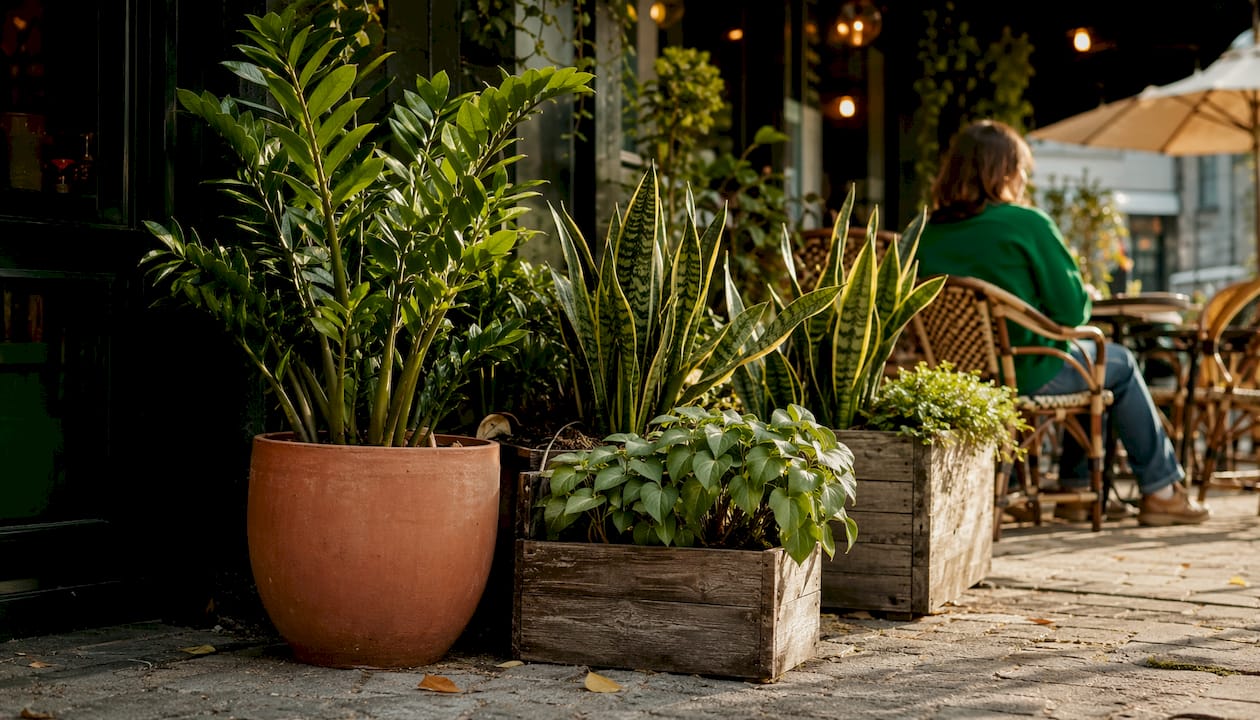
Layered greenery adds depth without requiring a large footprint. Pair a tall Yucca Cane or Dracaena Marginata with a mid-height Audrey Ficus and a low ZZ Plant at its base. The layering mimics a natural plant community and reads as intentional rather than decorative.
Green walls and moss panels are the highest-impact option for entries with limited floor space. Stabilized moss walls require no watering, no light, and no maintenance, yet they create a textured, living-looking backdrop that photographs beautifully and reinforces a brand's commitment to natural aesthetics. For a restaurant with a rustic or eco-forward identity, a moss wall behind the host stand is a signature moment.
Plant and lighting pairing is where most restaurant owners leave impact on the table. Dynamic lighting that shifts from cooler color temperatures during lunch service to warmer tones in the evening mimics the natural daily cycle and amplifies the biophilic effect of your greenery. Directional spotlights aimed at a sculptural Bird of Paradise or a trailing Pothos create drama without additional square footage. For guidance on commercial lighting scenarios that complement plant installations, working with a lighting specialist pays dividends.
Seasonal and thematic refreshes keep the entrance feeling current. Swap in a Calamondin Tree with ripe fruit for the holidays. Introduce warm-toned dried pampas grass in autumn. A Mediterranean concept might rotate in fragrant rosemary topiaries during summer. These small rotations signal to returning guests that the space is alive and cared for.
Pro Tip: Pair your entrance plant selection with your restaurant signage design from the outset. A cohesive visual language between your greenery, signage, and lighting tells a consistent brand story before a guest ever opens the menu.
Keeping entrance plants healthy in a real restaurant environment
A struggling plant at the entrance does more damage than no plant at all. That is not an opinion; it is a consistent finding among hospitality designers who work with live greenery professionally. The entrance is the first and last thing a guest sees, and a yellowing Fiddle Leaf Fig in a cracked planter undercuts every other investment you have made in your space.
For live plants, the care priorities are straightforward but require consistency:
- Water on a fixed schedule tied to the plant's actual needs, not a calendar. Check soil moisture before watering; most restaurant entrance plants prefer to dry slightly between waterings.
- Rotate plants quarterly to prevent phototropic lean toward light sources.
- Wipe leaves monthly with a damp cloth to remove dust, which blocks light absorption and dulls the visual impact.
- Prune dead or yellowing leaves immediately. One brown leaf left in place signals neglect to observant guests.
- Keep plants away from heating and cooling vents, which dry soil rapidly and stress foliage.
For detailed guidance on restaurant plant care schedules and species-specific maintenance, a structured approach makes the difference between plants that thrive and plants that limp along.
For artificial and stabilized options, the maintenance bar is lower but not zero. Dust accumulates on artificial foliage just as it does on live leaves. A monthly wipe-down keeps high-quality silk or preserved plants looking sharp. Stabilized moss requires no water or light but should be kept away from direct sunlight, which can fade the pigment over time.
Assign plant care responsibility explicitly. Whether that means in-house training for a designated team member or a professional plant maintenance service, the plants need an owner. Ambiguity about who waters, prunes, and monitors is the single most common reason restaurant greenery deteriorates.
What the research says about plants and the guest experience
The case for entrance greenery is not just aesthetic. Biophilic design functions as a physiological design language, triggering genuine comfort and relaxation responses in guests rather than simply making a space look prettier. Green elements create psychological comfort that promotes longer stays and, by extension, higher average checks.
Plants also improve acoustics in ways that matter specifically to open-plan dining rooms. Restaurant greenery can reduce interior noise by several decibels, a meaningful reduction in spaces where hard surfaces like concrete, glass, and steel amplify ambient sound. Dense, layered greenery absorbs sound and reduces echo, which is especially valuable near entrances where street noise enters with every guest.
A survey of restaurant guests found that 32% of respondents selected plants as the most desirable decorative element in a room, outranking artwork, textiles, and lighting fixtures. That preference reflects something deeper than taste. Guests are drawn to natural elements because human biology is wired for them.
Biophilic investment in restaurant interiors, from potted plants at entry points to full living walls, changes guest behavior, not just mood. Restaurants that treat greenery as an architectural element rather than a decorative accessory consistently see stronger guest engagement. The entrance is where that investment pays its first dividend.
Greenspace Plants brings professional plant design to your entrance
Restaurant owners who want the impact of a well-planted entrance without the ongoing management burden have a clear path forward with Greenspace Plants. Our Greenspace+ service covers plant design, professional installation, regular maintenance, and plant replacements for a fixed monthly fee, with no upfront costs and no long-term commitment required.
We work with restaurants across Toronto, Vancouver, and Calgary, selecting species matched to each entrance's specific light levels, traffic patterns, and brand identity. Whether your concept calls for a pair of sculptural Bird of Paradise plants flanking a host stand or a custom green wall that becomes your signature first impression, our team handles every detail from selection through ongoing care. You get healthy, polished plants at your entrance every day, without adding plant maintenance to your team's already full plate. Browse our indoor plant portfolio to see what a professionally managed plantscape looks like in real commercial spaces, then reach out to start a conversation about your entrance.
Key Takeaways
The most effective plants for restaurant entrance areas combine visual presence with genuine resilience, and their impact on guest comfort, acoustics, and brand perception is backed by biophilic design research.
| Point | Details |
|---|---|
| Top entrance species | Bird of Paradise, Snake Plant, ZZ Plant, Audrey Ficus, and Rubber Tree lead for resilience and visual impact. |
| Acoustics benefit | Strategic plant arrangements can reduce interior noise by several decibels, improving the dining atmosphere. |
| Guest preference | In a survey, 32% of respondents chose plants as the most desirable decorative element in a room. |
| Maintenance is non-negotiable | A neglected plant at the entrance harms guest perception more than having no plant at all; assign care responsibility explicitly. |
| Greenspace Plants | Provides design, installation, and ongoing maintenance for restaurant entrances under a fixed monthly fee with no upfront cost. |