
Seasonal indoor plant design trends in 2026 are defined by one clear shift: intentional, sculptural greenery has replaced the crowded jungle shelf. Large architectural specimens, dark moody foliage, and wellness-driven plant choices now lead interior design decisions in both residential and commercial spaces. The maximalist approach that peaked around 2022–2023 has given way to curated, gallery-like displays where each plant earns its place. Whether you're styling a Toronto office lobby or a Vancouver living room, understanding these trends helps you create spaces that feel alive, considered, and genuinely beautiful.
1. What are the seasonal indoor plant design trends for 2026?
The defining characteristic of 2026 indoor plant styles is restraint with impact. Designers are choosing fewer plants and placing them with far more intention. A single Bird of Paradise in a hand-thrown terracotta pot makes a stronger statement than a shelf of twelve mismatched succulents.
Four major directions shape this year's trends. Architectural specimen plants command attention as focal points. Dark foliage "goth houseplants" add luxury and depth. Wellness-driven greenery prioritizes sensory and environmental benefits. And plant theater arrangements turn collections into living art installations. Each direction reflects a broader cultural desire for spaces that feel curated rather than cluttered.
2. Architectural statement plants: the sculptural focal point
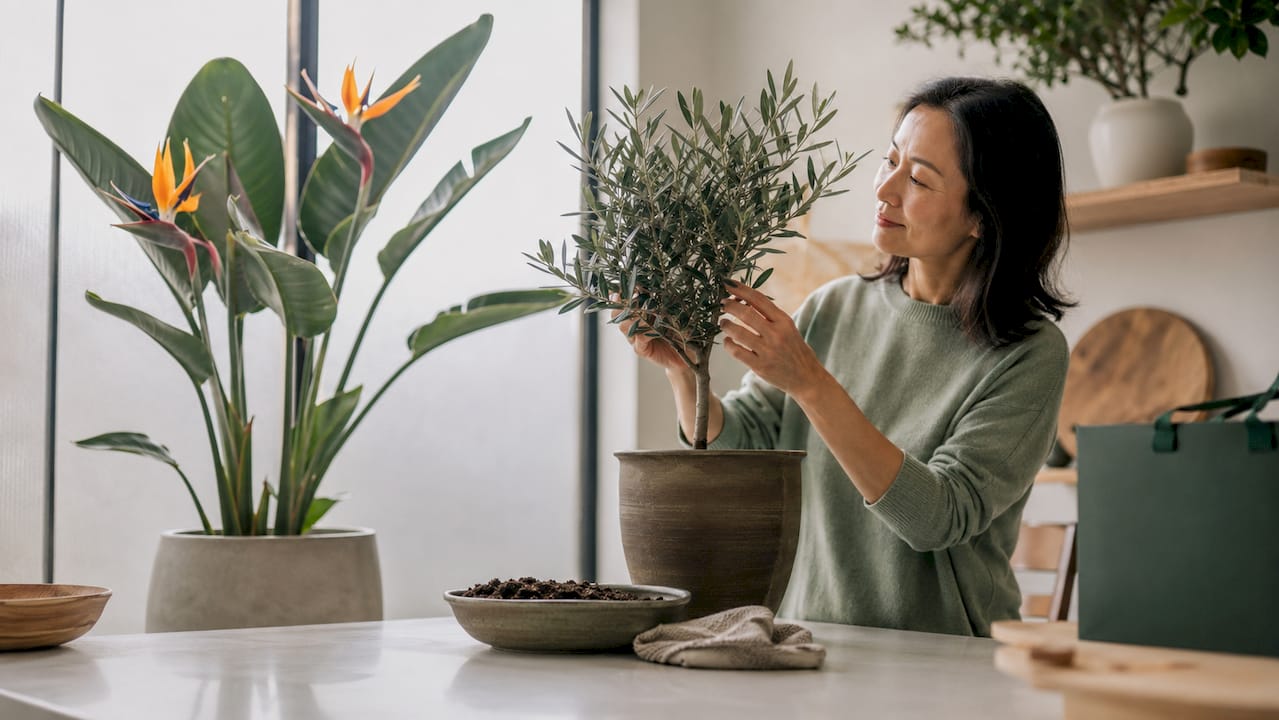
Large sculptural plants like Bird of Paradise, indoor Olive Trees, and Monstera deliciosa have become the anchor pieces of 2026 interior design. A single specimen placed in a corner or beside a window functions the way a piece of art does. It draws the eye, defines the room's scale, and sets the tone for everything around it.
Placement matters as much as plant choice. Position architectural specimens where their silhouette reads clearly against a plain wall. Avoid tucking them into corners where foliage gets lost. Bright, indirect light suits most of these species and also supports healthy seasonal growth through spring and summer.
Pot selection is not a secondary decision. Hand-thrown terracotta and matte ceramic vessels with natural textures elevate plant styling to a gallery-like aesthetic. Uniform, mass-produced plastic pots undercut even the most beautiful specimen. Choose vessels with irregular surfaces, earthy tones, or subtle glaze variations.
Styling tips for architectural specimens:
- Place the plant at eye level or slightly above to maximize silhouette impact
- Use a single large pot rather than grouping multiple smaller ones
- Rotate the pot quarterly so the plant grows evenly and presents fresh angles
- Pair with neutral linen, raw wood, or stone surfaces nearby for material harmony
- Refresh the seasonal look by swapping the pot cover or adding a woven basket sleeve
Pro Tip: Rotate your Bird of Paradise 90 degrees every 6–8 weeks. Most large-leafed plants are phototropic, meaning they lean toward light. Regular rotation keeps the shape symmetrical and the display looking intentional year-round.
3. How is the goth houseplant trend shaping 2026 indoor plant decor?
"Goth houseplants" is the term now used across interior design circles to describe dark-foliaged species that add drama and luxury to a room. Alocasia Black Velvet and ZZ Raven lead this category. Both feature deep, near-black foliage that creates visual contrast against light walls or pale furnishings. Rare aroid prices have stabilized in 2026, making these once-expensive specimens more accessible to a wider audience.
Care for dark foliage plants requires more attention than most trending houseplant guides suggest. Alocasia Black Velvet needs humidity above 60% and indirect light. Overwatering causes root rot quickly in this species. ZZ Raven is a lower-maintenance alternative that tolerates lower humidity and irregular watering, making it a better starting point for designers who want the aesthetic without the intensive care routine.
Styling dark foliage plants effectively:
- Place against a white or cream wall to maximize the contrast of deep leaves
- Try a moody, dark wall for a tonal, layered effect that feels editorial
- Use matte black or deep charcoal ceramic pots to reinforce the design direction
- Avoid overcrowding. One or two dark foliage plants read as intentional; five read as chaotic
- Add a single trailing plant nearby, like a Pothos, to soften the composition
Pro Tip: If you love the goth aesthetic but find Alocasia too demanding, start with ZZ Raven. It delivers the same dark drama with a fraction of the care requirements, and it thrives in lower light conditions common in commercial interiors.
4. What is the plant theater concept and how does it work?
Plant theater is the practice of arranging plants on multiple levels to create depth, rhythm, and visual drama. The structure follows a clear rule: tallest plants at the back, cascading or trailing plants at the front, with mid-height specimens filling the middle. The result resembles a theatrical set where every element is visible and purposeful.
This approach works because it solves a common problem. Most plant collections look accidental because all plants sit at the same height on a flat surface. Introducing three levels of height immediately creates visual movement. The eye travels from front to back and top to bottom, which makes the display feel dynamic rather than static.
Building a plant theater step by step:
- Choose a corner, alcove, or console table as your stage
- Select one tall structural plant for the back, such as a Fiddle Leaf Fig or Dracaena
- Add two mid-height plants in the center, such as a Calathea or compact Monstera
- Place one trailing plant at the front edge, such as a String of Pearls or Pothos
- Use consistent pot colors or textures to unify the display
Consistent pot colors and textures are what separate a plant theater from a random collection. Mixing terracotta with bright plastic pots breaks the visual logic. Commit to one material family and the display reads as designed.
Pro Tip: Leave deliberate space between plants in your theater. Breathing room between specimens lets each plant's shape read clearly. Overcrowding defeats the purpose and also increases humidity-related disease risk.
5. How to incorporate wellness-driven greenery into seasonal plant styling
Wellness-driven plant selection is one of the most significant indoor garden trends in 2026. The focus has shifted from purely visual choices to plants that deliver sensory and environmental benefits. Fragrant Hoyas, for example, produce clusters of waxy flowers with a sweet scent that creates genuine sensory calm. Humidity-loving plants like ferns and peace lilies improve air moisture in dry office environments.
Hydroponic and soil-free cultivation methods are also gaining traction for their clean, modern aesthetic. A glass vessel with a Pothos or Philodendron growing in water fits perfectly in minimalist interiors where soil and mess feel out of place. These setups also make water management more visible and intentional, which appeals to design-conscious plant owners.
Wellness-focused plant styling tips:
- Place fragrant Hoyas in reading nooks or near seating areas where their scent is most appreciated
- Use humidity-loving ferns in bathrooms where natural moisture supports their care needs
- Try a glass hydroponic vessel on a desk or kitchen counter for a clean, architectural look
- Match plant selection to the room's light conditions before choosing for aesthetics
- Pair plantscaping with wellness goals to get both beauty and measurable environmental benefit
Pro Tip: Hoyas are one of the most underrated plants in interior design. They grow slowly, tolerate neglect, and reward patience with fragrant blooms. For commercial spaces, they offer low-maintenance beauty with genuine sensory appeal.
6. Seasonal care: what changes by time of year
Seasonal care is the practice of adjusting watering, feeding, and light exposure to match a plant's natural growth cycle. Reducing winter watering and stopping fertilization during dormancy are the two most common mistakes designers overlook. Most tropical houseplants slow their growth significantly between november and february. Feeding them during this period pushes weak, leggy growth that undermines the clean silhouettes that 2026 design trends depend on.
Resume fertilizing carefully in early spring, once new growth appears. This timing aligns feeding with the plant's natural demand and produces stronger, more structured growth through the display season. Hydroponic setups require a different approach. Nutrient solutions need regular monitoring and replacement on a schedule distinct from soil-based care.
Seasonal care also means refreshing the display itself. Swap pot covers in autumn to warmer tones. Introduce flowering plants in spring to add color. Rotate specimens to prevent phototropic lean and present fresh angles to the room. These small adjustments keep a display feeling current without requiring a full redesign.
7. Top seasonal plant decor ideas for 2026
The following plants and styling approaches represent the strongest directions for this year. Each one reflects the broader shift toward intentional, curated indoor garden design.
| Plant | Style Direction | Seasonal Tip |
|---|---|---|
| Bird of Paradise | Architectural focal point | Rotate quarterly for even growth |
| Monstera deliciosa | Statement leaf texture | Support with a moss pole for upright form |
| Alocasia Black Velvet | Dark foliage luxury accent | Maintain humidity above 60% |
| ZZ Raven | Low-maintenance goth alternative | Tolerates low light; ideal for offices |
| Hoya varieties | Wellness and fragrance | Place near seating for scent benefit |
| Indoor Olive Tree | Mediterranean sculptural form | Needs bright direct light; suits south windows |
| Fiddle Leaf Fig | Plant theater back anchor | Consistent watering prevents leaf drop |
| String of Pearls | Trailing front layer | Bright indirect light; minimal watering |
| Peace Lily | Humidity and air quality | Thrives in bathrooms and low-light rooms |
| Aglaonema | Beginner-friendly color accent | Hardy species suited to varied light |
Styling these plants well comes down to three consistent principles. Match the plant to the room's actual light conditions. Choose vessels that complement the plant's form rather than compete with it. And leave space. The most common mistake in seasonal plant decor is adding too much. One well-placed, healthy specimen outperforms six struggling ones every time.
For those specifying plants in commercial or designed spaces, indoor plant design blueprints provide a structured framework for translating these trends into professional installations.
Key takeaways
The strongest seasonal indoor plant design approach in 2026 combines architectural specimens, intentional staging, and plant selection matched to real light and lifestyle conditions.
| Point | Details |
|---|---|
| Architectural specimens lead | One large sculptural plant creates more impact than a crowded collection of small ones. |
| Goth foliage adds depth | Alocasia Black Velvet and ZZ Raven deliver luxury contrast; ZZ Raven suits lower-maintenance needs. |
| Plant theater creates rhythm | Three height levels with consistent pot materials turn any collection into a curated display. |
| Wellness drives plant choice | Fragrant Hoyas and humidity-loving plants deliver sensory and environmental benefits beyond aesthetics. |
| Seasonal care protects design | Stop fertilizing in winter and resume in early spring to maintain the clean silhouettes trends require. |
What I've learned from watching the jungle shelf trend fade
The jungle shelf had its moment, and I understand why it appealed to so many people. Filling every surface with plants felt abundant and alive. But abundance without intention is just clutter with better lighting.
What I find genuinely exciting about 2026 indoor plant styles is that they reward patience and observation. Choosing one Bird of Paradise and learning exactly where it thrives in your space is a more satisfying practice than buying twelve plants and hoping some survive. The shift toward architectural specimens and plant theaters reflects a maturity in how people relate to plants indoors.
My honest advice: resist the urge to chase every trending houseplant design at once. Pick one direction, whether that's a dark foliage accent or a three-level plant theater, and execute it well. A single Alocasia Black Velvet in the right pot, against the right wall, in the right light, will stop people in their tracks. That's the point.
Sustainability matters here too. Buying plants suited to your actual conditions means fewer replacements and less waste. The most stylish plant display is one where everything is genuinely healthy. Dead or struggling plants undercut any design direction, no matter how on-trend the species.
— Nicole
Greenspace Plants and your 2026 plant design vision
Translating these trends into a real space takes more than a good plant list. It takes knowledge of light conditions, vessel selection, seasonal maintenance, and the patience to let a design breathe.
Greenspace Plants works with commercial clients across Toronto, Vancouver, and Calgary to design, install, and maintain indoor plant installations that reflect exactly these principles. Our Greenspace+ program covers design, installation, regular maintenance, and plant replacements for a fixed monthly fee, with no upfront costs. You get the aesthetic without the guesswork of ongoing care. Browse our client portfolio to see how architectural specimens, plant theaters, and wellness-driven greenery translate into real commercial spaces.
FAQ
What are the top indoor plant trends for 2026?
The leading trends are architectural specimen plants like Bird of Paradise and indoor Olive Trees, dark foliage "goth houseplants" like Alocasia Black Velvet and ZZ Raven, and wellness-driven species like Hoyas and peace lilies. Plant theater arrangements and hydroponic displays are also gaining significant traction.
How do I style plants indoors for a gallery-like look?
Choose one large sculptural plant as a focal point and pair it with a hand-thrown terracotta or matte ceramic vessel. Keep surrounding surfaces clear and neutral so the plant's form reads without competition.
What is a plant theater and how do I create one?
A plant theater is a layered arrangement using three height levels: tall plants at the back, mid-height plants in the center, and trailing plants at the front. Using consistent pot colors and textures across all levels creates a unified, curated display.
Are goth houseplants difficult to care for?
Alocasia Black Velvet requires humidity above 60% and indirect light, making it moderately demanding. ZZ Raven is a lower-maintenance alternative that delivers the same dark aesthetic with greater tolerance for varied conditions.
When should I fertilize my indoor plants seasonally?
Stop fertilizing during winter dormancy and resume carefully in early spring once new growth appears. Feeding plants during dormancy produces weak growth that undermines the clean, structured silhouettes that 2026 design trends require.