
A lobby reads as well-maintained when four things line up: durable finishes that still look sharp after years of foot traffic, consistent layered lighting, furniture that's actually cleaned on a schedule, and visible upkeep routines that tenants notice without being told. Add activated amenities and clear wayfinding, and a lobby stops feeling like a pass-through and starts feeling like a destination.
Here's your quick-start verdict:
- Durable, timeless materials (stone, terrazzo, solid wood) age better than trend-driven finishes.
- Layered lighting that's easy to relamp keeps the space feeling fresh, not dim or patchy.
- Commercial-grade furniture with cleanable upholstery, arranged for clear circulation.
- Visible daily upkeep, from swept floors to healthy, dusted plants.
- Activated amenities (a café counter, a lounge nook, a worktable) that give people a reason to linger.
This week, do three things: walk the lobby daily and note visible touchpoints (glass, floors, trash), check plant health and soil moisture, and confirm your entrance security and access points are functioning. Even small activations pay off. KPF's design for 30 Hudson Yards built a café and art installation into a 20,900-square-foot lobby specifically to increase dwell time and turn a transit space into a social one.
Key Takeaways
A well-maintained lobby is the product of durable material choices paired with a written, consistently executed daily-to-annual maintenance schedule.
| Point | Details |
|---|---|
| Copy proven examples | Study cases like 30 Hudson Yards and 50 Rockefeller Center for material and activation choices you can adapt. |
| Build a tiered schedule | Separate daily touchpoints from quarterly restoration work so budgets and staffing match each task's real frequency. |
| Restore before replacing | Preserve historic stone and terrazzo when structurally sound; add function through reversible, non-invasive fixtures. |
| Assign clear ownership | Put every recurring task, including plant care, on a written checklist with a named backup person. |
| Outsource plant upkeep | Greenspace Plants' Greenspace+ program handles design, installation, maintenance, and replacement under one fixed monthly fee. |
Table of Contents
- What Do Examples of Well-Maintained Building Lobbies Look Like?
- Which Design Features Make a Lobby Look Well-Cared-For?
- How Often Should a Lobby Be Cleaned and Inspected?
- How Do You Preserve Historic Lobby Materials While Adding Modern Function?
- What Plants Work Best in High-Traffic Lobby Settings?
- What Are the Most Common Lobby Maintenance Challenges?
- What Does Lobby Maintenance Typically Cost?
- How Do You Train Staff to Keep a Lobby Consistently Maintained?
- What Lobby Maintenance Lessons Do Facilities Managers Learn on the Job?
- How Can Property Managers Simplify Lobby Plant Upkeep?
- Where Can You Find More Lobby Design Case Studies?
- Frequently Asked Questions
- Sources
What Do Examples of Well-Maintained Building Lobbies Look Like?
The best lobby examples aren't abstract mood boards. They're specific choices you can trace back to a maintenance decision. Here are six worth studying.
30 Hudson Yards, New York. The lobby pairs travertine, bronze, and cast glass with a café and rotating art installation. KPF's own account of the build explains how material assembly choices there were made specifically with long-term upkeep in mind. Copy: the material palette, and the decision to activate a large footprint with food service rather than leaving it as pure circulation space.
50 Rockefeller Center. This redesign reinstated the original black terrazzo and brass inlays, then layered in modern lighting and custom rugs to keep a historic space feeling bright and current. Copy: restoring rather than replacing hero materials, and using textiles to soften a hard-surfaced room.
1411 Broadway. A once-utilitarian lobby gained a 67-foot terrazzo counter and an art focal point, improving both accessibility and circulation, according to Architizer's project coverage. Copy: a single strong focal feature paired with better sightlines for staff and visitors.
The Gordon Building. A compact residential lobby uses terrazzo and textured wood joinery to conceal the package room, plus cove lighting to make a small footprint feel larger. Copy: hiding functional clutter behind good joinery instead of open shelving.
Maersk Headquarters, Copenhagen. A barista station, informal lounge, and courtyard turn the lobby into a flexible social hub, per 3XN's project description. This is the clearest case of an added amenity extending dwell time.
The Palms Building. A small-scale refresh combining restored marble with walnut furniture proves square footage isn't the limiting factor. Good material pairing is.
Pro Tip: Ask for detail shots, not just wide-angle photos, when documenting your own lobby. A close-up of a clean grout line or a dust-free light fixture does more to prove upkeep than a hero shot ever will.
Which Design Features Make a Lobby Look Well-Cared-For?
Materials do most of the talking. Stone, honed terrazzo, and solid wood accents read as substantial and age well, while resilient upholstery in commercial-grade fabric holds up to daily contact without pilling or staining within a year. If budget is tight, quartz composite and porcelain tile mimic stone's look at a fraction of the maintenance burden.
Lighting matters almost as much as the materials themselves. Layer ambient, task, and accent lighting so no corner goes dark, and specify fixtures your maintenance team can actually reach for relamping. A single burned-out bulb in an otherwise polished lobby undercuts everything else.
Furniture should be modular and easy to reposition for cleaning, with upholstery rated for commercial wear. Arrange it to support clear sightlines for front desk staff and to guide movement toward elevators or mailrooms without funneling people through tight pinch points.
Signage should be simple enough to update in an afternoon, not a full sign-shop order. CityRealty's survey of standout residential lobbies found that attended desks, fireplaces, and seating nooks consistently reinforce a sense of security and care.
- Choose stone or terrazzo over laminate wherever budget allows.
- Layer lighting and specify accessible fixtures for relamping.
- Pick modular furniture with commercial-grade, cleanable upholstery.
- Keep signage simple and easy to refresh.
Pro Tip: When choosing finishes, ask "will this look dated in five years?" before "will this look impressive on day one?" A quiet, timeless material almost always outperforms a trendy one on long-term upkeep cost.
How Often Should a Lobby Be Cleaned and Inspected?
Consistency beats intensity. A lobby that gets five minutes of attention every day looks better, longer, than one that gets a deep clean once a month and nothing else.
Daily: sweep or spot-clean floors, empty trash, wipe down glass and high-touch surfaces, do a quick plant check for wilting or dry soil, and confirm entrance doors and security access are working. Budget 15 to 30 minutes for a small lobby, more for a large multi-tenant entrance.
Weekly and monthly: deep-clean upholstered seating, dust high surfaces and ledges, polish metal inlays and handrails, clean light fixtures, check HVAC filters, and sweep out the package room. This is typically an hour or two of dedicated labor weekly.
Quarterly and annual: restore stone or wood finishes, replace worn rugs, deep-clean upholstery professionally, relamp fixtures on a full cycle, and assess historic materials for conservation needs.
- Assign daily touchpoint checks to whoever staffs the front desk or a rotating custodial shift.
- Schedule weekly deep-clean tasks on a fixed day so they don't get skipped during busy weeks.
- Book quarterly and annual restoration work months ahead, since specialty contractors book up fast.
| Task Frequency | Example Tasks | Estimated Effort | Cost Band |
|---|---|---|---|
| Daily | Floor sweep, trash, glass wipe-down, plant check | 15-30 minutes | Low |
| Weekly/Monthly | Upholstery clean, dusting, metal polish, HVAC filter check | 1-2 hours | Low to medium |
| Quarterly/Annual | Stone/wood restoration, rug replacement, relamping | Contractor-dependent | Medium to high |
Small buildings often handle daily and weekly tasks in-house and outsource quarterly restoration. Larger properties tend to contract the whole cadence out, which is where subscription-style services can standardize training and reduce the risk of tasks slipping between shift changes.
How Do You Preserve Historic Lobby Materials While Adding Modern Function?
Restore original marble, terrazzo, and moldings when the material is structurally sound. It almost always outlasts a replacement, and it's what gives a lobby its "always been there" quality, according to Studio Mellone's take on the 50 Rockefeller Center refresh. Replace only when damage is beyond repair.
Add function without cutting into historic fabric: reversible fixtures, freestanding modular furniture, and discreet tech integrations (card readers, package lockers) that don't require altering original surfaces.
Pro Tip: Bring your conservator, restorer, and facilities manager into the same room before signing off on a renovation plan. Sequencing mistakes, sanding a floor before electrical work is finished, for example, are the single biggest source of blown budgets on historic lobby projects.
What Plants Work Best in High-Traffic Lobby Settings?
Plant health is one of the fastest signals of overall building care, and it's also one of the easiest to get wrong in high-traffic spaces. Match plant choice to traffic level: tough, low-light species like snake plants and ZZ plants for corridors people brush past constantly, and larger statement plants like fiddle-leaf figs or olive trees for open floor areas with better light.
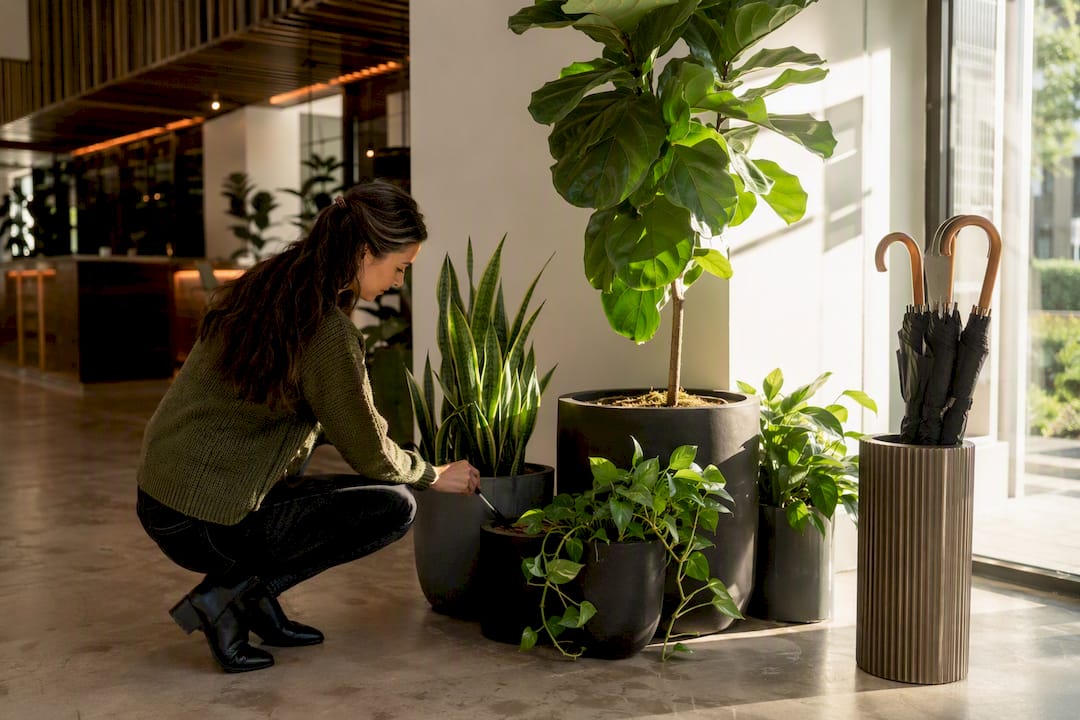
Fold plant care into your existing cleaning rhythm rather than treating it separately: a weekly soil-moisture and leaf-dust check, a monthly deeper inspection for pests, and a seasonal rotation or replacement plan for anything showing stress. Keppel South Central's lobby refresh leans on biophilic design specifically to make the lobby feel restorative, not just decorative.
Pro Tip: Specify self-watering planters with built-in reservoirs wherever possible. They cut ad-hoc watering calls dramatically and make it far easier for high-traffic plant maintenance to stay on a predictable schedule instead of a reactive one.
What Are the Most Common Lobby Maintenance Challenges?
Foot traffic wear is the most persistent problem. High-traffic floors and door hardware show scuffs and fingerprints within weeks, no matter how good the initial install was. The fix isn't a better material alone. It's a wipe-down schedule tight enough that wear never accumulates past a quick fix.
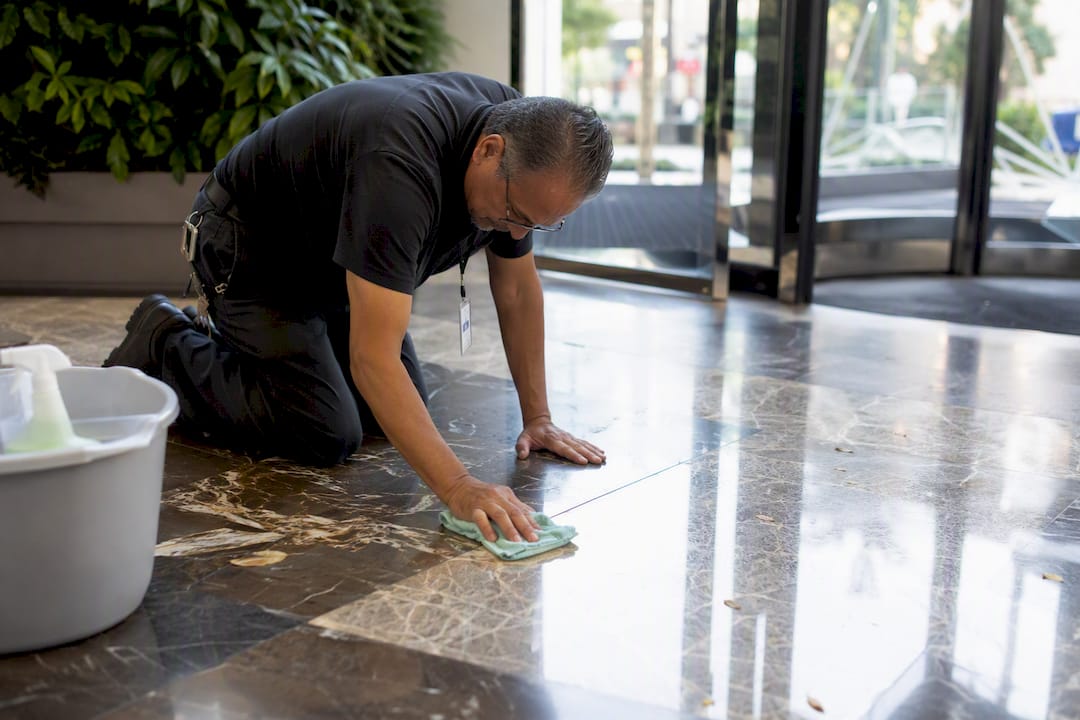
Staff turnover is the second-biggest challenge. When the person who knew the plant-watering schedule or the relamping vendor leaves, tasks quietly stop happening until something looks visibly neglected. Written checklists and a named backup for every recurring task close that gap.
Budget competition is real too. Lobby upkeep often loses out to bigger capital projects when funds get tight, and a skipped quarter of deep cleaning compounds fast, since grime and wear are cheaper to prevent than to reverse.
Multi-tenant buildings face a coordination problem: no single tenant "owns" lobby appearance, so accountability drifts. Assign lobby care explicitly to building management, not tenant goodwill, and put it in writing.
Finally, seasonal wear (salt stains in winter, humidity swings affecting wood and plants) catches teams off guard when the maintenance calendar doesn't account for it. Building seasonal tasks into your annual schedule, not just reacting when damage appears, is what separates buildings that stay sharp year over year from those that show visible decline.
What Does Lobby Maintenance Typically Cost?
Budgets break into two buckets: routine upkeep and periodic restoration, and conflating them is the most common budgeting mistake property managers make.
Routine upkeep, daily cleaning, weekly deep cleans, and plant care, is a predictable recurring line item. It scales with square footage and lobby complexity, but it should never fluctuate wildly month to month once a schedule is set. This is where a fixed monthly service model has a real advantage: you know the cost band going in, instead of getting surprise invoices after a particularly bad month.
Periodic restoration, relamping, upholstery deep cleans, stone refinishing, is where costs spike, and where deferred maintenance gets expensive fast. A terrazzo floor that's cleaned regularly needs occasional polishing. One that's neglected for a year needs full refinishing, at several times the cost.
Set aside a separate reserve for quarterly and annual work rather than trying to fund it out of the same bucket as daily janitorial. Get quotes locked in before the work is due, since specialty contractors (stone restorers, upholstery cleaners) often book weeks out and last-minute requests carry a premium.
Plants deserve their own line item too. A real ROI case for office greenery shows that predictable monthly plant costs tend to beat the ad-hoc replacement cycle of buying, killing, and rebuying plants without a maintenance plan behind them.
How Do You Train Staff to Keep a Lobby Consistently Maintained?
Consistency comes from a written schedule, not institutional memory. If the daily checklist lives in one person's head, it disappears the day that person calls in sick or changes jobs.
Give front desk and custodial staff a physical or digital checklist tied to specific times of day, not vague instructions like "keep it tidy." A checklist that says "wipe entrance glass at 9 AM and 2 PM" gets done. "Keep the glass clean" gets forgotten by Wednesday.
Cross-train at least two people on every recurring task, including plant care, so a single absence doesn't leave a gap that shows up as wilting leaves or dusty ledges within a week. Rotate a quick supervisor walkthrough into the schedule, five minutes, twice a week, to catch small issues before a tenant does.
Outsourced specialists (stone restoration, upholstery cleaning, plant maintenance) should hand off a written care log after every visit. That log becomes your record for warranty claims, budget planning, and training new staff without starting from zero.
The buildings that maintain the highest visual standard year over year usually aren't spending more. They're spending consistently, with clear ownership for every task and a paper trail that survives staff turnover.
What Lobby Maintenance Lessons Do Facilities Managers Learn on the Job?
The lesson that sticks: consistency beats intensity every time. A five-minute daily walk-through, checking glass, floors, and plant health, catches small problems before they become visible ones, and it's the coordination between small routines, not any single big renovation, that keeps a lobby looking cared-for week after week.
How Can Property Managers Simplify Lobby Plant Upkeep?
Plant health is one of the easiest things to get right and one of the easiest to let slide, especially when watering and pest checks compete with a dozen other daily tasks. That's the gap Greenspace Plants was built to close.
Greenspace+ from Greenspace Plants bundles design, installation, scheduled maintenance, and plant replacement into one fixed monthly fee, with no upfront cost and no long-term lock-in. If a plant declines, it gets replaced under the healthy plant guarantee, so your lobby never shows the wilted-leaf giveaway that undercuts an otherwise well-kept space. Office managers and property teams across Toronto, Vancouver, and Calgary use it to keep entrances looking consistently sharp without adding a task to their own checklist. If you're weighing options, start by comparing indoor plant service plans or browse the client look-book for real installations, then request a quote for your lobby's square footage and traffic pattern.
Where Can You Find More Lobby Design Case Studies?
- 30 Hudson Yards: material sourcing and long-term upkeep detail.
- 50 Rockefeller Center: historic restoration paired with modern lighting.
- 1411 Broadway: circulation and art-focal-point renovation.
- Maersk HQ: amenity programming and social-hub design.
- Managing artwork for hotels and hospitality: upkeep guidance for lobby art installations.
Frequently Asked Questions
What are the clearest examples of well-maintained building lobbies? Projects like 30 Hudson Yards, 50 Rockefeller Center, and 1411 Broadway show the pattern clearly: durable stone and terrazzo, restored rather than replaced historic detail, and an activated amenity like a café or lounge that keeps the space in active use.
How often should a commercial lobby be cleaned? Daily touchpoints (floors, glass, trash, plant checks) take 15 to 30 minutes and should never be skipped. Deeper weekly and monthly tasks, upholstery cleaning, light fixture dusting, HVAC checks, round out a full schedule.
What's the most overlooked maintenance item in building lobbies? Plant health. Wilting leaves or dry soil are visible within days and read as neglect faster than almost any other lobby element, which is why plant checks belong in the daily routine, not a monthly afterthought.
Is it better to restore historic lobby materials or replace them? Restore original marble, terrazzo, or wood moldings whenever they're structurally sound. It preserves the character that gives a lobby its identity and typically outperforms replacement on long-term durability.
Should property managers handle lobby maintenance in-house or outsource it? Small daily and weekly tasks often work well in-house. Specialized work, stone restoration, upholstery deep cleaning, and ongoing plant care, tends to hold up better under a dedicated contract or subscription service with consistent training and accountability.
Sources
- 30 Hudson Yards lobby & cafe | KPF
- 50 Rockefeller Center Lobby, New York - Workplace Design
- 1411 Broadway Lobby by KPF (Kohn Pedersen Fox) - Architizer
- Maersk hq lobby design - copenhagen, denmark | 3xn architects | 3XN
- The Making of: 30 Hudson Yards The Lobby | KPF