
Renting is the better call for most offices: it guarantees a healthy-looking space, keeps monthly costs predictable, and takes plant care completely off your staff's plate. Buying only makes sense if you're in a stable location, already have someone with a green thumb on staff, and rarely lose plants to light or traffic problems. Either way, the smart next step is the same: schedule a site assessment and get a written proposal that spells out service frequency and replacement terms before you sign anything.
TL;DR:
- Rent usually costs more upfront but covers replacement logistics, pest control, and staff time that buying plants would require paying separately.
- High plant loss rates, frequent replacements, and heavy foot traffic environments tend to favor leasing over ownership over three years.
- Smaller plants and desk specimens are the most affordable options, while living walls or large statement plants significantly increase monthly costs.
- Reputable providers include site assessments, documented service schedules, clear replacement guarantees, and liability policies in their proposals.
- Proper plant and pet-safe species choice, along with regular maintenance, significantly reduces allergy risks and pet toxicity concerns.
Table of Contents
- How Does Managed Office Plant Rental Work?
- What Drives the Cost of Office Plant Leasing?
- Is It Cheaper to Rent or Buy Office Plants?
- How Do You Choose an Office Plant Rental Provider?
- What Should You Expect From Ongoing Maintenance Visits?
- What ROI Do Office Plants Actually Deliver?
- How Do You Handle Allergies and Pet Safety in an Office Plant Program?
- Greenspace Plants' Approach to Managed Plant Programs
- Getting Started With Greenspace+
- Sources
- FAQ
- Why Most Office Managers Get the Rent-Versus-Buy Decision Backwards
How Does Managed Office Plant Rental Work?
Most providers follow a similar sequence, whether you're outfitting a downtown lobby or a single conference room. A site assessment that measures light, airflow, access, and traffic comes first, and it matters more than people expect. Get the light readings wrong and you'll be replacing plants every eight weeks no matter how good the maintenance team is.
From there, the process typically runs like this:
- Free on-site assessment covering light levels, floor space, and delivery access
- Custom design proposal matching species and containers to each location
- Delivery and professional installation, often scheduled around business hours or after-hours if the space requires it
- Scheduled maintenance visits with documented condition notes at every stop
Visit cadence depends on the site and the species. Fast-growing tropicals in high-traffic lobbies often get weekly attention, while hardier desk plants in low-light offices might only need a technician biweekly or monthly. During each visit, a technician checks soil moisture, prunes for shape, wipes down leaves so the plant can actually photosynthesize, and looks for early signs of pests before they spread.
Contracts vary on details that are easy to overlook until they cause friction later: who owns the planters, whether custom joinery or built-ins are included, how after-hours installs are billed, and what insurance covers if a plant or container damages flooring or furniture during delivery. Ask about all of it upfront. Providers typically build replacement guarantees directly into the monthly fee, documenting plant condition at each visit and swapping out anything in decline within one or two service cycles.
What Drives the Cost of Office Plant Leasing?
Quotes for plant rental swing widely, and the reason usually comes down to five variables: how many plants you need, how large they are, what kind of planters you choose, whether you're adding a green wall, and how often you want service visits. Installation complexity and building access play a role too. A ground-floor office with a loading dock costs less to service than a 40th-floor suite with a single freight elevator.
Here's roughly how pricing shapes up by plant type:
- Desktop plants sit at the low end of the pricing spectrum, often bundled in small clusters
- Floor specimens (think six-foot ficus or bird of paradise) cost meaningfully more per unit
- Large statement plants for lobbies or reception areas push toward the higher end
- Living walls command the highest fees, given the irrigation systems and structural work involved
Published rental estimates consistently show this same pattern: desktop and small cluster plants are the cheapest per-unit option, while large specimens and green walls cost substantially more. Because pricing depends so heavily on your specific space, treat any number you see online as a rough starting point and request a custom quote before budgeting.
Statistic Callout: Rental fees aren't just paying for the plants themselves. They fold in replacement logistics, staff time that would otherwise go toward watering schedules, and pest treatment that most office managers aren't equipped to diagnose on their own. When you compare a rental quote against the sticker price of buying plants outright, factor in what you're not paying for separately.
Is It Cheaper to Rent or Buy Office Plants?
The honest answer is: it depends on your site's plant loss rate, and most office managers underestimate theirs. A useful way to think about it is total cost of ownership over one to three years, not the price of the first invoice.
Buying requires you to absorb every future cost yourself: replacement plants when something dies, staff hours spent watering and monitoring, and occasional pest treatment call-outs. Leasing bundles all of that into one predictable line item.
- When a site's annual plant loss rate runs high, leasing tends to come out ahead over a three-year horizon because it absorbs replacement cost and labor that would otherwise fall on you
- Buying 15 mixed plants can carry a large upfront cost, and hidden replacement expenses often narrow the gap with leasing faster than people expect
- Client-facing spaces with heavy foot traffic, low natural light, or seasonal HVAC swings tend to favor leasing
- Stable, low-traffic offices with someone on staff who genuinely enjoys plant care can make buying work
A hybrid approach often makes the most financial sense. Lease the statement pieces (the lobby specimen, the green wall behind reception) where replacement risk is highest, and buy inexpensive desk plants for individual workstations where employees might even enjoy the ownership.
How Do You Choose an Office Plant Rental Provider?
Not every provider operates the same way, and the differences show up fast once you're a few months into a contract. Look for these baseline signals before you sign anything:
- A site visit is included, not optional or upsold separately
- You get a written proposal, not a verbal estimate over the phone
- A replacement guarantee is explicitly stated, with a defined response window
- Service schedule is documented, including frequency and what each visit covers
- Insurance and damage policy are spelled out in case of an installation mishap
- The provider has handled buildings like yours, including freight elevator or after-hours access constraints
- Ask who owns the plants if the contract ends early
- Ask how replacements are handled and how fast a failing plant gets swapped
- Ask about lead times for both initial installation and mid-contract changes
- Ask for references from clients with a similar office footprint
Watch for red flags: a provider willing to quote a price without ever seeing your space, vague language around what counts as a "replacement," or a proposal that doesn't spell out what's excluded.
Pro Tip: Ask a prospective provider to walk you through their documentation process for a single visit. If they can't describe what gets logged (moisture levels, pruning notes, pest checks) they probably aren't doing it consistently.
What Should You Expect From Ongoing Maintenance Visits?
A good maintenance visit follows a rhythm: check soil moisture, water as needed, prune for shape, wipe down leaves, and scan for pests before an infestation takes hold. Technicians typically document plant condition at each stop, which gives you a paper trail if something starts declining.
Track these to judge whether a provider is actually earning their monthly fee:
- Response time between flagging a problem and a replacement showing up
- Whether visit notes are actually documented, not just verbally reported
- Consistency of the agreed service frequency (are they really showing up biweekly?)
- Visible plant health trends over several months, not just a single snapshot
On your end, keep access windows clear, designate a small storage spot for supplies, and give your provider a heads-up before any office move or remodel so plants aren't sitting in a construction zone.
What ROI Do Office Plants Actually Deliver?
The aesthetic case is the easiest to make: consistent presentation, coordinated containers, and seasonal refreshes that keep a lobby or reception area from looking static. Clients notice a well-kept space even if they can't articulate why.
The operational case is where budget approval usually happens. A fixed monthly fee replaces the staff hours someone was quietly spending on watering schedules, and it removes the shock of an unplanned plant-replacement purchase.
Statistic Callout: Companies frequently cite predictable aesthetics and reduced staff liability as the top practical reasons they choose rental over ownership. On the wellbeing side, biophilic design research points to modest, consistent gains: employees in offices with visible greenery tend to report lower stress and better focus, even if no single plant is a productivity miracle worker on its own.
How Do You Handle Allergies and Pet Safety in an Office Plant Program?
Plant allergies in office settings are usually a mold or pollen issue, not a leaf-contact issue. Overwatered soil and standing water in decorative planters create the conditions for mold spores, so proper drainage and a consistent watering schedule solve most of the problem before it starts. If a specific employee reports sensitivity, ask your provider about swapping flowering species (which release more pollen) for foliage-only plants in that zone.
Pet safety matters more than most office managers realize, especially in pet-friendly workplaces. Several common office plants (pothos, philodendron, and certain dracaena varieties, for example) are mildly toxic if chewed by a dog or cat. A provider that's done this before will ask about pet policies during the site assessment and route pet-safe species like spider plants, areca palms, or Boston ferns to spaces where animals have access. Bring this up during your consultation rather than after installation. Swapping species after the fact usually costs more than specifying it upfront.
Greenspace Plants' Approach to Managed Plant Programs
Greenspace Plants runs its all-inclusive Greenspace+ program across offices in Toronto, Vancouver, and Calgary, covering design, installation, maintenance, and replacement under one fixed monthly fee. Every engagement starts with a free site assessment and a written proposal, followed by scheduled visits with documented condition checks, the same criteria this guide recommends you demand from any provider. Plant health issues get addressed under a replacement guarantee rather than an unplanned invoice.
Getting Started With Greenspace+
If everything above sounds like the version of plant care you'd rather not manage yourself, an all-inclusive monthly service handles design, installation, maintenance, and replacement guarantees with no upfront cost and no long-term commitment locking you in.
When you request a proposal, look at the same things this guide walked through: a documented service schedule, clear replacement terms, and a plan that matches species to the light and traffic in your actual space, not a generic template. Greenspace Plants builds each indoor plant design around your office's specific layout, and the plant care maintenance program keeps everything on schedule after installation. If you're weighing a green wall for a lobby or reception area, the green plant walls option folds into the same all-inclusive fee structure. Book a free site assessment and get a written proposal before your next budget cycle closes.
Sources
For deeper detail on process and pricing, see the managed plant rental delivery and care guide, the corporate greenery rental guide, and the plant ownership versus leasing cost comparison. For general rental pricing context, NoleggioQui's guide offers useful comparative examples.
- The Complete Guide to corporate greenery rental
- What do office plants cost?
- Plant Ownership vs. Plant Leasing: What’s the Difference and Which Saves You Money?
FAQ
Is Renting Office Plants Cheaper Than Buying?
It depends on your site's plant loss rate. Sites with high replacement needs often come out ahead with leasing over a three-year horizon, since the monthly fee absorbs replacement cost and labor you'd otherwise pay separately.
How Much Does Office Plant Rental Cost Per Month?
Pricing depends on plant count, size, and container choice, with desktop plants at the low end and living walls at the high end. Greenspace Plants' Greenspace+ program starts at $299 per month for an all-inclusive service covering design, installation, maintenance, and replacements.
How Often Do Technicians Visit for Maintenance?
Visit frequency ranges from weekly to monthly depending on plant species and location, with high-traffic or fast-growing plants typically needing more frequent attention than hardy desk plants in low-light corners.
What Happens if a Rented Plant Dies?
A reputable provider replaces a failing plant under a guarantee built into the monthly fee, usually within one to two subsequent service visits after the issue is documented.
Are Office Plants Safe Around Pets?
Some common office plants are mildly toxic to pets if chewed, so a good provider will ask about pet policies during the site assessment and route pet-safe species like spider plants or areca palms to accessible areas.
Why Most Office Managers Get the Rent-Versus-Buy Decision Backwards
The conventional advice treats this as a pure cost comparison: add up the price of plants, containers, and occasional replacements, then compare it to a monthly lease fee. That framing misses the actual decision variable, which is risk transfer, not sticker price.
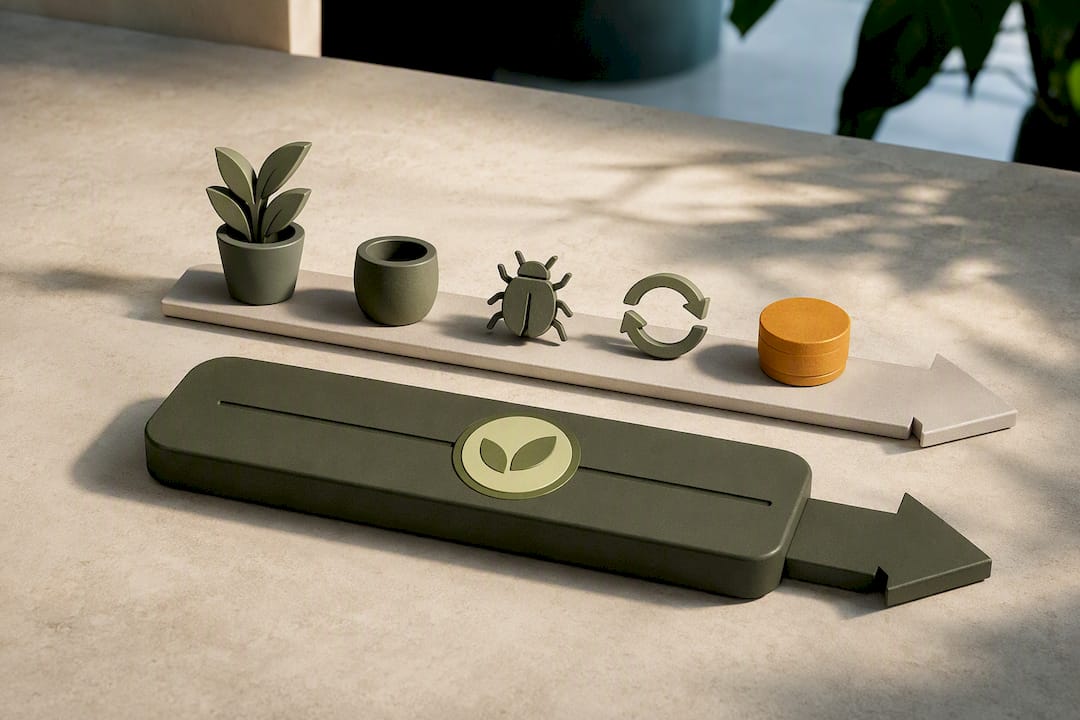
Buying plants outright puts you in the business of horticultural risk management, whether you wanted that job or not. You're now responsible for noticing a spider mite infestation before it spreads, for knowing that the ficus by the window needs rotating every few weeks because of phototropism, for absorbing the cost when three plants die the same month because someone adjusted the HVAC system. Most office managers have zero interest in acquiring that expertise, and that's fine. It's not their job.
What surprises people is how often the "cheaper" buying option turns out to be a mirage once you tally the hours someone quietly spends watering, the emergency replacement purchase nobody budgeted for, and the staff time that a managed program eliminates entirely. A fixed monthly number that never surprises you is worth more than a lower average cost that arrives in unpredictable spikes.
The real question isn't "which option is cheaper." It's "who do you want holding the risk when a plant starts declining." For most offices, especially client-facing ones, that answer points toward a managed program almost every time.
— Nicole