
Office plants typically pay back their cost within 12 to 18 months when you conservatively model productivity gains and absenteeism savings against installation and maintenance costs. That payback rests on peer-reviewed field studies and industry cost modeling, not marketing claims. A managed program like Greenspace+ makes the math even more predictable, since it replaces unpredictable plant losses with a fixed monthly fee.
TL;DR:
- A typical office plant ROI payback occurs within 12 to 18 months, driven by productivity gains and absenteeism savings backed by peer-reviewed studies.
- Placing plants within employee sightlines and matching species to room lighting is critical for maximizing perceived benefits and plant health longevity.
- A plant program's costs include installation, ongoing maintenance, and plant replacement, with the lowest upfront cost in in-house care but best predictability through managed services.
- The most effective setups for ROI involve a hybrid approach: desk plants, feature walls, and strategic common-area greenery, emphasizing visibility and density.
- Proper ROI tracking requires quarterly measurement of sick days, employee satisfaction, and plant health, with managed programs like Greenspace+ ensuring consistent plant care and replacement.
Table of Contents
- What Is the Real ROI of Office Plants?
- Can Plants Actually Change Your Office Environment?
- How Do You Calculate Payback for Office Plants?
- Does Where You Put Plants Matter More Than How Many?
- Should You Buy, Rent, or Outsource Plant Maintenance?
- How Greenspace+ Turns This Model Into a Real Program
- What Should a Pilot Program Look Like?
- Which Office Plant Setup Delivers the Best Return?
- Do Plants Boost Creativity, Not Just Productivity?
- What Do Real Office Plant Programs Look Like in Practice?
- How Do You Track Office Plant ROI Over Time?
- What Facilities Managers Get Wrong About Plant ROI
- Ready to Turn This Math Into a Real Office Program?
- Sources
What Is the Real ROI of Office Plants?
The productivity story behind office plants ROI is more specific than "greenery feels nice." Field experiments comparing so-called "green" offices to stripped-down "lean" ones found perceived and objective productivity improvements, with some measures climbing as much as a noticeable margin in University of Reading field research (https://centaur.reading.ac.uk/89347/1/Biophilic_design_and_office_planting_(Main_Document)clean%20version%20FINAL%20with%20tables%20and%20figures%20included.pdf). Multi-organization studies in the Netherlands found similar patterns: plants reduced dry-air complaints and raised perceived privacy and workspace attractiveness across nine separate workplaces, according to field research published in Frontiers in Psychology.
Absenteeism and retention also move, though more slowly than perception does. Industry cost models built on this research use figures like $2,000 per employee per year in absenteeism savings as a planning benchmark, based on biophilic design economics from Nordblooms.
Here's how a conservative range translates into real numbers for a 100-person office at $75,000 fully loaded cost per employee:
- 6% productivity gain: roughly $450,000 in annual value across the team
- 15% productivity gain (upper bound from field studies): roughly $1.1 million
- Absenteeism savings alone: around $200,000 annually using the $2,000-per-employee benchmark
That gap is why office greenery investment keeps showing up in facilities budgets rather than getting cut.
Can Plants Actually Change Your Office Environment?
Plants change measurable things in a room, but not everything people assume. A controlled study found that adding plants raised median relative humidity from 29.1% with no plants to 38.9% with 5 plants, and up to 49.2% with 18 plants in the same space, according to PLOS One research on indoor plants and air quality. That's a meaningful shift in dry, climate-controlled buildings where static shock, dry eyes, and scratchy throats are common complaints.
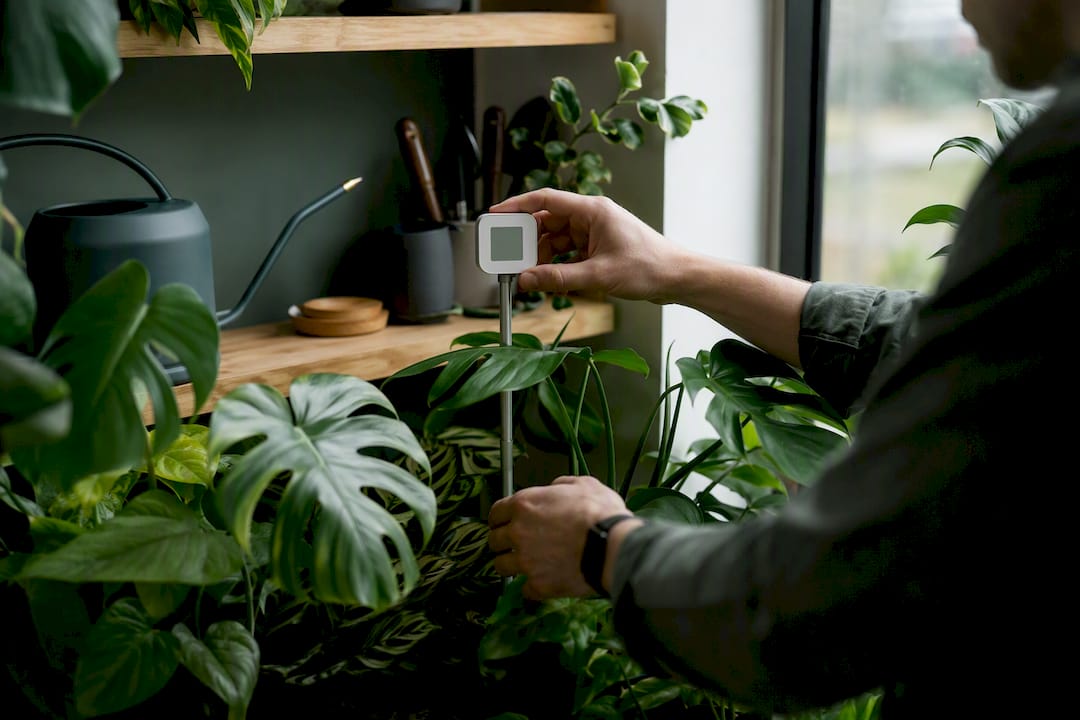
What plants don't meaningfully touch: CO2 concentration and air temperature. The same PLOS One study found no significant effect on either, which matters if a vendor tries to sell you plants as an HVAC substitute. Noise reduction from foliage is real but modest, more about softening hard surfaces acoustically than blocking sound outright.
Where plants earn their keep environmentally, especially through higher perceived privacy near workstations likely tied to visual screening.
- Reduced dry-air complaints in offices with HVAC systems running most of the year
- Higher perceived privacy near workstations, likely tied to visual screening
- Improved perceived air quality, even when actual particulate changes are small
Set expectations honestly here. Plants are a comfort and wellbeing lever, not a mechanical air-handling upgrade.
How Do You Calculate Payback for Office Plants?
A defensible payback model needs three cost lines and two benefit lines, and finance teams will ask about all five.
Cost lines to build into your model:
- One-time installation and design (planters, initial plants, placement consulting)
- Ongoing plant cost (purchase or rental, depending on your operational choice)
- Monthly maintenance (watering, pruning, pest management, replacements)
Benefit lines, modeled conservatively:
- Productivity improvement, using the low end of the studied range (1% to 6%) rather than the ceiling
- Absenteeism savings, using industry benchmarks like the Nordblooms cost-benefit framework only where your industry data supports it
Statistic to anchor your model: For a 50-person office at $70,000 fully loaded cost per employee, total annual payroll runs $3.5 million. If your total plant program (installation plus 12 months of maintenance) runs $8,000 to $12,000, that single percentage point clears the entire cost with room to spare, often inside the first year. For a deeper worksheet, see this plant wellness ROI breakdown.
Sensitivity matters: if maintenance lapses and plants decline, your benefit assumptions collapse before the cost side does.
Does Where You Put Plants Matter More Than How Many?
Placement often outperforms plant count. Studies designing these interventions calculated plant density from room volume and deliberately put plants in employee sightlines and common areas rather than tucking them in corners, following the approach documented in Frontiers in Psychology's field study. A plant nobody sees delivers none of the psychological benefit, even if it's technically in the building.
Species selection should follow the light available, not the other way around. Low-light corners need shade-tolerant species; south-facing windows can support more demanding, showier plants. Getting this wrong is the single most common reason plants decline within months of installation. For a rundown of resilient options, see this guide to low-maintenance office plants.
- Prioritize plants in sightlines: reception, meeting rooms, and open workstation clusters
- Match density to volume, following the plants-per-cubic-meter approach used in controlled studies
- Weigh preserved installations against living plants for high-visibility feature walls
Preserved (non-living) installations cost less to maintain over 5 to 10 years than living green walls, per Nordblooms' cost comparison, but they don't deliver the humidity or air-quality mechanisms living plants do.
Pro Tip: Walk your own office and count how many desks have a plant within direct eye line. If the answer is under half, you're likely under-realizing the ROI already built into your current plant budget.
Should You Buy, Rent, or Outsource Plant Maintenance?
Three operational models exist, and the choice affects your ROI more than most facilities managers expect.
In-house care costs the least upfront but carries hidden labor cost and inconsistent results. Rental or subscription shifts plant ownership risk elsewhere but often excludes design and placement strategy. Full-service managed programs bundle design, installation, maintenance, and replacement into one predictable fee.
Neglected maintenance is the leading reason plant programs fail to deliver on paper, since declining plants erase the very perception benefits the research measures. Before signing any vendor, ask these questions:
- Who owns plant replacement cost if a plant dies from disease or neglect?
- What's the maintenance visit frequency, and is it seasonal or fixed?
- Does pricing scale predictably as your footprint grows?
How Greenspace+ Turns This Model Into a Real Program
Greenspace+ bundles design, installation, ongoing maintenance, and plant replacement into one fixed monthly fee, with no upfront cost and no long-term commitment. That structure maps directly onto the cost lines in the payback model above: one predictable number replaces three separate line items and the guesswork of estimating replacement frequency.
Outsourcing maintenance also closes the biggest gap between studied ROI and real-world results. Since neglected care is what erodes plant health and the perception benefits tied to it, a guaranteed-health service protects the investment you already modeled. Readers ready to run the numbers for their own space can plug Greenspace+ pricing into Greenspace Plants' interior plant services for a workspace-specific quote.
What Should a Pilot Program Look Like?
Run a pilot before committing budget for a full rollout.
- Scope it to roughly 50 people over 3 to 6 months
- Track sick days, self-reported productivity, and workspace attractiveness ratings
- Collect a 3-month baseline before installation to avoid confusing seasonal sick-day swings with the plant effect
Bring finance three numbers: total program cost, projected annual savings, and payback period in months.
| Metric | Target for pilot |
|---|---|
| Pilot size | ~50 employees |
| Duration | 3 to 6 months post-baseline |
| Core KPIs | Sick days, self-reported productivity, satisfaction |
Which Office Plant Setup Delivers the Best Return?
Not every plant investment scales the same way, and matching setup to space size changes the ROI math meaningfully.
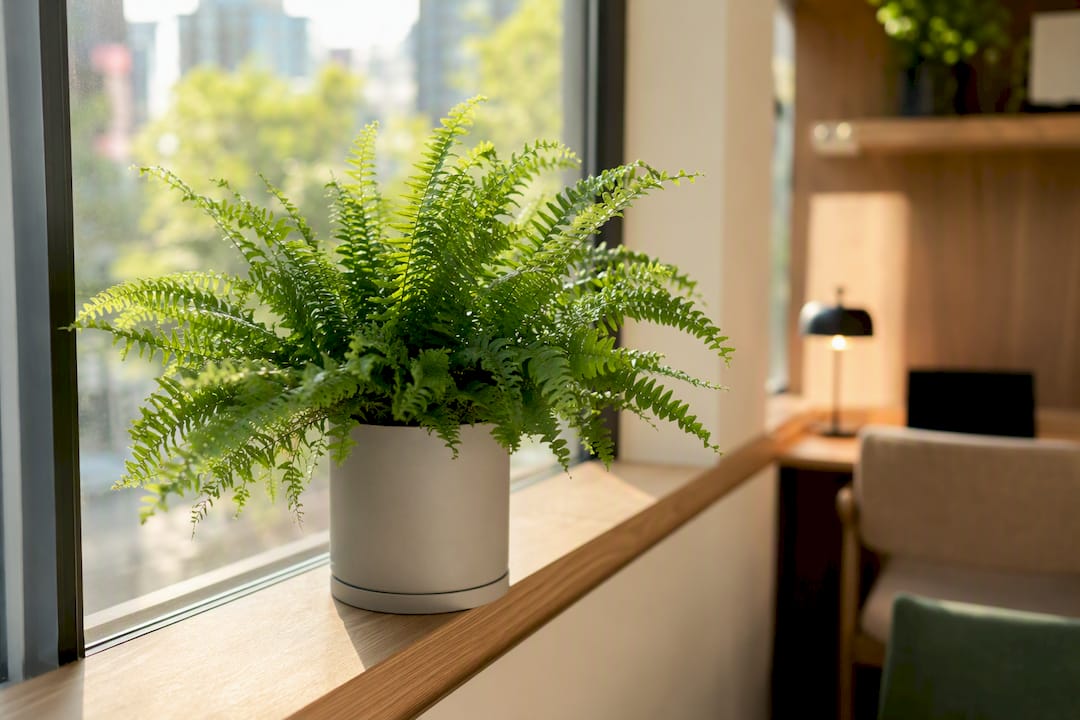
Desk plants carry the lowest upfront cost and the fastest deployment, making them the easiest entry point for a pilot. They deliver localized psychological benefits, mainly for the employee sitting closest, but their aggregate humidity and air-quality impact is limited by low density relative to room volume.
Living walls and green walls create the strongest visual impact and the most measurable environmental shift, since they concentrate leaf surface area in one location. They also carry higher upfront installation cost and ongoing maintenance demands, since living wall systems need irrigation monitoring and more frequent professional attention. For features that need to make a strong first impression, browse examples in this look-book of completed installations.
Full green-office buildouts, where plants are distributed across workstations, common areas, and reception, produce the field-study results cited earlier because they hit the density and sightline thresholds researchers used. This setup requires the largest budget commitment but also produces the most durable and broadly distributed ROI, since no single department misses out on the benefit.
For most mid-size offices, a hybrid approach works best: desk plants for individual workstations, one feature wall near reception or a high-traffic meeting space, and consistent density in common areas. This spreads cost across the budget year while still hitting the visibility and density benchmarks tied to measurable outcomes. Businesses weighing a full plantscaping approach can compare setups directly through Greenspace Plants' service comparison page.
Do Plants Boost Creativity, Not Just Productivity?
The dollar figures in a payback model capture direct labor cost savings, but plants also influence outcomes that don't show up on a spreadsheet as cleanly, even though they matter to the bottom line.
Reduced stress is the clearest secondary pathway. Employees working near visible greenery report lower perceived workload stress in field studies, and lower stress correlates with fewer errors and better decision-making under pressure. That's harder to quantify than a sick day, but it shows up indirectly in fewer costly mistakes and smoother team collaboration.
Creativity and innovation sit further downstream, but the mechanism is plausible and supported by the same research base: plants function as a visible signal that management invests in employee wellbeing, which can shift engagement even before physiological effects take hold, based on findings from the University of Reading's biophilic design studyclean%20version%20FINAL%20with%20tables%20and%20figures%20included.pdf). Engaged employees participate more actively in brainstorming and problem-solving, which compounds over time into better product decisions or process improvements.
None of this belongs in your primary ROI case, since it's harder to attribute cleanly and shouldn't replace the productivity and absenteeism math finance teams expect. But it's worth mentioning as a qualitative upside when you present a plant program to leadership, particularly in creative, design, or client-facing industries where perception of the workplace directly affects hiring and client confidence.
What Do Real Office Plant Programs Look Like in Practice?
Industries adopt plant programs for different reasons, and the ROI story shifts depending on what problem the business is solving.
Professional services firms (law offices, accounting practices, consultancies) tend to prioritize the retention and satisfaction angle, since these industries compete heavily on talent retention and client-facing impressions during office visits. A reception area and conference rooms with strong greenery signal stability and attention to detail before a client says a word.
Tech and creative companies often lean into the productivity and innovation framing, since open-plan offices in these industries already emphasize collaboration space where visual greenery reinforces the culture they're selling to prospective hires.
Restaurants and hospitality businesses use plants differently: the ROI case is customer-facing rather than employee-facing, tied to ambiance, repeat visits, and social media visibility of a well-designed space, though the underlying humidity and air-quality mechanisms still apply to staff working the space daily.
Property managers and multi-tenant office buildings increasingly bundle plant programs as a tenant-retention amenity, since a lobby or common area with well-maintained greenery becomes a selling point during lease renewals. Read more on how these arguments come together in why offices invest in live plants.
How Do You Track Office Plant ROI Over Time?
Measuring ROI on office plants isn't a one-time calculation. It needs a light but consistent tracking rhythm, or the business case erodes the first time someone asks "is this still working?"
Start with a baseline before any installation: current sick-day rates, an employee satisfaction survey question about the physical workspace, and a simple visual audit of plant coverage. Repeat that same survey question and sick-day pull every quarter after installation, using the same wording and the same time of year where possible to avoid seasonal noise.
Metrics worth tracking on a recurring basis:
- Sick days per employee, compared quarter-over-quarter against the pre-installation baseline
- Self-reported workspace satisfaction, using a simple 1-to-5 scale question in existing employee surveys
- Plant health and coverage, tracked by your maintenance provider as a leading indicator, since declining plants predict declining perception benefits before satisfaction scores drop
You don't need specialized software for this. A shared spreadsheet updated quarterly, cross-referenced with HR's existing absenteeism data, is enough for most offices under a few hundred employees. Larger facilities teams sometimes fold plant health metrics into existing workplace experience dashboards alongside things like desk utilization and amenity usage. For deeper background on measurement approaches used across industries, see Greenspace Plants' 2026 guide to office greenery productivity benefits.
What Facilities Managers Get Wrong About Plant ROI
The cost objection is usually a maintenance objection in disguise. Most failed plant programs I've seen weren't too expensive, they were poorly maintained until they looked worse than an empty corner. A managed, maintenance-first approach solves that root problem far more reliably than picking cheaper plants ever will.
— Nicole
Ready to Turn This Math Into a Real Office Program?
Running the numbers is one thing. Keeping plants alive long enough to realize them is another problem entirely, and it's the one that sinks most in-house programs within a year. Greenspace+ removes that risk by bundling design, installation, maintenance, and guaranteed plant replacement into one fixed monthly fee, with no upfront cost and no long-term contract locking you in.
That structure means the payback model in this article isn't theoretical. You get one predictable line item instead of three unpredictable ones, and a team accountable for keeping plants healthy rather than a facilities manager squeezing plant care between other duties. If you're ready to see what a pilot would cost for your specific square footage and headcount, request a quote through Greenspace Plants' interior plant design services and get a number you can bring straight to finance.
Sources
- Effects of indoor plants on office workers: a field study in multiple Dutch organizations (Frontiers in Psychology)
- Effects of indoor plants on CO2 concentration, indoor air temperature and relative humidity in office buildings (PLOS One)
- ROI of Biophilic Design: The Business Case | Nordblooms