
Preserved moss walls generally offer better returns for commercial interiors due to their lack of irrigation, lighting needs, and minimal maintenance, whereas living green walls require ongoing horticultural labor. Businesses with existing maintenance structures and specific needs may find living walls more suitable. Comparing options via a total cost of ownership calculation is recommended.
TL;DR:
- Preserved moss walls have significantly lower ongoing maintenance costs and can last over 8 to 10 years with proper quality materials.
- The total ten-year cost of a preserved moss wall is often five to eleven times less than that of a living green wall when accounting for installation, maintenance, and replacement.
- Living green walls require complex installation, regular horticultural care, and have a high risk of decline within months under typical office conditions.
- A fixed monthly service fee from providers like Greenspace Plants simplifies budgeting and usually results in faster ROI, often within 12 to 18 months.
- Site assessment, warranty details, and total cost of ownership projections are essential before choosing between preserved moss and living green walls.
Table of Contents
- What Does Moss Wall ROI Actually Look Like?
- Preserved Moss Walls vs. Living Green Walls: Which Costs Less?
- How to Calculate the ROI of a Moss Wall Investment
- What Maintenance and Lifespan Should You Actually Expect?
- What Business Benefits Should Factor Into the ROI Math?
- How Greenspace Plants Approaches Moss Wall ROI
- Preserved or Living: Which One Actually Makes Sense?
- Turn a Moss Wall Proposal Into a Predictable Budget Line
- Sources
What Does Moss Wall ROI Actually Look Like?
A preserved moss wall panel typically runs $75 to $250 per square foot installed, depending on moss grade, backing material, and how much custom shaping the design calls for. Custom logos, curved installations, or rare moss varieties push costs toward the top of that range; simple flat panels in standard greens sit near the bottom.
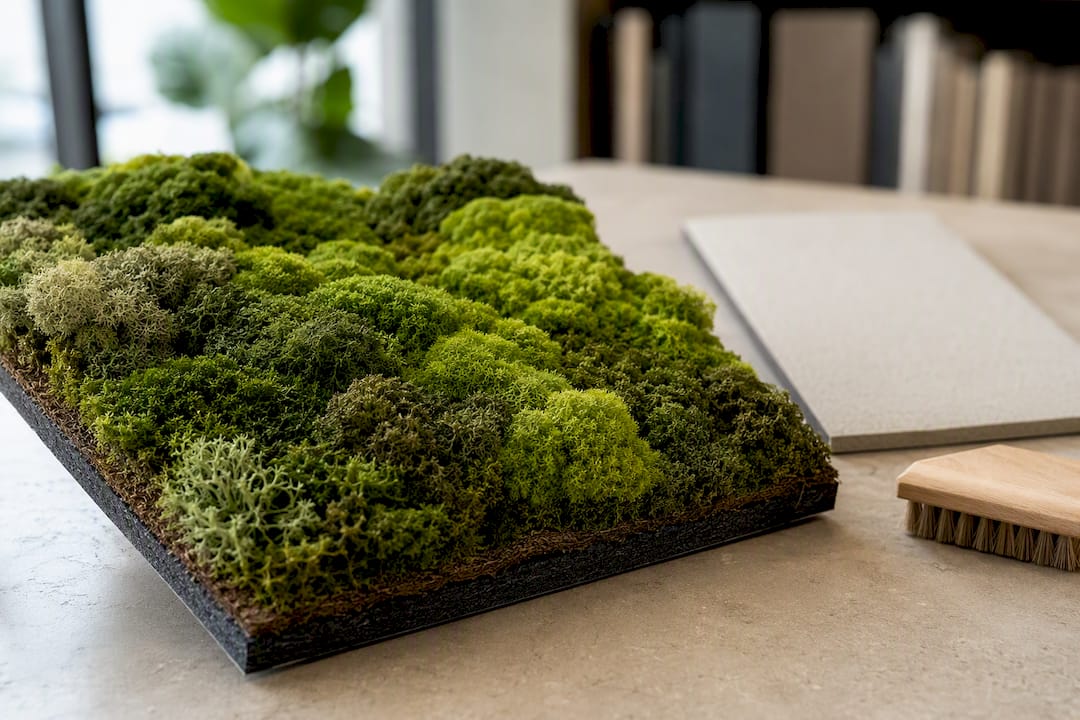
Because preserved walls need no water, no grow lights, and no ongoing horticultural visits, most of the expense is front-loaded into installation rather than spread across years of service calls. That changes how finance teams should think about the purchase. It behaves more like a capital fixture than a recurring utility.
Three variables swing the return more than anything else:
- Moss and backing quality — cheap preserved product fades and sheds within a couple of years; premium material holds color and texture far longer.
- Site conditions — direct sunlight and high humidity accelerate preserved moss degradation and shorten replacement cycles.
- Maintenance model chosen — a managed service with rejuvenation built in avoids the surprise capital call that hits buyers who purchase and forget.
Preserved installations can cost 5 to 11 times less over a 10-year period than an equivalent living green wall, once irrigation, plant replacement, and skilled labor are factored into the living system's upkeep.
Preserved Moss Walls vs. Living Green Walls: Which Costs Less?
The upfront price tag tells you almost nothing about which system actually costs less. Living green walls need irrigation lines, drainage, supplemental lighting, and structural assessment to support hydrated plants. Preserved moss walls require a flat surface, adhesive or mounting hardware, and installation time per panel.
Maintenance is where the gap widens further. Living walls require weekly or biweekly visits from a horticultural technician to prune, feed, treat pests, and replace plants that fail. Preserved moss requires occasional dusting and, in bright or high traffic areas, a moisture check to keep panels from drying out or discoloring. There is also a durability question that rarely comes up until it's too late: controlled studies on indoor moss have found that several living moss species decline within months under typical office humidity and lighting, driven largely by fungal growth. That is not a maintenance failure. It's a structural limitation of asking a living organism to survive conditions it did not evolve for.
Here's how the two systems compare over a typical decade of use:
| Factor | Preserved moss wall | Living green wall |
|---|---|---|
| Upfront cost | typical range per square foot varies by installation and market | typical range per square foot varies by installation and market |
| Annual maintenance cost | Near zero | High (technician visits, water, nutrients) |
| Expected lifespan | 8–10+ years with care | Often months to a few years indoors |
| Risk of failure/replacement | Low, if quality product is used | High, humidity and light dependent |
| Installation complexity | Low, no plumbing or wiring | High, irrigation and lighting required |
| Acoustic performance | Strong, NRC up to ~0.7–0.9 | Comparable when fully established |
Over a 5 to 10 year window, the living wall's recurring labor and replacement costs typically overtake its lower entry price within the first two or three years.
How to Calculate the ROI of a Moss Wall Investment
A defensible ROI model needs six inputs: capital cost, installation cost, annual maintenance, expected lifespan, replacement probability, and any indirect benefits you're willing to quantify, like productivity or reduced turnover.
Here's a simple sequence to build the model:
- Total the capital and installation cost for the square footage you need.
- Add annual maintenance cost. For preserved moss, this is often close to $0; for living walls, budget for technician visits and consumables.
- Divide the total 5-year cost (capital plus five years of maintenance) by five to get an annualized cost.
- Estimate indirect benefits conservatively. Even a small productivity uplift, grounded in the WorldGBC's review of biophilic design outcomes, can offset a meaningful share of annual cost when applied across a floor of employees.
- Compare the annualized cost against those benefits to see how many months or years it takes to break even.
A conservative worked example: a 200 square foot preserved moss installation at $150 per square foot costs $30,000 up front, with negligible annual upkeep. Spread across ten years, that is $3,000 annually. An equivalent living wall at $200 per square foot costs $40,000 up front, plus roughly $8,000 to $12,000 a year in technician visits, water systems, and plant replacement, based on typical living wall maintenance contracts. The living wall's ten-year cost can run three to four times higher than the preserved alternative, even though it started with a smaller cost gap.
Before you commit to any number, stress test it. If the preserved option still wins on cost under those pessimistic assumptions, you have a genuinely conservative case, not a hopeful one.
What Maintenance and Lifespan Should You Actually Expect?
Preserved moss walls require minimal maintenance, usually occasional dusting and humidity checks, while living walls need frequent horticultural visits including irrigation, pruning, pest management, and plant replacement.
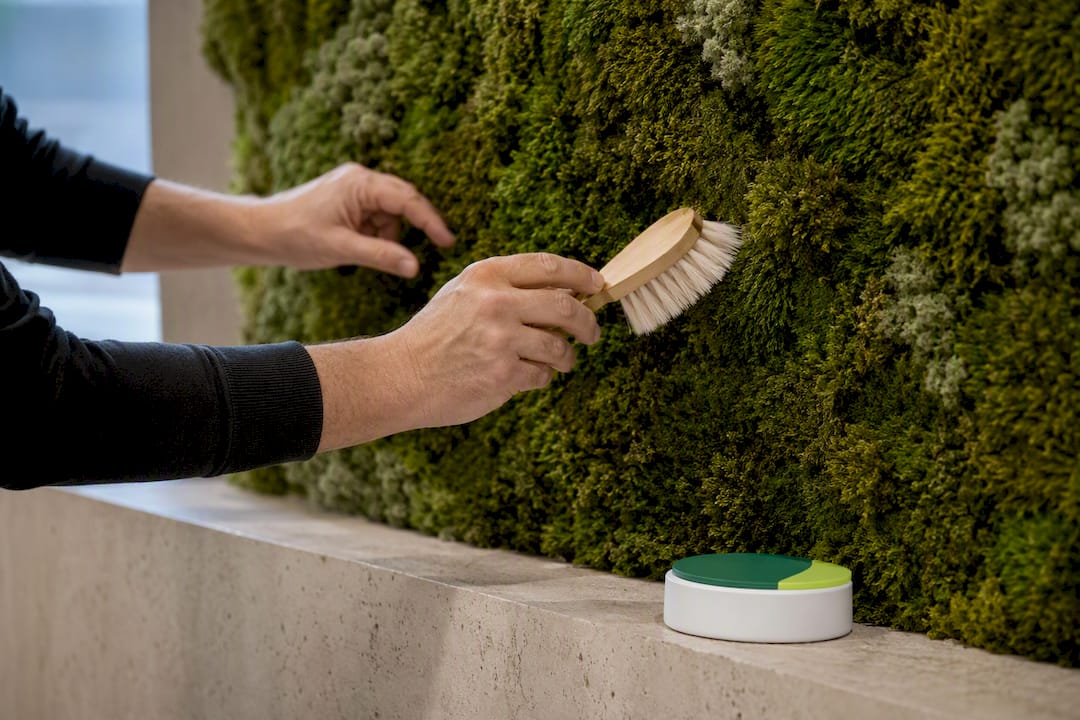
Warranty terms matter more than most buyers realize going in. A quality preserved installation should carry a multi-year warranty against color loss and material failure, and reputable vendors offer a rejuvenation program that refreshes moss color and texture partway through its life rather than forcing a full replacement. That rejuvenation option is what turns a moss wall from a recurring expense into a long-term asset, and it belongs in writing before you sign anything.
Watch for these red flags in a vendor proposal:
- No stated warranty period or vague language like "as needed" replacement.
- No mention of moss grade, sourcing, or preservation method.
- A maintenance plan for a living wall that doesn't specify visit frequency.
Pro Tip: Ask any vendor to quote rejuvenation pricing separately from the original installation. A detailed maintenance breakdown up front prevents an unbudgeted capital call three years into ownership.
What Business Benefits Should Factor Into the ROI Math?
Cost avoidance is only half the ROI story. The other half is what a moss wall does for the people working near it, and some of that is measurable enough to put a number on.
Reviews of biophilic design research consistently link natural elements in the workplace to gains in wellbeing and productivity, and the conceptual framework behind those findings, laid out in Terrapin Bright Green's biophilic design patterns, treats natural texture and greenery as a legitimate design input, not decoration. For ROI purposes, apply that research conservatively: a small, well-supported productivity assumption beats an optimistic one that won't survive scrutiny from finance.
Acoustics are the more concrete benefit. Preserved moss surfaces can achieve noise reduction coefficients up to roughly 0.7 to 0.9 in certain constructions, which matters directly in open-plan offices where sound distraction is a documented productivity drain. If you're citing an NRC figure from a vendor, ask for the third-party lab report behind it. Lab conditions and real installations don't always match.
There's a softer category too, one that's harder to quantify but still worth naming in a proposal: brand impression on clients and candidates, and tenant retention for landlords who install greenery in common areas. Treat these as a qualitative bonus in your model rather than a line item with a dollar figure, unless you have your own retention or leasing data to back it up.
- Productivity and wellbeing gains: apply conservatively, backed by WorldGBC research.
- Acoustic dampening: quantifiable via NRC testing and directly relevant to open-plan noise complaints.
- Brand and retention effects: real, but qualitative until you have your own data.
How Greenspace Plants Approaches Moss Wall ROI
Some indoor plant service providers install turnkey moss wall projects and offer all-inclusive monthly services covering plant design, installation, maintenance, and replacements for a fixed fee with no upfront cost. That structure shifts moss wall risk away from the buyer: instead of absorbing a surprise repair or replacement bill years into ownership, the cost is smoothed into a predictable monthly line item.
Office plant programs of this kind often show payback within 12 to 18 months once reduced turnover in plant assets and lower internal facilities labor are factored in, based on typical client experience with all-inclusive service models. That's the kind of return finance teams can actually plan around.
When you request a proposal, ask Greenspace Plants for three specific things:
- A site visit to assess lighting, humidity, and structural conditions before quoting.
- A written total cost of ownership projection, not just an installation price.
- Warranty terms and rejuvenation program pricing spelled out in the contract.
Preserved or Living: Which One Actually Makes Sense?
Preserved moss walls are the right call for most commercial spaces we evaluate: offices, lobbies, and retail environments where nobody wants to manage irrigation schedules or budget for a horticultural technician. Living walls only make financial sense when a client already has plant maintenance infrastructure in place and specific design or air quality goals that justify the added labor. Before signing anything, get a site survey and a written five-year cost comparison. A short pilot wall is often the cheapest way to test moss quality and vendor reliability before committing to a full installation.
— Nicole
Turn a Moss Wall Proposal Into a Predictable Budget Line
Greenspace Plants removes the guesswork that usually derails a moss wall budget: with Greenspace+, design, installation, maintenance, and replacements are bundled into one fixed monthly fee, so there's no upfront capital outlay and no separate repair invoice showing up two years later.
That matters most for the office managers and facilities leads who don't have a horticultural background and don't want to build one. A managed service also carries a healthy plant guarantee, which means the replacement risk that inflates a living wall's total cost of ownership is handled as part of the contract, not billed separately when something fails. For teams comparing acoustic partition or interior material options alongside a moss wall, it's also worth reviewing complementary products like green partition panels before finalizing a floor plan.
If you're ready to see what this looks like for your space, browse Greenspace Plants's indoor plant design portfolio or request a site visit through the interior plant services page to get a written cost comparison before you commit to a vendor.
Sources
For procurement teams building their own case: the preserved vs. living cost breakdown, the indoor moss survival study, the WorldGBC productivity report, and Garden on the Wall's TCO analysis each back a distinct claim made above and are worth reading in full before a purchase decision.
- Preserved Moss Walls vs Living Walls - Greenmood
- Sustainability — experimental study on moss survival in indoor settings
- WorldGBC — Health, Wellbeing & Productivity in Offices (report)
- Garden on the Wall — The economics of high-quality moss walls & preserved gardens