
Plant design for hospitality is the strategic integration of living plants, natural materials, and biophilic elements into hotels, restaurants, and resorts to improve guest experience, well-being, and revenue. This is not interior decoration. It is a deliberate operational and commercial discipline, grounded in the science of biophilic design, which reconnects people with nature to reduce stress and increase satisfaction. Guests form an emotional impression of a hospitality space within the first 5 seconds of entry, making your plant layout a revenue decision, not just an aesthetic one. Greenspace Plants works with hospitality operators across Toronto, Vancouver, and Calgary to build exactly this kind of intentional greenery into commercial spaces, from lobby installations to restaurant dining rooms.
What is a plant design for hospitality, and why does it matter?
Plant design for hospitality, known in the industry as biophilic design, goes far beyond placing a few potted ferns near the front desk. It is a full system that combines plant selection, spatial layout, lighting, natural materials, and sometimes water features to create environments that feel alive and restorative. The goal is measurable: longer guest stays, higher spending, and stronger brand loyalty.
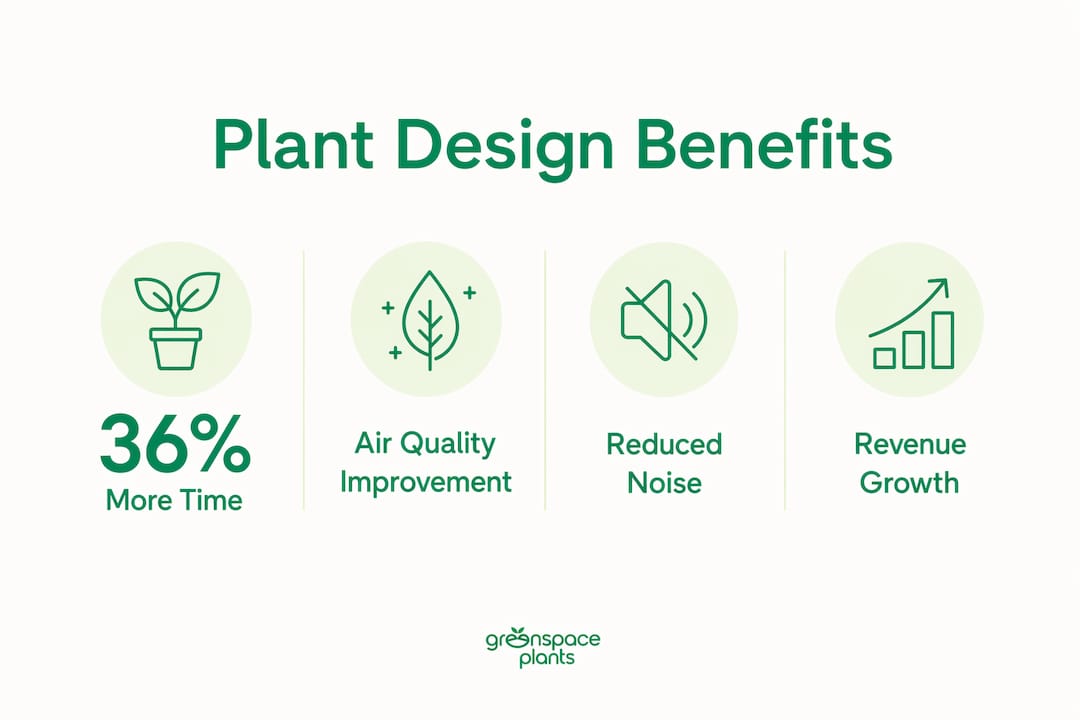
Hospitality venues with biophilic-designed lobbies see guests spend 36% more time in those spaces. That extended dwell time translates directly into higher food and beverage revenue and a 19% lift in repeat bookings. Stress levels among guests in well-planted spaces drop by 15%. These are not soft benefits. They show up on your income statement.
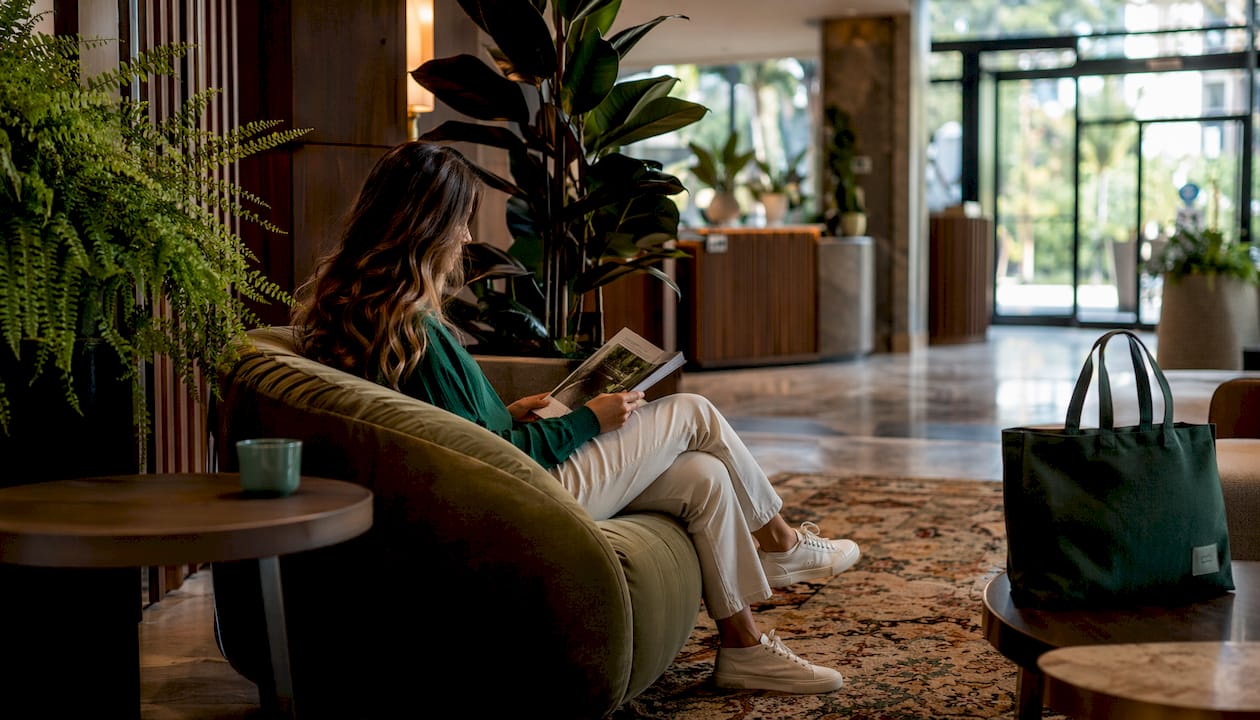
Indoor plants improve air quality, reduce ambient noise, and eliminate the need for synthetic air fresheners, supporting both guest wellness and your sustainability commitments. For hospitality operators, that combination of sensory improvement and operational efficiency is the core argument for investing in plant design. The importance of greenery in hospitality is not a trend. It is a proven performance lever.
How does plant design influence guest behavior?
Guest perception forms fast, and plants are one of the most powerful tools you have to shape that first impression. A lobby with layered greenery, from floor-level planters to ceiling-height living walls, signals quality, care, and comfort before a single word is spoken. That signal directly influences perceived value and willingness to pay premium rates.
The behavioral effects go deeper than aesthetics. Biophilic design integrating natural materials, living walls, and calibrated lighting produces measurable gains in guest satisfaction and dwell time. Guests who linger spend more. Guests who feel calm return. The psychology is straightforward: nature exposure lowers cortisol, which makes people more relaxed, more generous, and more likely to form positive associations with your property.
For restaurants, the effect is equally direct. Plant design ideas for restaurants often focus on creating distinct zones using tall planters or hanging installations, which give diners a sense of privacy without physical walls. That perceived intimacy increases table satisfaction scores and average check size.
Pro Tip: Layer your plant design across three height levels: floor, mid-height, and overhead. This creates an immersive canopy effect that guests feel rather than consciously notice, producing stronger emotional responses than a single row of plants along one wall.
Treating plants as a revenue-driving element rather than decoration improves guest well-being, reduces staff absenteeism, and supports premium pricing. That reframe, from cost center to revenue driver, is the most important shift a hospitality operator can make when approaching plant design.
What are the core plant design concepts for hospitality spaces?
Effective interior plant design for hotels and restaurants draws on several well-established techniques. Understanding these methods helps you make smarter decisions about where to invest and what to expect.
Biophilic design principles form the foundation. This approach treats nature connection as a human need, not a luxury. It calls for integrating plants alongside natural light, organic textures like wood and stone, and spatial variety to create environments that feel genuinely restorative rather than artificially decorated.
Key plant categories serve distinct functional roles:
- Air-purifying species such as Philodendron scandens and Drynaria quercifolia filter particulates and volatile organic compounds, improving indoor air quality without mechanical systems.
- Noise-absorbing plants with dense foliage, like large-leafed tropicals and moss walls, reduce echo and ambient noise in high-traffic areas such as lobbies and open dining rooms.
- Structural statement plants including tall Ficus or Dracaena varieties anchor visual focal points and define spatial zones without permanent construction.
- Hydroponic and potted long-life plants signal sustainability to guests and reduce waste compared to cut flowers, which guests increasingly prefer.
Modular green wall systems represent the most technically advanced option in hospitality plant design. Modern installations use modular systems with automated irrigation and grow-lighting to sustain plant health in high-traffic, low-natural-light environments. One well-documented installation uses more than 2,000 plants across a 107 square meter modular system. That scale requires engineering, not just gardening.
Pro Tip: Match your plant palette to your brand narrative. A resort targeting wellness travelers benefits from lush, tropical species that evoke escape. A business hotel in a city center reads better with clean-lined, architectural plants like ZZ plants or snake plants that signal precision and calm.
| Design method | Primary guest impact |
|---|---|
| Living green walls | Strong visual impression, air filtration, noise reduction |
| Floor-level planters | Zone definition, privacy, wayfinding |
| Overhead hanging installations | Immersive canopy effect, perceived warmth |
| Hydroponic plant systems | Sustainability signaling, low maintenance footprint |
| Natural material integration | Tactile comfort, perceived quality, brand coherence |
How do you maintain a hospitality plant installation?
Maintenance is where most hospitality plant programs fail. A beautifully designed installation that receives inconsistent care degrades quickly, and neglect leads to rapid decline in perceived quality. Guests notice dying plants. The effect on brand perception is the opposite of what you intended.
Budget planning matters here. Typical annual maintenance costs run approximately 8–10% of initial capital expenditure. That figure covers irrigation, pruning, cleaning, lighting calibration, and plant replacements. Operators who model this cost upfront avoid the common trap of under-resourcing maintenance after installation.
A practical maintenance program for hospitality plant design covers these priorities:
- Irrigation scheduling. Automated drip systems or self-watering planters reduce labor and prevent both overwatering and drought stress, the two most common causes of plant failure in commercial settings.
- Pruning and shaping. Regular pruning keeps plants within their designated footprint and prevents overgrowth that blocks sightlines or creates safety hazards in high-traffic corridors.
- Cleaning and dusting. Dusty foliage looks neglected and reduces photosynthetic efficiency. Weekly wipe-downs on large-leafed species maintain the polished appearance guests expect.
- Lighting calibration. Plants in low-natural-light zones require grow-lighting tuned to the correct spectrum. Quarterly checks prevent gradual light degradation that weakens plants over time.
- Seasonal plant rotation. Swapping species seasonally keeps the installation looking fresh and allows plants to recover in better-lit environments, extending their lifespan.
Choosing the right species from the start reduces maintenance burden significantly. Native and low-maintenance tropical species adapted to indoor conditions require less intervention and recover faster from the stress of high-traffic environments. For detailed guidance on restaurant plant care, the specific demands of food service environments require extra attention to hygiene and pest management.
What do real hospitality plant design installations look like?
The most instructive examples of landscape design for hospitality come from properties that treat plant design as a core brand element, not an afterthought.
Green walls with native plant species promote thermal comfort, air filtration, and biodiversity in luxury hospitality settings. One high-profile installation uses 2,100 plants, including species selected specifically for functional roles: Drynaria quercifolia for structural drama and Philodendron scandens for air purification. The result is a living system that performs environmental work while creating a signature visual identity for the property.
Practical outcomes from well-executed hospitality plant design include:
- Higher guest satisfaction scores linked directly to the presence and quality of natural elements in common areas and guest rooms.
- Increased food and beverage revenue in restaurant and bar spaces where plant design extends dwell time and improves perceived ambiance.
- Stronger sustainability credentials that support premium pricing, as sustainability in plant choices aligns with modern guest expectations and increases willingness to pay.
- Differentiated brand identity that photographs well for social media, generating organic marketing reach without additional spend.
The most effective installations align plant choices with the property's target guest profile. A boutique hotel serving design-conscious travelers might invest in a sculptural moss wall as a lobby centerpiece. A resort focused on wellness might extend its plant design to outdoor terraces and spa corridors, creating a continuous nature experience throughout the guest journey. For inspiration on common area plant layouts, the principles translate directly from office environments to hospitality settings.
Key Takeaways
Effective plant design for hospitality is a measurable revenue strategy, not a decorative choice, and it requires integrated planning, species selection, and sustained maintenance to deliver results.
| Point | Details |
|---|---|
| First impressions are fast | Guests form emotional impressions within 5 seconds, making plant placement at entry points critical. |
| Dwell time drives revenue | Biophilic spaces increase guest time on property by 36%, directly lifting food and beverage spend. |
| Maintenance protects your investment | Annual upkeep costs 8–10% of initial capital expenditure; neglect reverses all guest experience gains. |
| Species selection is functional | Choose plants for air quality, noise absorption, and durability, not just visual appeal. |
| Sustainability signals value | Guests prefer long-lasting potted and hydroponic plants and reward sustainable choices with higher spend. |
Why plant design deserves a seat at the operations table
The hospitality industry has a persistent blind spot: plant design gets assigned to the interior design team at the start of a project, then handed off to facilities management with no clear owner and no maintenance budget. I have seen this pattern repeat across properties of every size. The installation looks stunning at opening. Eighteen months later, half the plants are struggling, and no one knows whose job it is to fix them.
The fix is not complicated. Plant design needs to be treated the same way you treat your HVAC or your kitchen equipment: as an operational system with a lifecycle, a maintenance schedule, and a budget line. Biophilic design implemented as a full system, including lighting, sound, materials, and plants, produces results that isolated greenery never will. That means cross-functional ownership from day one, with your operations team involved in the design phase, not just the cleanup phase.
The other misconception I push back on regularly is that plant design is a luxury reserved for high-end properties. The data does not support that. A well-chosen cluster of healthy plants in a mid-market hotel lobby produces the same psychological effect as a six-figure green wall. The scale differs. The mechanism is identical. Start where your budget allows, maintain what you install, and build from there.
— Nicole
How Greenspace Plants supports your hospitality plant design
Greenspace Plants brings together plant design, installation, and ongoing care under one program built specifically for commercial hospitality environments in Toronto, Vancouver, and Calgary.
The Greenspace+ program covers everything from initial design consultation and species selection to regular maintenance visits and plant replacements, all for a fixed monthly fee with no upfront costs. That structure removes the maintenance gap that undermines most hospitality plant programs. Whether you need a statement green plant wall for your lobby or a full indoor plant design program across your property, Greenspace Plants handles the details so your team can focus on guests. Contact Greenspace Plants to schedule a consultation and see what a properly maintained plant program looks like in practice.
FAQ
What is biophilic design in hospitality?
Biophilic design in hospitality is the intentional integration of natural elements, including plants, natural light, water, and organic materials, into hotel and restaurant environments to improve guest well-being and satisfaction. It is the industry standard term for what most people call plant design for hospitality.
How do plants affect guest spending in hotels?
Guests in biophilic-designed spaces spend 36% more time on property, which directly increases food and beverage revenue and repeat booking rates. The extended dwell time is the primary commercial mechanism behind plant design investment.
What plants work best for hotel lobbies?
Air-purifying species like Philodendron scandens, structural plants like Ficus and Dracaena, and low-maintenance tropicals adapted to indoor light conditions perform best in hotel lobbies. Species selection should balance visual impact with the practical demands of high-traffic, variable-light environments.
How much does hospitality plant maintenance cost?
Annual maintenance for a hospitality plant installation typically runs 8–10% of the initial capital expenditure. That budget covers irrigation, pruning, cleaning, lighting, and plant replacements needed to keep the installation performing at the level guests expect.
Can small restaurants benefit from plant design?
Plant design produces measurable benefits at any scale. Even modest installations using tall planters or hanging plants to define dining zones improve perceived ambiance, guest comfort, and table satisfaction scores without requiring a large capital investment.