

A plant health assessment is an on-site diagnostic visit where a trained technician documents the condition of every plant in your space, diagnoses specific problems like underwatering, pests, or poor light, and hands you a prioritized list of fixes. It's the difference between guessing why your ficus keeps dropping leaves and knowing exactly why. If you need reliable condition data to set service benchmarks or you're deciding whether to fold plant care into a monthly maintenance plan, schedule an assessment before you sign anything.
Two things separate a real assessment from a quick walkthrough:
- The technician follows an Integrated Pest Management (IPM) protocol, not a guess-and-spray approach.
- Every plant gets a documented moisture reading and a light reading, not a visual once-over.
Key Takeaways
A commercial plant health assessment works because it replaces guesswork with documented moisture, light, and pest data that drives prioritized fixes and contract terms.
| Point | Details |
|---|---|
| Request measurable data | Ask for moisture readings and foot-candle light readings for every plant, not a visual summary. |
| Confirm IPM is included | Verify the provider follows an Integrated Pest Management protocol as standard, not an add-on. |
| Set SLA benchmarks in writing | Require urgent response times within two days and a prompt replacement window. |
| Use the priority scale | Sort report findings into A (immediate), B (schedule), C (monitor) to act efficiently. |
| Consider an all-inclusive plan | Greenspace+ builds assessment tasks like IPM checks and container audits into a fixed monthly service with replacement guarantees. |
Table of Contents
- What Does a Commercial Plant Health Assessment Include?
- How Do Technicians Measure and Diagnose Plant Problems?
- How Often Should You Schedule Plant Maintenance Visits?
- What Should a Plant Condition Report Look Like?
- Why Hiring a Plantscaping Pro Beats Managing It Yourself
- An Editorial Take on Operations-First Plant Care
- Get an Assessment Built Into Your Plant Care Plan
- Sources
What Does a Commercial Plant Health Assessment Include?
A technician moving through your space works from a checklist, not intuition. Here's what actually happens at each plant, in order.
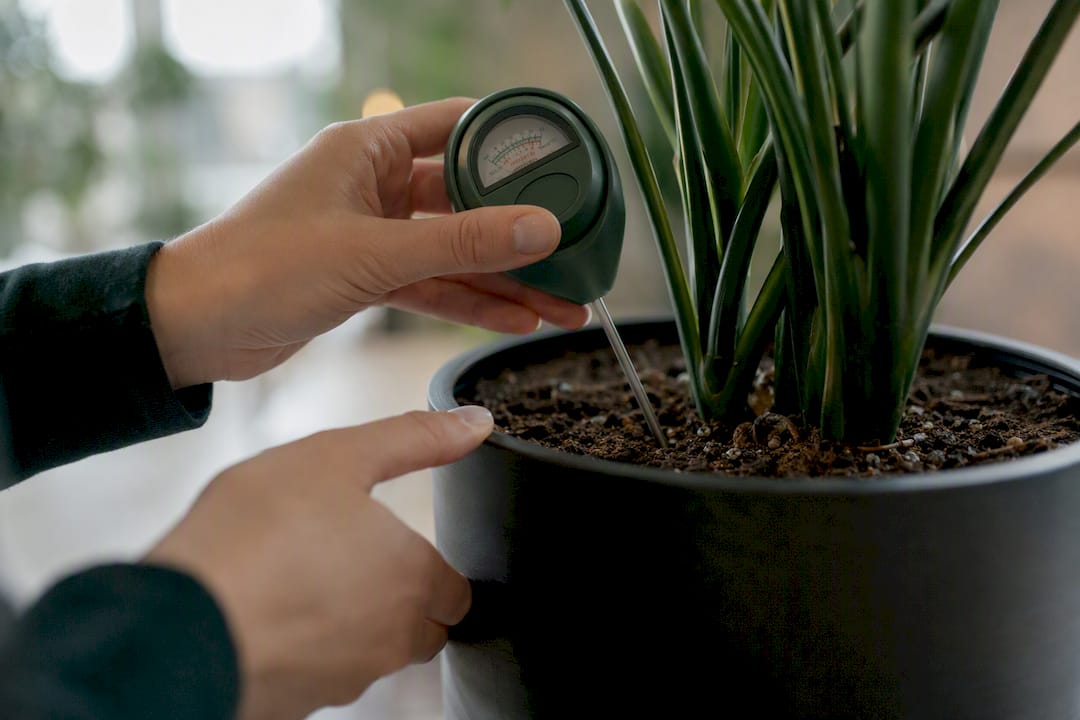
- Moisture and vital-sign check. The technician inserts an electronic moisture meter with a depth probe into the root zone, not just the topsoil, because surface soil dries faster and gives a false reading. A meter that reads dry at the surface but wet six inches down means you're watering too often on the wrong schedule.
- Foliage inspection. This means checking for discoloration, wilting or loss of turgor (the firmness that tells you a plant is properly hydrated), dust buildup that blocks photosynthesis, and any mechanical damage from cleaning crews or foot traffic.
- Pest and disease inspection. A loupe, essentially a small magnifying lens, lets the technician spot early signs of spider mites, scale, or fungus gnats before they're visible to the naked eye. Anything found gets logged under the property's IPM Council Canada protocol, which prioritizes early detection and targeted treatment over blanket pesticide use.
- Container system audit. Liners, saucers, and reservoirs get checked for cracks, drainage blockages, and condensation risk, since a failing liner can quietly damage flooring or carpet long before anyone notices the plant itself is struggling.
- Pruning, cleaning, and documentation. The technician removes dead growth, wipes down leaves, rotates the plant if it's leaning toward its light source, top-dresses the soil if needed, and photographs the result for the report.
Pro Tip: Ask any provider whether their per-visit checklist includes container audits. Liner failures and condensation damage are among the most common hidden causes of recurring plant problems, and they rarely show up unless someone is actually checking underneath the pot.
How Do Technicians Measure and Diagnose Plant Problems?
Diagnosis relies on specific tools and thresholds, not impressions. A moisture meter reading in the 1 to 3 range (on the standard 1 to 10 scale most probes use) signals the soil is bone dry and needs water immediately. A reading above 7 or 8, paired with yellowing leaves, usually points to root rot rather than thirst. Container volume matters here too: a six-inch pot dries out far faster than a 24-inch planter, so watering frequency has to match container size, not a fixed weekly schedule.
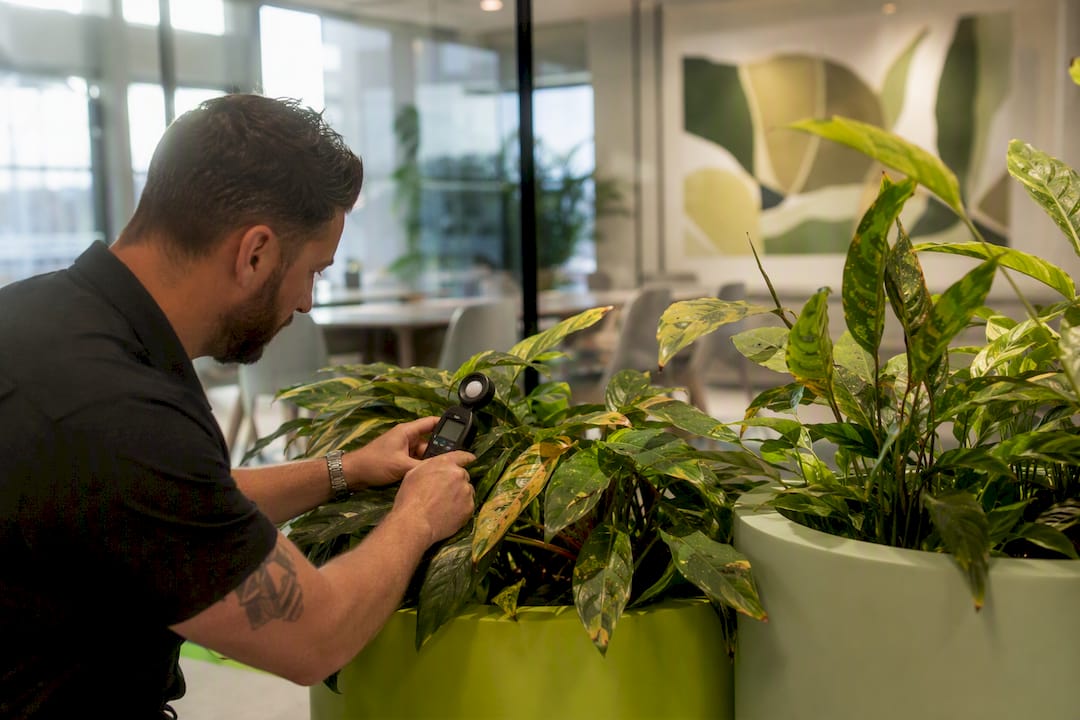
Light gets measured in foot-candles, and plant species vary by light preference categories such as low-light, medium-light, and high-light plants with increasing foot-candle needs.
A plant sitting at 40 foot-candles when it needs 150 isn't sick, it's starved of light, and no amount of watering adjustment will fix that. Technicians also log temperature and humidity near each plant, since an HVAC vent blasting cold, dry air onto a tropical plant will cause leaf drop that looks like a watering problem but isn't.
Maintained indoor plants can measurably raise office humidity, and research on vertical greening links that improvement to reduced sick-leave symptoms tied to dry indoor air. That's a real business reason to take humidity readings seriously, not just an aesthetic detail.
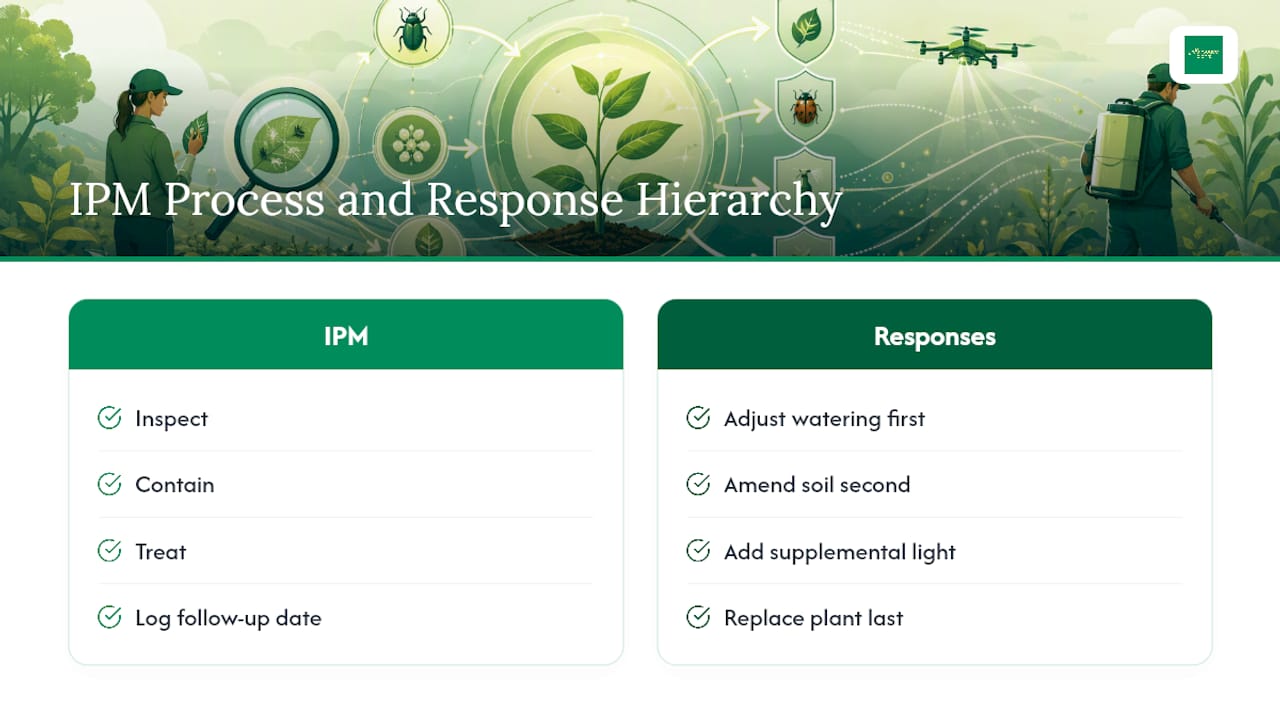
IPM detection follows four steps: inspect, contain, treat, and log the follow-up date. When a reading points to a problem, the recommended action follows a hierarchy: adjust watering first, amend the soil second, add supplemental light third, and replace the plant only when none of those will realistically bring it back.
How Often Should You Schedule Plant Maintenance Visits?
Visit frequency depends on plant density and visibility, not a one-size-fits-all calendar. A lobby with a living wall or heavy foot traffic needs weekly attention. A standard office with tabletop plants in low-traffic corners can run on a biweekly or monthly cadence without issues.
Contract benchmarks worth writing into any agreement include urgent response times within two days, a prompt replacement window, and regular documented reporting.
Industry guidance on commercial maintenance models generally splits service into three shapes: Plant-as-a-Service (a fixed monthly fee covering design, installation, care, and replacements), maintenance-only contracts (you own the plants, the provider just services them), and in-house care (a staff member waters on the side, with no professional diagnostics at all). Leasing models tend to shift replacement risk to the provider, which often lowers total cost over a five-year horizon compared to owning plants outright and eating replacement costs yourself.
| Cost Driver | Typical Range Factor |
|---|---|
| Small office (few plants) | Lower monthly fee, biweekly or monthly visits |
| Large atrium or living wall | Higher fee, weekly visits, added IPM monitoring |
| Plant ownership model | Maintenance-only shifts replacement cost to client |
| Leasing model (Plant-as-a-Service) | Provider absorbs replacement risk |
Any contract you sign should spell out replacement guarantee terms, confirm IPM is included (not billed as an add-on), and require photo-documented visit logs with a clear escalation path if something goes wrong.
What Should a Plant Condition Report Look Like?
A useful report is compact enough to scan in two minutes but specific enough to act on. Request one with these fields for every plant: location, species, moisture reading, light reading, pest status, recommended action, priority level, and an estimated timeline if replacement is needed.
Priority levels should follow a simple scale:
- A: immediate. Active root rot, severe pest infestation, or a safety hazard. Action happens within 48 hours.
- B: schedule. Chronic low light or borderline moisture stress. Action gets scheduled within the next visit cycle.
- C: monitor. Minor cosmetic issues with no urgent risk. Logged and rechecked next visit.
| Plant ID | Issue Found | Priority | Recommended Action |
|---|---|---|---|
| Lobby Ficus #3 | Root rot, moisture reading over 8 | A | Remove, treat container, schedule replacement within 7 days |
| Reception Dracaena #1 | Light reading 45 foot-candles (needs 100+) | B | Relocate near window or add grow light next visit |
Any provider unwilling to give you this level of detail in writing isn't actually assessing your plants, they're just watering them.
Why Hiring a Plantscaping Pro Beats Managing It Yourself
A one-time assessment tells you what's wrong today. Greenspace Plants built Greenspace+ so that finding never sits unresolved. It's an all-inclusive monthly service covering design, installation, ongoing maintenance, and replacements, with no upfront cost and no long-term lock-in.
Greenspace technicians run the same checks covered above at every visit:
- Moisture and vital-sign readings with depth probes
- IPM-based pest inspection and recordkeeping
- Container and liner audits to catch condensation or drainage issues early
- Soil amendments and top-dressing as needed
That data doesn't just sit in a report. It feeds directly into your maintenance plan, so a plant flagged for low light gets relocated before it declines, and one that can't recover gets replaced under the guarantee before it's visibly unhealthy. That's the real value: problems get caught while they're still cheap to fix.
Pro Tip: If a provider can't tell you their average replacement window in writing, assume it's longer than you'd like. Ask before you sign, not after a dead plant sits in your lobby for a month.
An Editorial Take on Operations-First Plant Care
Most advice on plant care treats it as a soft, cosmetic concern, something you deal with when a leaf looks bad. The research here points somewhere different: the businesses that get real value out of indoor plants treat them like equipment with a maintenance schedule, not decor with a watering can.
The conventional wisdom, "just hire someone to water the plants," undersells what a proper assessment actually catches. None of that shows up on a casual walkthrough, and none of it gets fixed by someone whose job description is "waters plants on Tuesdays."
If you take one thing from this, prioritize the documentation over the visit itself. A technician who shows up weekly but leaves no written moisture and light data isn't giving you anything you can act on or compare against next quarter. Demand the report before you evaluate the frequency.
— Nicole
Get an Assessment Built Into Your Plant Care Plan
Most facility managers only think about plant assessments after something already looks wrong, at which point you're paying for a diagnosis and a replacement in the same visit. Greenspace Plants folds that diagnostic work into Greenspace+, so the moisture readings, light checks, and IPM inspections happen automatically at every visit, not as a separate line item you have to request.
That means your monthly fee already covers design, installation, ongoing care, and replacements under a healthy plant guarantee, with no upfront cost and no long-term contract to escape from if your space changes. If you're weighing a living wall or a full interior redesign, the same team handles plant design in coordination with interior designers, so the assessment data shapes the layout from day one instead of getting bolted on afterward. Browse the look-book for examples, or request a site visit to see what your own space needs.
Sources
- IPM Council Canada
- Sustainability study on vertical greening and sick-leave (MDPI, 2021)
- Commercial plant maintenance models and SLA benchmarks