
Yes, interior plants belong in your restaurant, and they work best when treated as design fixtures rather than afterthoughts. Choose resilient, low-light species suited to your layout, integrate them into your architecture, and put a maintenance plan behind them, whether that's a trained staffer or a full-service partner like Greenspace Plants. Research backs this up: one experimental study found live plants meaningfully boosted guest satisfaction and loyalty, and designers increasingly treat greenery as structural rather than decorative.
TL;DR:
- Resilient plants like snake plants, ZZ plants, and parlour palms are best suited for low-light restaurant areas and forgiving of irregular watering.
- Strategic plant placement, such as green walls and zoning planters, can improve acoustics, privacy, and circulation without costly construction.
- A consistent maintenance schedule including weekly watering, dusting, and seasonal pruning prevents plant health issues that damage brand perception.
- Outsourcing plant care through a full-service subscription ensures ongoing plant health, installation, and replacements, saving staff time and preventing visible decline.
- Prioritizing plant placement and maintenance over decorative placement enhances guest satisfaction and avoids the common mistake of ineffective light mapping.
Table of Contents
- Best Restaurant Interior Plants by Light, Heat, and Role
- Using Plants as Architecture, Not Accessories
- The Real Maintenance Checklist Restaurants Skip
- Styling Greenery to Match Your Restaurant's Concept
- When It Makes Sense to Hire a Plantscaping Service
- Why Most Restaurants Get Greenery Backwards
- Let Greenspace Plants Handle the Plant Side of Your Restaurant
- Sources
Best Restaurant Interior Plants by Light, Heat, and Role
Not every plant survives a dinner rush, a walk-in cooler blast, or three weeks of inconsistent watering. The species that hold up in restaurants share a few traits: they tolerate low or inconsistent light, forgive irregular watering, and don't sulk when the HVAC swings the room from cold to hot in an hour. Practitioner guides consistently point toward the same short list of plants that "hold" rather than merely thrive under these conditions.
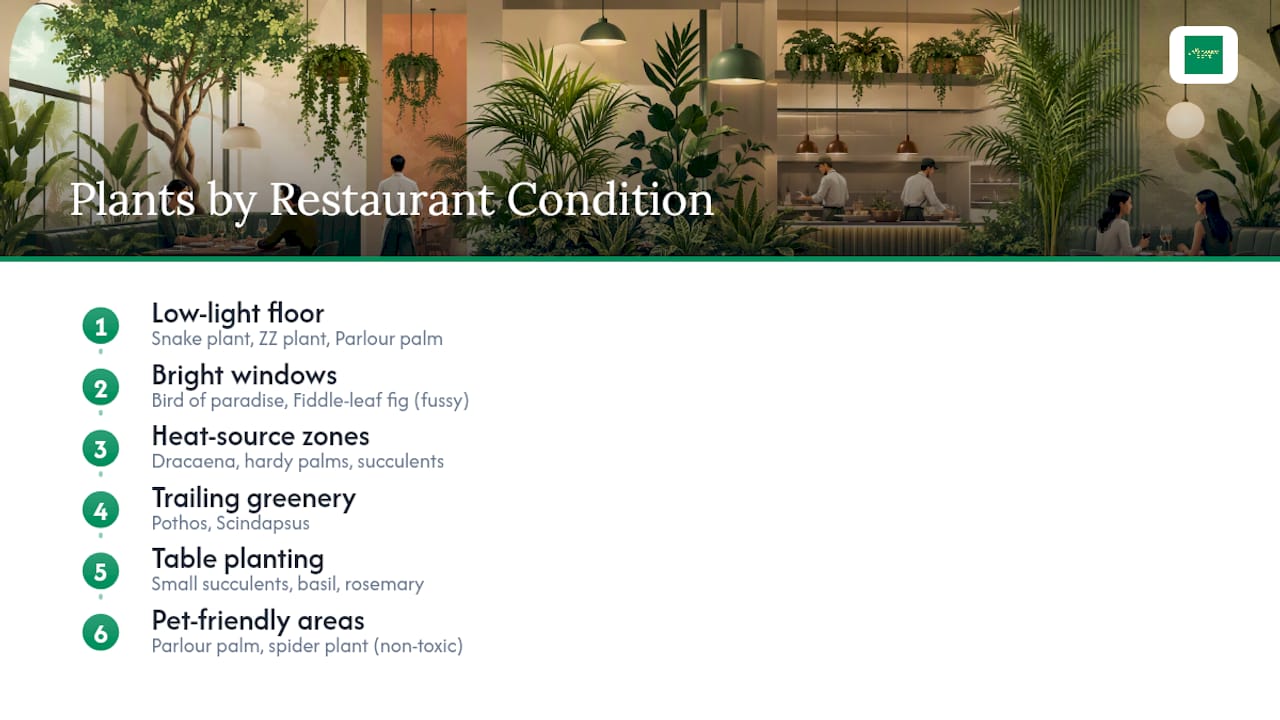
For low-light floor space, near booths or interior walls without windows, three plants earn their keep. The snake plant (Sansevieria) stores water in thick leaves and tolerates weeks of neglect. The ZZ plant (Zamioculcas) does the same trick with glossy foliage that resists dust buildup, a real advantage near a busy dining room. The parlour palm (Chamaedorea) softens corners with a delicate look while still tolerating dim conditions most palms would reject.
Bright windows and atriums can support showier specimens. A bird of paradise (Strelitzia) delivers a tropical, photogenic silhouette in direct or filtered light. A fiddle-leaf fig looks striking too, but it's genuinely fussy: sudden drafts, inconsistent watering, or a table move can trigger leaf drop, so reserve it for stable, low-traffic corners rather than a spot near a swinging kitchen door.
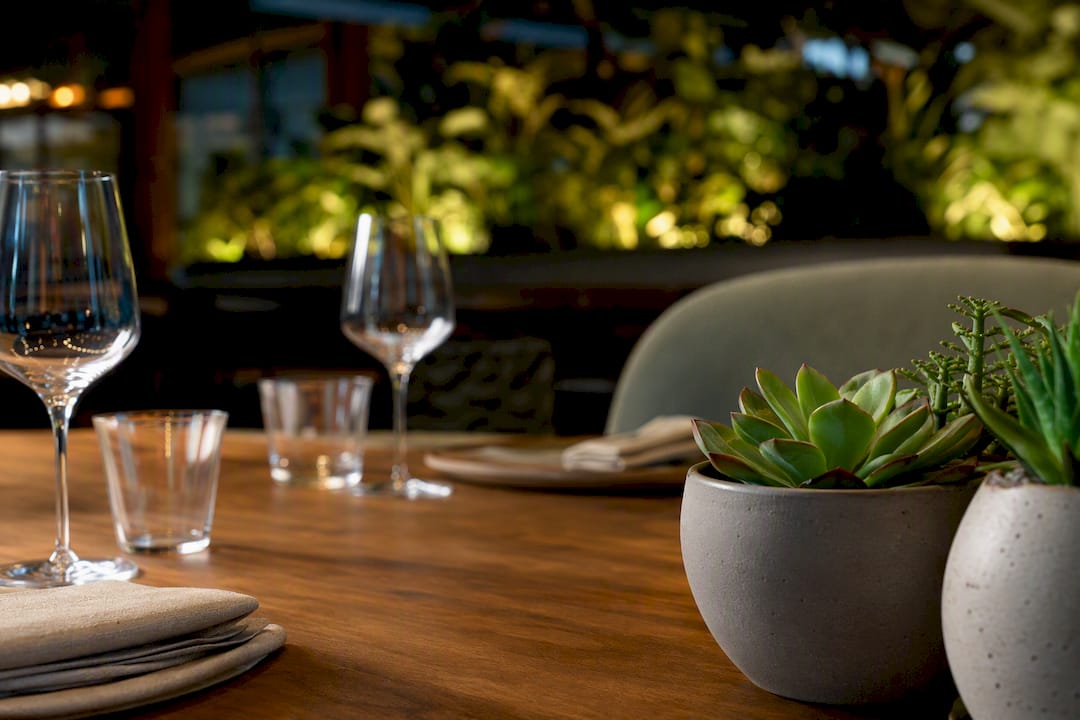
Near heat sources like service lines or heat lamps, reach for dracaena, hardy palm varieties, or succulents, all of which tolerate dry air and temperature swings that would stress a fern. For trailing greenery on bar backs or open shelving, pothos (Epipremnum) and scindapsus cascade attractively and need only occasional watering. At the table, small succulents or culinary herbs like basil and rosemary add a thematic touch, though edible plants at guest-facing tables need a strict no-pesticide policy and separation from any shared surfaces to avoid hygiene concerns.
Pro Tip: In pet-friendly patio areas, stick to genuinely non-toxic cultivars like parlour palm or spider plant. A gorgeous dieffenbachia isn't worth an emergency vet call.
Using Plants as Architecture, Not Accessories
Designers who specialize in hospitality spaces increasingly integrate plants into the architecture itself, treating them the way an architect treats a load-bearing wall or a sound baffle. That shift changes how you plan a floor plan.
- Zoning and privacy. A row of medium-height planters between booths creates the sense of a private table without the cost of a permanent partition.
- Acoustic buffering. Dense foliage absorbs sound in hard-surfaced dining rooms, cutting the echo that makes a full restaurant feel louder than it needs to.
- Focal green walls. A single living wall near the host stand or bar gives guests an obvious photo backdrop and signals design intent the moment they walk in.
- Circulation and wayfinding. Strategic groupings can steer foot traffic away from server paths without a velvet rope in sight.
Scale matters as much as placement. A single statement specimen, like a six-foot bird of paradise, reads as intentional near a host stand; a scattering of small pots in the same spot looks like an afterthought. Before finalizing any layout, walk the room with a light meter and note where heat lamps, kitchen exhaust, or drafty doors will stress a plant that looks perfect on paper. A structured design process that maps light and heat zones before ordering plants prevents the most common and expensive placement mistakes.
The Real Maintenance Checklist Restaurants Skip
A dying fichus by the door does more damage to a restaurant's image than an empty corner ever would. Industry commentary is blunt on this point: inconsistent plant health actively hurts brand perception, which is why a firm maintenance rhythm matters more than the initial purchase.
A workable schedule breaks down like this:
- Daily: a quick visual scan for wilting, yellowing, or pest activity near entrances and high-traffic zones.
- Weekly: wipe dust off broad leaves (dust blocks light absorption) and water according to each species' actual need, not a blanket schedule.
- Monthly: check soil moisture depth, inspect for pests like spider mites or fungus gnats, and rotate pots toward light sources since most plants lean toward their brightest exposure over time.
- Seasonally: prune leggy growth and swap out any plant that hasn't recovered after two consecutive treatment attempts.
Documentation prevents most failures. Practitioner data ties operational failures, poor watering, greasy dust buildup, bad placement, to the majority of plant losses in commercial settings, and a laminated care card zip tied to each planter fixes most of it. Staffing the work in house works if someone owns it consistently; a part time contractor covers gaps but adds another vendor to manage; a full-service subscription removes the burden entirely, with scheduled visits and plant guarantees built into the fee. On hygiene, keep every planter and its runoff tray well clear of prep surfaces, and pull any plant showing persistent pests before it becomes a health inspector's talking point. Detailed operational guidance for restaurant settings is covered in Greenspace Plants' care guide.
Styling Greenery to Match Your Restaurant's Concept
The right plant choice depends heavily on what kind of room you're running. A casual café suits mixed succulent arrangements on each table paired with trailing pothos along open shelving, a low-cost combination that reads as intentional without demanding much upkeep. Fine dining calls for restraint: one statement specimen near the entrance, plus subtle ledge planting along banquettes, keeps the eye on the plate rather than competing with it. Bars benefit from height, tall palms or dracaena near a back bar add drama and break up a wall of bottles.
Table-level plants should stay small enough that guests can see across the table, and pot finishes should echo your existing material palette, matte ceramic for warm woods, brushed metal for industrial spaces. For photo-friendly moments, light a green wall or specimen plant with a warm, diffused source rather than a hot spotlight that will scorch leaves within weeks. When you're testing layouts before committing, interior visualization tools can show how a planting scheme will actually look under your lighting before you buy a single pot.
Pro Tip: If a zone gets fewer than two hours of usable light a day, a preserved moss panel or a high-quality artificial specimen will outperform any live plant and never need a bandage fix.
When It Makes Sense to Hire a Plantscaping Service
Outsourcing makes the most sense when staff time is already stretched, when you need a consistently polished look every single service, or when you're managing something more complex, like a living green wall or plants across multiple locations. A struggling houseplant is a personal failure; a struggling restaurant plant is a visible brand problem multiplied by every guest who walks past it.
A full-service plantscaping arrangement typically covers:
- An initial site audit that maps light levels, heat sources, and traffic patterns
- Design and species selection matched to those conditions
- Installation, including planters and soil
- Scheduled maintenance visits on a set cadence
- Replacement of any plant that declines, under a health guarantee
Most arrangements run as a monthly subscription covering design, installation, and ongoing care without a large upfront outlay, which suits operators who'd rather budget a predictable line item than gamble on DIY upkeep. Greenspace Plants structures its own service, Greenspace+, around exactly this model for commercial spaces.
Why Most Restaurants Get Greenery Backwards
Most restaurants treat plants as a finishing touch, something to buy after the tables and light fixtures are settled. That's backwards. The research on guest satisfaction and loyalty ties the benefit to perceived aesthetic value, which means a half-dead pothos by the restroom does active harm rather than nothing at all. Plants aren't neutral. They're either raising the perceived quality of your room or dragging it down.
The bigger blind spot is treating plants as decor instead of infrastructure. A well-placed floor plant solves an acoustic problem or a zoning problem that would otherwise cost real construction money. Skipping the light-mapping step before ordering plants is the single most common and most avoidable mistake I see recommended by generic decor advice, and it's why so many restaurant plants die within a season.
If you take one thing from this guide, prioritize the maintenance conversation before the species list. A gorgeous plant with no care plan is a liability with a due date.
— Nicole
Let Greenspace Plants Handle the Plant Side of Your Restaurant
Running a dining room already means juggling staffing, inventory, and service quality every single day, and plant upkeep is the item that gets skipped first when things get busy. Greenspace Plants exists so it never has to be: a fixed monthly fee covers design, installation, ongoing maintenance, and guaranteed plant replacements, with no upfront cost and no long-term lock-in.
That structure fits restaurant operators particularly well, because a wilting plant near the host stand is a visible problem every guest notices, not a private inconvenience. Greenspace Plants' team designs around your actual light and heat conditions, whether that's a low-light booth zone or a statement green wall near the entrance, and handles the recurring visits so your staff never has to remember a watering schedule on top of everything else. Restaurant owners and interior designers can browse real installed examples in the client look-book or request a custom plant design consultation to map out a plan for a specific dining room before committing to a single pot.
Sources
Further reading: Greenery and the Guest Experience (Modern Restaurant Management); natural plants and hospitality servicescapes study; EPA indoor air quality guidance; restaurant plant selection guide.
- Greenery and the Guest Experience | Modern Restaurant Management
- Natural plants in hospitality servicescapes: the role of perceived aesthetic value
- Plants for Restaurants: A Practical UK Guide