
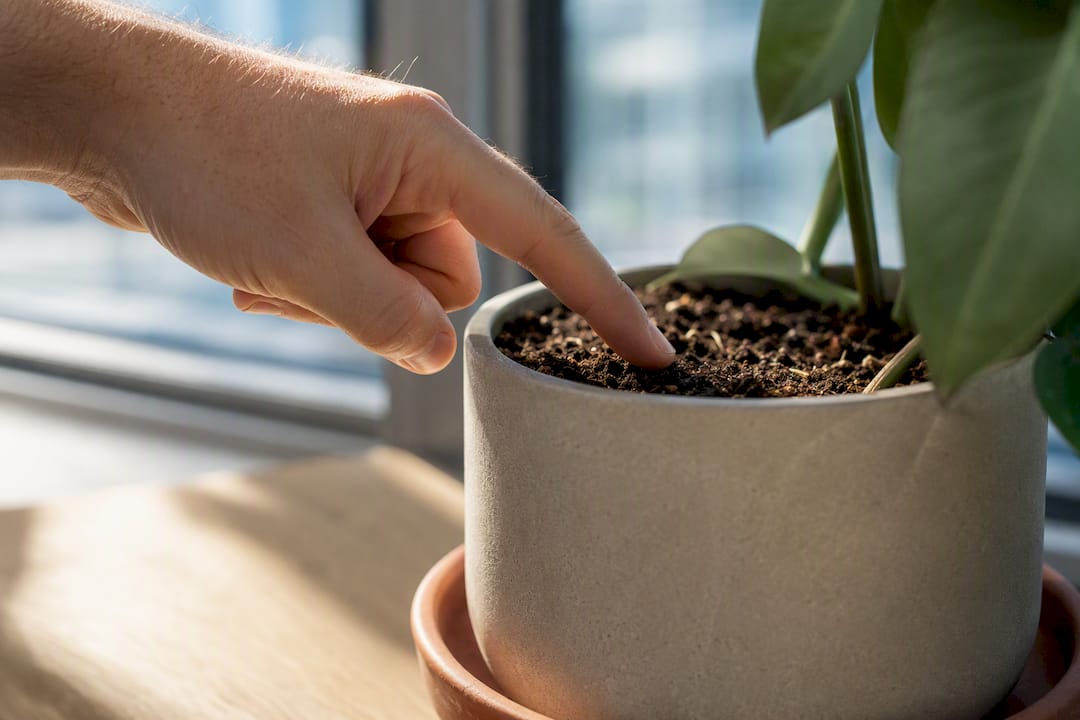
Check the soil first, not the calendar. Press a finger 1 to 2 inches into the pot: if it's soggy and water hasn't drained recently, stop watering and tip out any standing water immediately. If it's bone dry past the first inch, water thoroughly until it runs from the drainage holes. Almost every office plant crisis traces back to skipping this thirty second check before reaching for the watering can.
TL;DR:
- Using the finger test and weight check accurately identifies whether soil is soggy or dry before watering, preventing over- or under-watering.
- Yellowing, mushy stems, and a sour smell indicate overwatering and root rot, while dry leaf edges and soil pulling away signal underwatering.
- Adjust watering methods based on office conditions: top watering for most plants, bottom watering for moisture-sensitive species, and using self-watering systems for less oversight.
- Plants near vents, strong airflow, or direct sunlight need more frequent moisture checks, especially during seasonal changes and with smaller or porous pots.
- Labeling pots with watering schedules and assigning responsibility reduces miscommunication, and professional maintenance is recommended for high-maintenance or high-visibility spaces.
Table of Contents
- What To Do First When You Spot Watering Problems
- How Can You Tell Overwatering From Underwatering?
- Which Watering Method Fits Your Office Setup?
- How Often Should You Water Office Plants?
- Fix the Pot and Soil Before You Fix the Schedule
- Who's Responsible for Watering, and How Do You Keep It Consistent?
- When Does It Make Sense to Call in a Professional?
- Watering Mistakes That Invite Pests and Disease
- How Office Conditions Change Your Watering Needs
- Reviving a Plant After Watering Stress
- What's the One Habit That Actually Prevents This?
- How Greenspace+ Takes Watering Off Your Plate
- Sources
What To Do First When You Spot Watering Problems
Once you've confirmed whether the plant is drowning or dehydrated, work through these steps in order rather than guessing at a fix.
- Run the finger test and a weight check. Push a finger into the soil to a depth of 1 to 2 inches, then lift the pot. A pot that feels heavier than expected usually means saturated soil; a pot that feels surprisingly light usually means the roots have gone dry.
- Deal with standing water immediately. If there's water sitting in the saucer or cachepot, pour it out. Leaving roots sitting in water is the single fastest way to suffocate them and invite rot.
- Assess the roots if you can do it safely. Slide the plant partway out of the pot. Healthy roots look white or tan and feel firm. Roots that are brown, black, or mushy signal rot that needs trimming.
- Apply a temporary fix. For an overwatered plant, move it to a sink or utility area, let the excess drain fully, and set it somewhere with airflow so the root zone can dry out. For an underwatered plant, water slowly and deeply, then let it rest before returning it to the desk. Clip off any leaves that are already dead or blackened. Common corrective steps like these, drying the medium and trimming rotten roots, are standard practice for reviving stressed houseplants.
If more than half the root ball is rotted, or the plant has collapsed and won't firm back up after 48 hours, it's time to repot into fresh mix or bring in a professional rather than keep experimenting.
Pro Tip: Keep a spare terracotta pot on hand. If a plant is severely overwatered, repotting it into terracotta immediately (even temporarily) pulls moisture out of the soil faster than plastic ever will.
How Can You Tell Overwatering From Underwatering?
The symptoms overlap just enough to trick people, which is why so many office plants get watered into worse condition instead of better. Both stressed states can produce drooping, yellowing leaves. The difference is in the details.
Overwatering usually shows up as:
- Yellowing that starts on the lower, older leaves and feels soft rather than crispy
- Stems that feel mushy or discolored near the soil line
- Soil that stays wet days after the last watering
- A sour, swampy smell coming from the pot
- Small flying insects (fungus gnats) hovering near the soil surface
These signs, including the sour smell and fungus gnats that accompany waterlogged soil, point to root suffocation. Roots need oxygen, and saturated soil pushes air out of the pore spaces, which is why rot follows so quickly.
Underwatering usually shows up as:
- Leaf edges and tips that turn brown and feel dry or crispy
- Leaves that curl inward or droop but perk back up within an hour of watering
- Soil that has pulled away from the sides of the pot
- A pot that feels noticeably lighter than usual
Verification before you act: Don't rely on how the soil surface looks. Push a finger down 1 to 2 inches, since surface soil dries faster than the root zone underneath. A moisture meter removes the guesswork entirely for anyone who doesn't want to get their hands dirty at a desk. If the tool reads "wet" at the bottom of the pot while the top looks dry, you're dealing with a drainage problem, not an underwatering problem.
Which Watering Method Fits Your Office Setup?
The method matters as much as the timing. Most office plant damage happens not from watering too much or too little, but from watering the wrong way in a space that wasn't built for it.
Top watering is the default for most desk plants. Carry the pot to a sink, water slowly until it runs from the drainage holes, then let it sit for 10 to 15 minutes before setting it back on its saucer. Skipping the drain step is how desks end up with water rings and soggy carpet.
Bottom watering works well for plants prone to crown rot, like African violets, or for anyone who wants to walk away for a while. Set the pot in a few inches of water in a sink or tray for 20 to 30 minutes, then let it drain fully before returning it to the desk.
Self-watering pots and water globes solve the biggest office problem: inconsistent attention. They're genuinely useful for low-maintenance species and for stretches when nobody's around to check on plants. The catch is that self-watering systems can mask a developing root problem if nobody ever pulls the plant to inspect it, so they need an occasional manual check even when they're doing their job.
To keep desks dry:
- Always use a saucer or tray, even under self-watering pots
- Lift the pot to check for backup water rather than eyeballing the saucer
- Water over a sink or in a break room, never directly at a desk, and let pots drain fully before setting them back down
Pro Tip: Keep a turkey baster in the supply closet next to the watering can. It's the fastest way to pull excess water out of a saucer without tipping the whole plant sideways over a keyboard.
How Often Should You Water Office Plants?
There's no single number that works for every pot in a building, because light, pot size, and plant type all change how fast soil dries. Think in ranges tied to plant groups instead of a fixed weekly ritual.
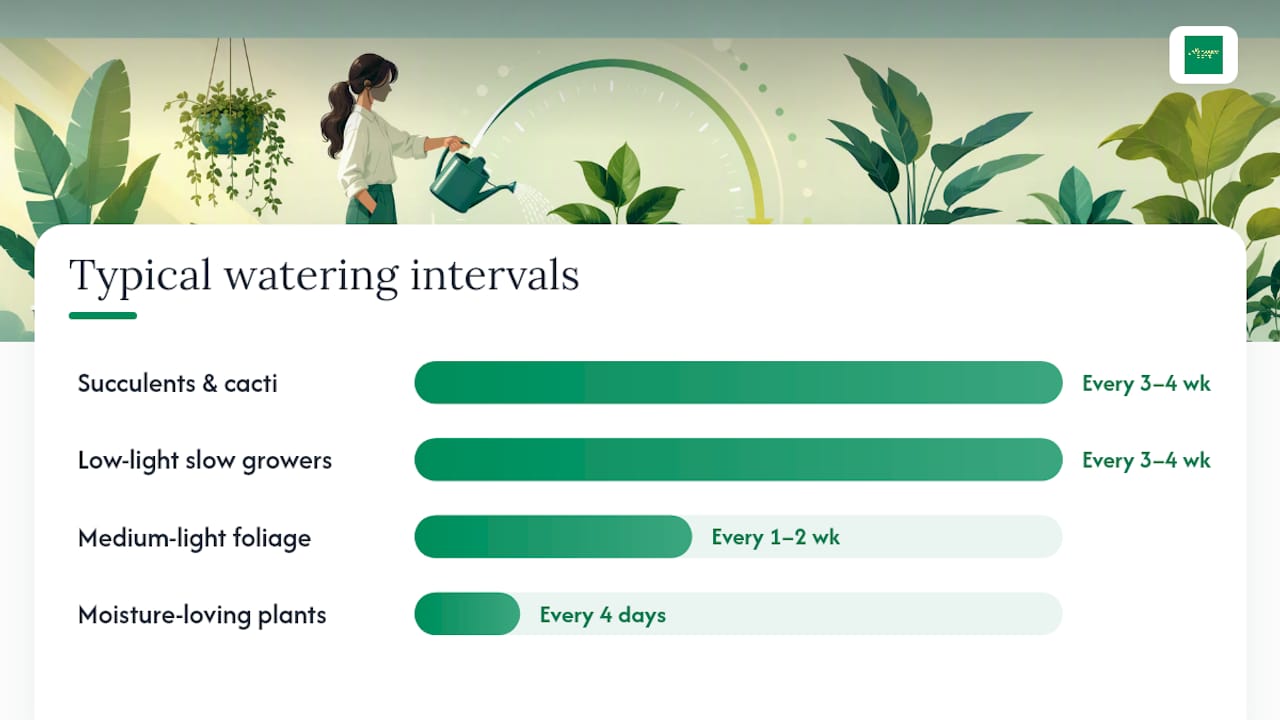
Succulents and cacti near a bright window typically go several weeks between waterings. Slow growers in low light, like snake plants or ZZ plants, often need water infrequently even under decent light, because they have low water use. Medium-light foliage plants, such as pothos or philodendron, usually require watering about every one to two weeks. Moisture-loving plants like peace lilies or ferns may need water approximately once a week, especially near heating vents. Sorting plants into these groups turns a confusing schedule into a manageable routine.
Pot size and material shift those numbers further. Small pots dry out faster than large ones because there's less soil volume to hold moisture. Terracotta wicks moisture through its walls and dries faster than glazed ceramic or plastic. A plant under strong grow lights or south facing glass, the kind of exposure covered in guidance on commercial lighting design, will dry out faster than the same plant in a dim interior cubicle.
Seasonal shifts matter too. Growth slows in winter as daylight hours drop, which means most office plants need less water from November through February than they do in summer, even indoors under artificial light.
| Plant group | Typical watering interval | Adjust for |
|---|---|---|
| Succulents and cacti | Every 3 to 4 weeks | Increase frequency near bright, hot windows |
| Low-light slow growers (snake plant, ZZ plant) | Every 3 to 4 weeks | Decrease further in winter |
| Medium-light foliage (pothos, philodendron) | Every 1 to 2 weeks | Increase in small plastic pots |
| Moisture-loving plants (peace lily, ferns) | Every 4 days | Increase near vents or heaters |
None of these intervals beat the finger test. Treat the table as a starting point, then let the soil tell you when it's actually time.
Fix the Pot and Soil Before You Fix the Schedule
A watering schedule can't compensate for a pot that traps water or soil that repels it. Most repeat watering problems in offices come down to the container, not the calendar.
- Confirm every pot has a drainage hole; if it doesn't, either drill one, use it strictly as a decorative outer cachepot with a nursery pot inside, or limit water strictly and check the base often.
- Use a well-draining potting mix rather than dense, compacted soil that holds water against the roots for days.
- Repot when roots circle the bottom of the pot tightly, when growth stalls despite correct watering, or when you spot rot during an inspection.
- When repotting a plant recovering from rot, trim blackened or mushy roots with clean shears before placing it in fresh, dry mix.
- Choose terracotta for plants prone to overwatering and glazed ceramic or plastic for plants that dry out too fast, since material genuinely changes drying speed.
Planter choice affects more than looks. Some of the most common plantscape design mistakes start with a beautiful pot that has nowhere for excess water to go. If you inherited a gorgeous ceramic planter with no drainage, keep the plant in its plastic nursery pot and slide it inside as a liner. Lift it out to water over a sink, then return it once it's finished draining.
Who's Responsible for Watering, and How Do You Keep It Consistent?
Inconsistent watering rarely comes from bad intentions. It comes from nobody actually owning the task, so plants get watered twice by two well-meaning coworkers in the same week, then ignored for a month.
- Assign single ownership or a clear rotation. One person per plant, or a posted weekly rotation with names attached, ends the guesswork about who watered last.
- Label each pot with its watering needs and last watering date. A small waterproof tag or a sticky note works. Checking moisture rather than following a rigid calendar still matters more than the date itself, but the label prevents duplicate watering.
- Group plants by water needs when you place them. Put moisture-loving plants together near someone attentive, and set low-maintenance varieties like snake plants or pothos in spots that get less foot traffic and less oversight.
- Plan for vacations and office closures in advance. Options include self-watering inserts, a trusted backup person with clear instructions, or a professional maintenance visit scheduled around the closure.
A rotation with real names on it beats a vague expectation that "someone" will handle it. That one change eliminates most of the confusion behind both overwatering and total neglect in shared spaces.
When Does It Make Sense to Call in a Professional?
Some situations outgrow a DIY watering routine no matter how good your checklist is. A lobby with forty plants, a reception area that needs to look flawless for client visits, or an office where half the team travels weekly all create the same problem: watering becomes inconsistent the moment it depends on busy people remembering.
A managed service usually makes sense when:
- The plant count is high enough that a consistent rotation becomes a real time cost for staff
- Frequent absences or travel make DIY schedules unreliable
- High-visibility spaces like reception desks or meeting rooms can't afford a droopy or yellowing plant during a client visit
- Nobody on staff wants to take on root inspections, repotting, or pest monitoring
Professional maintenance covers the parts of plant care that a rotation chart can't: consistent, moisture-checked watering rather than calendar guessing, drainage corrections when a planter is fighting the plant, and monitoring for early pest or root issues before they show up as brown leaves.
A managed service like Greenspace+ offers design, installation, scheduled maintenance, and plant replacements bundled into one fixed monthly service, sometimes backed by a guarantee that unhealthy plants get replaced. It's built for offices that want the look of well-tended greenery without adding "water the plants" to anyone's job description.
Watering Mistakes That Invite Pests and Disease
Most pest problems in office plants start with a watering mistake, not bad luck. Fungus gnats, the small flies that swarm around soil, breed in the top layer of consistently damp potting mix. Cut back watering frequency and let the top inch dry out fully between waterings, and the gnat population usually collapses within a couple of weeks because their breeding ground disappears.
Root rot and stem rot both trace back to prolonged saturation. Roots sitting in water lose access to oxygen, tissue breaks down, and fungal pathogens move in on the weakened plant. Once rot sets in, the plant often can't be saved without repotting into dry, fresh mix and trimming the damaged roots.
Spider mites and scale insects, by contrast, tend to show up on chronically underwatered plants. Stressed, dry plants have thinner, weaker tissue that's easier for pests to colonize, and low humidity in many air-conditioned offices makes spider mites especially comfortable.
Prevention comes down to three habits:
- Let the top 1 to 2 inches of soil dry between waterings for most common office species
- Empty saucers after every watering so roots never sit in standing water
- Wipe leaves occasionally to spot early pest activity before it spreads to neighboring plants
A plant watered on a sensible, moisture-checked schedule rarely develops a serious pest or disease problem. Most infestations are a symptom of a watering habit that needed fixing weeks earlier.
How Office Conditions Change Your Watering Needs
The same plant needs different watering in a bright, humid greenhouse than it does under a fluorescent light near an air vent, and most offices sit much closer to the second scenario.
Air conditioning strips moisture from the air, which speeds up how fast soil and leaves lose water. Plants near vents, in reception areas with aggressive climate control, or in open floor plans with strong airflow will dry out faster than the same species tucked into a quieter corner. Heating does the same thing in winter, often more aggressively, since forced air heat tends to run drier than central air conditioning. Facilities teams managing office climate control systems are essentially setting the humidity and airflow conditions that determine how often every plant in the building needs water.
Temperature swings near windows or doors add another variable. A plant that sits in direct afternoon sun through a west-facing window will dry out noticeably faster on hot days than it does on cloudy ones, even in the same pot.
The practical takeaway: don't set one watering schedule for the whole office. Plants near vents, radiators, or big windows need more frequent moisture checks than plants in a stable interior zone. If your building's HVAC runs a consistent dry cycle, expect every plant to need water somewhat more often than generic care guides suggest, and check them more frequently for the first few weeks in a new spot until you see how fast the soil actually dries.
Reviving a Plant After Watering Stress
An overwatered or underwatered plant isn't necessarily a dead plant. Recovery is realistic in most cases if you catch the problem before root damage becomes extensive.
For an overwatered plant, the priority is drying out the root zone without shocking the plant further. Remove it from its pot, gently shake off soggy soil clinging to the roots, and inspect for rot. Trim any brown or mushy roots with clean scissors, then repot into fresh, dry, well-draining mix. Skip fertilizer for at least a month since damaged roots can't process nutrients well, and hold off on watering again until the top 2 inches of the new soil are dry.
For an underwatered plant, resist the urge to flood it all at once. Water slowly in stages, letting the first pour soak in before adding more, since severely dry soil can repel water and let it run straight through without absorbing. A brief soak in a sink or basin for 15 to 20 minutes helps parched soil rehydrate evenly.
Expect recovery to take one to three weeks, not overnight. New growth, firmer stems, and leaves that hold their color are the signs it's working. If a plant shows no improvement after three weeks of correct care, or if rot has claimed most of the root system, it's usually more efficient to replace it than to keep nursing it along.
What's the One Habit That Actually Prevents This?
Most office plant casualties aren't killed by neglect. They're killed by good intentions colliding with each other, a well-meaning coworker topping off a pot that someone else watered two days earlier. The single best habit isn't a fancier watering can or a stricter schedule. It's checking before you water, every time, and writing down when you did it.
I've seen the "check before you pour" habit paired with a simple label system solve problems that months of scheduling apps couldn't touch. One office I came across had three different people watering the same fern out of pure helpfulness, and the plant was dying of kindness. A single index card taped to the pot with a watering date fixed it in a week.
Try it for two weeks: label every pot, check moisture before adding water, and note the date each time. Watch how much less often you actually need to water compared to what the old routine assumed.
— Nicole
How Greenspace+ Takes Watering Off Your Plate
Greenspace Plants is the alternative to managing watering schedules yourself: instead of assigning rotations, labeling pots, and hoping vacations don't leave anyone guessing, Greenspace+ puts design, installation, scheduled maintenance, and replacements into one fixed monthly service.

That fixed monthly fee comes with no upfront cost and no long-term lock-in, and it includes a guarantee that unhealthy plants get swapped out rather than left to decline on a shelf. Instead of a rotation chart depending on whoever remembers, a trained technician checks moisture, drainage, and root health on a set schedule, which eliminates the duplicate watering and total neglect problems that hit shared offices the hardest. It's worth comparing what a managed program actually covers for offices that want reception areas and meeting rooms to look consistently healthy without adding plant care to anyone's job description. Take a look at Greenspace Plants' service options and request a quote to see what a plan would look like for your space.
Sources
For readers who want to go deeper on diagnosing plant stress, the Missouri Botanical Garden's guide to common indoor plant problems covers overwatering symptoms in detail. The Royal Horticultural Society's advice on office plants is a solid reference for species selection and care. Gardening Know How's guide to desk plants walks through the finger test and moisture checks step by step. For plant recommendations suited to low-oversight offices, see Greenspace Plants' list of low-maintenance office plants.
- Problems common to many indoor plants — Missouri Botanical Garden
- Caring for desk plants — Gardening Know How (2021)
- Indoor plants for offices — Royal Horticultural Society (RHS)