
Most plantscape failures trace back to two root causes: mismatching plants to their environment and skipping a defined maintenance model. Fix those two things first, and you eliminate the majority of problems before they cost you a replacement budget.
Here are the most common plantscape design mistakes we see in commercial offices, each paired with a one-line corrective action:
- Wrong plant for the light level — Audit lux zones before specifying any species.
- No plan for mature size — Plan to the mature size, not the install size; leave clearance for canopy spread.
- Planters without drainage or correct grow-pot sizing — Confirm usable internal dimensions against standard grow-pot sizes before purchasing.
- No maintenance model or schedule — Require a written inspection cadence and replacement policy in every vendor contract.
- Neglected irrigation components — Inspect valves, emitters, and drainage capture on a fixed monthly cadence.
- Administrative failures (wrong measurements, missing supplies) — Run a monthly inventory and measurement audit before every service visit.
- Overwatering and poor drainage causing root rot — Match watering frequency to the species and season, not a fixed calendar.
- Pest spread from lack of quarantine protocol — Isolate any new or symptomatic plant immediately; never skip a visual inspection.
- No structural load calculation for large planters — Coordinate with your structural engineer before specifying built-in planters.
- Hiring a vendor without a pre-spec consultation — Require a site walkthrough and written spec before any contract is signed.
Pro Tip: Before any new installation, run a 15-minute environmental audit: measure light levels in each zone, note HVAC discharge points, and map foot-traffic corridors. That single step eliminates the most expensive mistakes.
Greenspace Plants includes a pre-spec consultation with every Greenspace+ engagement, so nothing gets specified without a site walkthrough first.
Table of Contents
- What are the most common plantscape design mistakes, and how do you fix them?
- How do environmental variables affect your indoor plantscape?
- Are your planters causing more problems than you realize?
- What does a proper irrigation inspection look like for living walls?
- Why your maintenance model determines whether your plantscape survives
- How do you design for plant growth without creating future problems?
- What administrative mistakes quietly derail a plantscape program?
- How do you catch pests and root rot before they spread?
- When should you hire a plantscape professional?
- Ready-to-use pre-spec checklist and maintenance templates
- What does a commercial plantscape installation actually cost and how long does it take?
- Key Takeaways
- Why treating plants as living systems is the most cost-effective decision you'll make
What are the most common plantscape design mistakes, and how do you fix them?
Every mistake below has a predictable cause and a practical fix. The goal is to give you something you can hand to your facilities team or a vendor today.
Wrong plant, wrong place
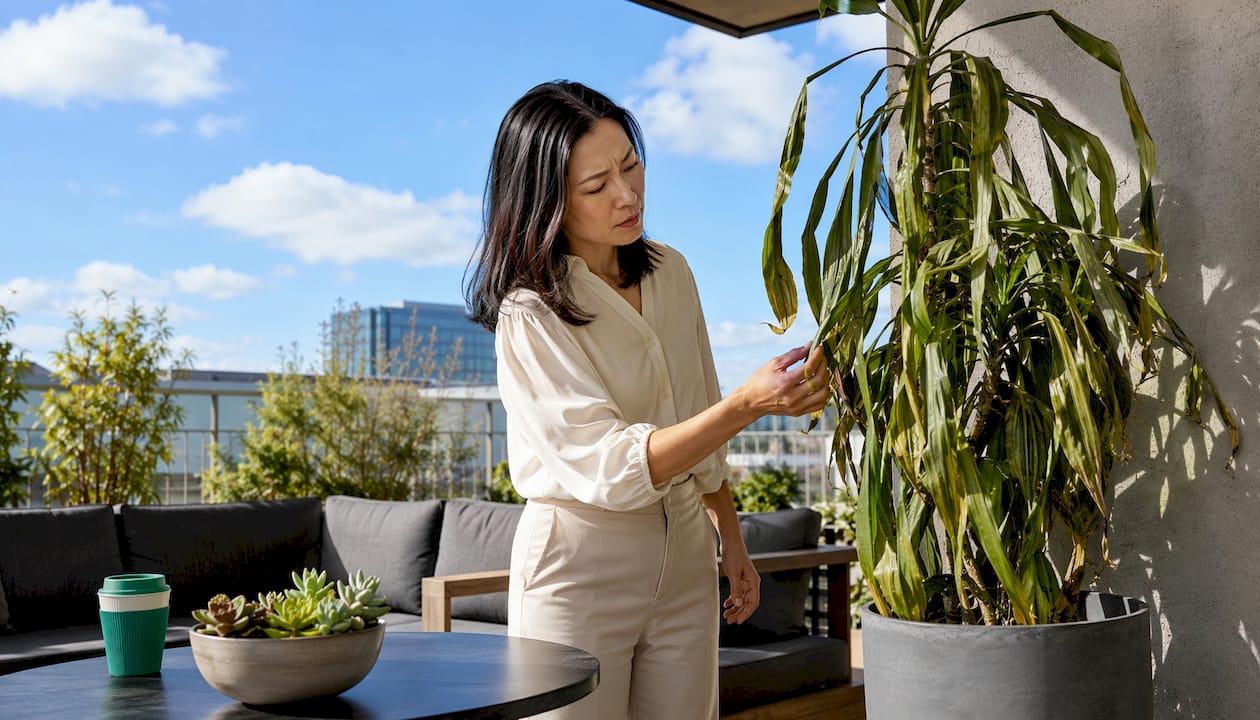
The most common plantscape design blunder is placing a light-hungry species in a dim corridor or a humidity-sensitive plant near an HVAC vent. Observable signs include yellowing leaves, leggy growth, and rapid decline within a few months of installation. Short-term fix: relocate the plant or swap the species. Long-term prevention: build a light-zone map before specifying anything.
Ignoring mature size
A 3-gallon Ficus lyrata looks elegant on install day. Eighteen months later, it's blocking a sightline or pressing against a ceiling tile. Treating plants as active living systems rather than static décor is the mindset shift that prevents overcrowding, excessive pruning, and safety issues near walkways.
"Plants are living components, not inert decoration. Specifying plant biology, lighting spectrum, and maintenance access upfront reduces long-term replacements." — Interior plantscape practitioners
No maintenance model
A beautiful install without a maintenance plan degrades within months. Living walls and sophisticated green systems fail most often not from design flaws but from neglected irrigation and absent service schedules. Require a written maintenance model from every vendor before signing.
Pro Tip: Ask any prospective vendor for a sample inspection log from a current client. If they can't produce one, that's your answer.
How do environmental variables affect your indoor plantscape?
Environmental mismatch is the single most common root cause of commercial plantscape failure. Light, airflow, temperature, and foot traffic each create distinct microclimates within the same office floor.
Run this 15-minute audit before specifying any plant:
- Light: Measure lux at plant height in each zone. Most low-light species need at least 50–150 lux; medium-light species need 150–500 lux. Supplement with full-spectrum LED grow lights where natural light falls short.
- HVAC discharge: Mark every supply and return vent on your floor plan. Cold drafts and hot discharge air desiccate foliage and stress root systems.
- Temperature swings: Check zones near exterior glass walls in winter; temperature differentials of more than 10°F between day and night stress tropical species.
- Foot traffic: High-traffic corridors create physical damage and soil compaction. Use planters with protective barriers or choose structurally resilient species like Dracaena or Zamioculcas zamiifolia (ZZ plant).
- Humidity: Office HVAC typically holds relative humidity at 30–40%, well below the 50–60% preferred by many tropical species. Group plants to create localized humidity pockets.
Pro Tip: For phased installations across multiple floors, map microclimates floor by floor before procurement. A species that thrives on the south-facing 10th floor may decline on the north-facing 3rd.
Are your planters causing more problems than you realize?
Decorative planters are one of the most underestimated sources of operational headaches in commercial plantscaping. The marketing dimensions on a planter rarely match its usable internal dimensions once a liner, drainage layer, and grow-pot are in place.
Check these before purchasing any planter:
- Usable internal diameter and depth: Measure the actual cavity, not the outside dimension. A 24" decorative pot may only accommodate a 10-gallon grow-pot.
- Drainage path: Confirm there is a clear path for excess water to exit or be captured. Oversized planters hold excess water and create mold and root-rot risk.
- Service access: Built-in and custom planters that can't be opened for grow-pot removal lock in expensive maintenance challenges. Specify removable liners.
- Structural load: Saturated engineered soil weighs 100–120 lb/ft³. A large built-in planter can introduce concentrated dead loads that require early structural coordination.
Pro Tip: Always request a planter spec sheet from your vendor that lists usable internal dimensions, liner type, drainage method, and maximum load. If the vendor can't provide it, specify it yourself before purchase.
What does a proper irrigation inspection look like for living walls?
Irrigation failures are catastrophic but predictable. Living walls fail when irrigation components are neglected for even a few weeks. A missed emitter blockage or a failed pump can kill an entire panel in days.
Inspection checklist (run monthly):
- Valves: open/close cycle test, check for leaks at fittings
- Emitters: visual flow check on every drip point
- Backflow prevention: confirm device is functional and code-compliant
- Drainage capture: verify sump or drain is clear and not backing up
- Timer/controller: confirm schedule matches current season and species needs
Maintenance frequency table:
| Task | Frequency |
|---|---|
| Visual inspection (all components) | Monthly |
| Emitter flush and flow test | Quarterly |
| Full system service (pump, filters) | Semi-annually |
| Deep clean (panel removal, media check) | Annually |
One practitioner red flag: routing new gravity drain lines through existing post-tensioned slabs is dangerous and often impossible. Plan drainage routing during design development, not after construction.
Pro Tip: Commission a full irrigation test before any living wall goes live. Run the system for a complete cycle and watch every emitter. Fixing a blocked drip line costs minutes; replacing a dead panel costs thousands.
Why your maintenance model determines whether your plantscape survives
A defined maintenance model prevents most lifecycle failures. Without one, even a well-specified installation degrades within a season.
Every vendor contract should include:
- Inspection cadence (weekly, bi-weekly, or monthly, depending on species and system complexity)
- Replacement terms: who triggers replacement, what the response time is, and who covers the cost
- Escalation path for pest outbreaks or irrigation failures
- Spare inventory rules: what consumables the vendor keeps on hand
Maintenance visit record template (what to log each visit):
- Date, technician name, and visit duration
- Watering status per plant or zone (adequate, dry, saturated)
- Visual health check: foliage color, new growth, signs of stress or pests
- Any treatments applied (fertilizer, pest control, pruning)
- Plants flagged for replacement and reason
- Next scheduled visit date
Contract red flags to avoid: vague language like "as needed" for replacement timing, no defined response time for pest escalations, and no mention of inspection logs.
How do you design for plant growth without creating future problems?
Plan to the mature size, not the install size. A Monstera deliciosa installed at 18 inches will reach 3–4 feet of spread indoors within two to three years. Designing to the install size creates overcrowding, blocked sightlines, and safety hazards near walkways.
- Spacing: Leave at minimum 18 inches of clearance between mature canopy edges and adjacent furniture or walls.
- Sightlines: Confirm that mature height won't block wayfinding signage or security cameras.
- Staged installs: For large floors, scale indoor greenery in phases. Install fast-growing species last so slower anchors establish first.
- Replacement cycles: Built-in planters need a planned replacement cycle. Specify it in the contract before install.
Pro Tip: Ask your vendor for a 24-month growth projection for every species specified. If they can't provide one, request substitutions with documented mature dimensions.
What administrative mistakes quietly derail a plantscape program?
Poor record-keeping, mismeasured containers, and missing supplies are a frequent cause of replacement delays and service failures. These aren't glamorous problems, but they're expensive.
Common administrative errors:
- Ordering replacement plants without confirming current grow-pot size on site
- No inventory log for consumables (fertilizer, pest control, grow media)
- Delayed replacements because no one owns the approval workflow
- Service visits scheduled without confirming site access
Monthly operational audit (facilities manager):
- Verify measurement log is current for all planters
- Confirm consumables inventory against next 30 days of scheduled visits
- Review replacement queue: any plants flagged more than two visits in a row need a decision
- Confirm vendor has current access credentials and contact list
Pro Tip: Plant care professionals recommend an appointment-based replacement workflow: flag, approve, order, and install in four discrete steps with a named owner at each stage. It eliminates the "I thought you ordered it" problem.
How do you catch pests and root rot before they spread?
Prevention is the only cost-effective strategy. Once a pest population establishes across multiple plants, treatment costs and plant losses multiply quickly.
Prevention rules:
- Quarantine all new plants for 14 days before placing them near existing installations.
- Use sterile, pathogen-free grow media for every new planting.
- Never reuse media from a plant that showed root rot or fungal symptoms.
- Inspect every plant at every service visit, not just the ones that look stressed.
Early warning signs to watch:
- Yellowing lower leaves with soft, mushy stems: root rot from overwatering or poor drainage
- Tiny flies hovering near soil: fungus gnats, almost always caused by consistently wet media
- Sticky residue on leaves or nearby surfaces: scale or mealybug infestation
- White powdery coating on foliage: powdery mildew, often triggered by low airflow
Action flow when you spot a problem: Isolate the plant immediately. Treat with an appropriate Integrated Pest Management (IPM) protocol. Log the date, symptoms, and treatment in the maintenance record. Replace if the plant doesn't show improvement within two service cycles.
Pro Tip: When repotting or replacing, wear gloves and sanitize tools between plants. Cross-contamination from infected media is how a single sick plant becomes a floor-wide outbreak.
When should you hire a plantscape professional?
Hire when you lack in-house horticultural expertise, need irrigation or structural changes, or want guaranteed outcomes with defined replacement terms. Engaging an interior plant professional early aligns structural, plumbing, lighting, and HVAC requirements before costly decisions are locked in.
Vendor question checklist for RFPs and vendor calls:
- What is your inspection cadence, and how is it documented?
- What are your replacement terms, and who covers the cost?
- Can you provide a sample maintenance log from a current client?
- How do you handle irrigation design and ongoing irrigation service?
- What is your response time for a pest escalation?
- Do you conduct a pre-spec site consultation before installation?
- Can you provide references from commercial office clients of similar scale?
Red flags to walk away from:
- No pre-spec consultation offered
- Vague or absent replacement policy
- No inspection logs or documentation process
- Irrigation "handled by others" with no coordination plan
For a deeper look at what to expect from the pre-spec consultation process, Greenspace Plants walks every prospective client through a full site walkthrough before any design is finalized.
Ready-to-use pre-spec checklist and maintenance templates
A pre-spec consultation with an interior plantscape professional is the single highest-leverage step you can take before any new installation. Architects and designers who add this step avoid the most expensive planter and maintenance mismatches.
Pre-spec checklist (hand to your designer or vendor):
- Usable internal planter dimensions confirmed (diameter and depth)
- Grow-pot size matched to usable cavity
- Drainage path specified (gravity drain, sump, or captured reservoir)
- Service access confirmed (removable liner or panel)
- Structural load calculated for all built-in planters
- Light levels measured at plant height in each zone
- HVAC discharge and return locations mapped
- Irrigation routing planned before construction (not after)
- Maintenance model and replacement policy agreed in writing
Planter spec snippet (confirm with vendor before purchase):
| Spec Item | What to Confirm |
|---|---|
| Usable internal diameter | Matches target grow-pot size |
| Usable internal depth | Accommodates root ball plus drainage layer |
| Liner type | Removable for service access |
| Drainage method | Gravity, reservoir, or captured sump |
| Max structural load | Reviewed by structural engineer if built-in |
Pro Tip: For design inspiration and early coordination guidance, the Devon Gardens plant and design guide is a useful reference for understanding how professional designers approach species selection and placement before a single plant is purchased.
What does a commercial plantscape installation actually cost and how long does it take?
A typical commercial installation follows five phases: site audit, design and species selection, procurement, installation, and commissioning. For a mid-size office floor (5,000–10,000 sq ft), expect 4–8 weeks from signed contract to completed install, with living-wall systems adding 2–4 weeks for irrigation commissioning.
Recurring cost drivers to ask every vendor about:
- Maintenance visit frequency and per-visit cost
- Irrigation service (separate line item or included?)
- Replacement reserve: what percentage of the install value is budgeted annually for plant replacement
- Specialized lighting: LED grow-light fixtures, bulb replacement, and energy cost
- Substrate replacement: grow media degrades and needs periodic refreshing
Tips for reducing lifecycle costs:
- Choose species with documented low-replacement rates for your light conditions (Pothos, Dracaena, Sansevieria, and ZZ plant are reliable performers in typical office environments).
- Stage large installations to spread procurement and labor costs.
- Require clear replacement SLAs in writing so you're never paying for a dead plant twice.
The real ROI of live plants in commercial offices extends beyond aesthetics to documented improvements in air quality and employee wellbeing, which makes a well-maintained plantscape a defensible budget line.
Greenspace Plants' Greenspace+ program covers design, installation, maintenance, and replacements for a fixed monthly fee, with no upfront costs and no long-term commitment. Explore indoor plant services to see how the model works for offices in Toronto, Vancouver, and Calgary.
Key Takeaways
Most commercial plantscape failures are preventable when you match plants to their environment, specify planters correctly, and lock in a maintenance model before installation begins.
| Point | Details |
|---|---|
| Environmental audit first | Measure light, HVAC, and traffic before specifying any species. |
| Planter specs matter | Confirm usable internal dimensions and drainage path before purchasing. |
| Maintenance model in writing | Every contract needs inspection cadence, replacement terms, and inspection logs. |
| Plan for mature size | Design to the plant's mature dimensions, not its install size. |
| Hire early | Engage a plantscape professional before construction locks in drainage and structural decisions. |
Why treating plants as living systems is the most cost-effective decision you'll make
The pattern we see most often is this: a beautiful install, no maintenance model, and a slow decline that costs two or three times the original installation budget in replacements. The plants weren't the problem. The process was.
What changes the outcome is treating the plantscape as a living system from day one. That means specifying drainage before the slab is poured, mapping light before species are chosen, and writing replacement terms before the first plant arrives. Every hour spent in pre-spec consultation saves days of remediation later.
Greenspace Plants was built around exactly this philosophy. Our Greenspace+ service handles design, installation, ongoing maintenance, and guaranteed replacements under one fixed monthly fee, so you're never managing a degrading asset alone. If you're planning a new installation or inheriting a struggling one, start with a conversation before anything is purchased.