
Living plants attract millennial diners because they do three jobs at once: they signal sustainability, they lower physiological stress in a way that makes people linger, and they create the kind of visual backdrop diners want to photograph and share. Together, those three drivers move real numbers, longer stays at the table, higher checks, and more repeat visits, not just prettier dining rooms.
We see this pattern across the research on hospitality servicescapes, and it shows up in practice too. A 119-person experimental restaurant study found that indoor plants increased customer satisfaction and loyalty, largely because guests perceived the space as more beautiful and more escapist. Separately, a field study in a real lunch restaurant found that a "nature ambience" week produced more positive emotional reactions and a modest increase in vegetarian choices. At Greenspace Plants, we design living systems around exactly these outcomes for restaurant clients.
Here's what that translates to on the floor:
- Longer dwell time, which tends to lift dessert and drink attach rates
- Higher perceived value, supporting menu pricing without pushback
- More organic social shares from a genuinely photogenic space
- Stronger repeat-visit rates tied to comfort and trust
Key Takeaways
Living plants attract millennial diners by combining a visible sustainability signal with a measurable stress-reducing effect and a naturally shareable aesthetic, and operators who treat greenery as a designed system rather than décor see the strongest gains in dwell time, spend, and repeat visits.
| Point | Details |
|---|---|
| Three drivers, one outcome | Sustainability signaling, stress reduction, and shareability work together to extend dwell time and lift spend. |
| Evidence is real but modest | Field and experimental studies show consistent direction, but effect sizes are small; treat them as a starting estimate. |
| Coverage beats single pots | Systemic placement along guest sight-lines changes behavior; one hero plant does not. |
| Maintenance protects the signal | A neglected plant undercuts the sustainability message it was meant to send. |
| Greenspace+ removes the risk | Greenspace Plants' all-inclusive monthly service covers design, installation, and guaranteed plant health for restaurants. |
Table of Contents
- Why Plants Attract Millennial Diners in the First Place
- How Plants Change What Diners Actually Do
- Practical Biophilic Design Checklist to Attract Millennial Diners
- Which Plants Work Where, and Who Should Maintain Them
- What a Plantscape Costs and How to Measure the Return
- Your 30/60/90-Day Plantscape Rollout
- Why We Think Full-Service Plantscaping Wins for Busy Operators
- Ready to Bring Your Dining Room to Life?
- Sources
Why Plants Attract Millennial Diners in the First Place
The short answer is alignment. Millennial diners weigh sustainability, authenticity, and shareability more heavily than previous generations did when choosing where to eat, and living plants hit all three at once. A fern or a moss wall isn't just decor. It's a visible, unambiguous signal that a restaurant cares about something beyond turning tables.
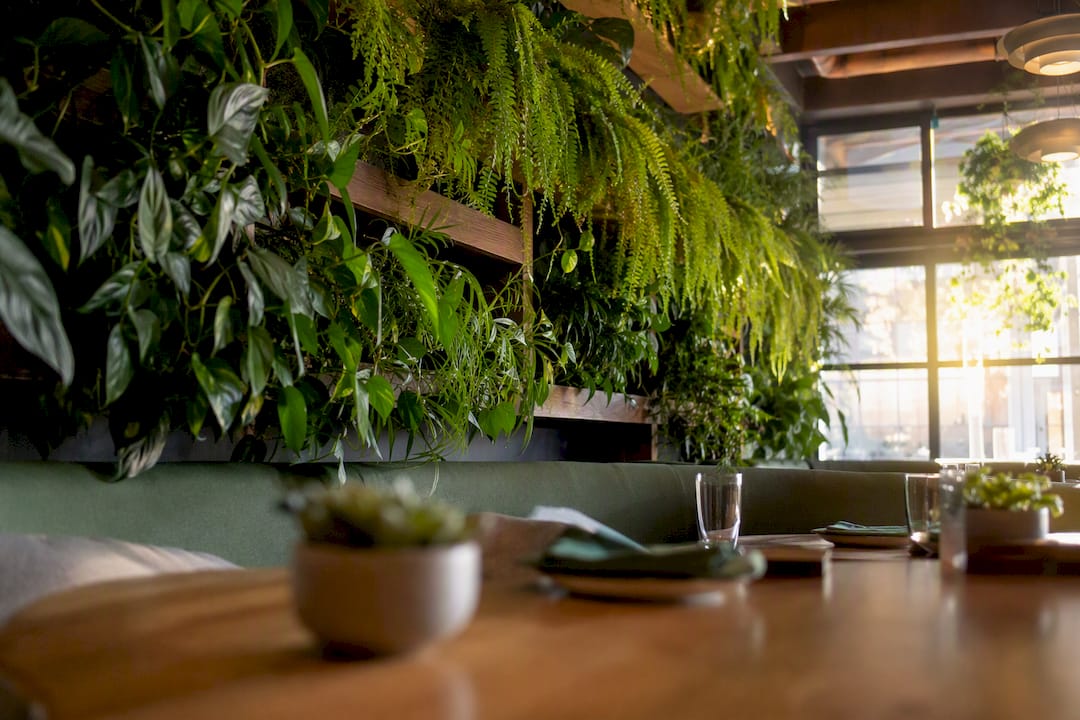
That signal does real psychological work. Gardens and integrated greenery inside restaurant interiors function as more than ornament, they carry aesthetic, restorative, and green-branding value that builds customer trust over repeat visits. Diners read a living wall the way they read a farm-to-table menu line: as evidence, not marketing copy.
Here's the evidence stack, briefly:
- The IJCHM study: plants raised satisfaction and loyalty through aesthetic value and a sense of escapism.
- The MDPI Foods field study: a nature-themed dining room produced more positive emotion and slightly lower plate waste.
- Biophilic rooftop restaurant research: daylight, greenery, and natural materials are low-cost interventions that reliably improve guest satisfaction.
None of these are massive, thousand-restaurant meta-analyses. They're targeted, real-world studies, one experimental, one a field trial, both grounded in actual dining rooms rather than lab mockups. That's a meaningful strength: the effects held up with real customers making real choices, not students rating photographs. The limitation is scale. Sample sizes run in the low hundreds, and effects like "marginal increase in vegetarian choices" are exactly that, marginal. Treat the direction of the findings as solid and the magnitude as a starting estimate, not a guarantee.
How Plants Change What Diners Actually Do
Two psychological frameworks explain why greenery changes behavior instead of just décor: Attention Restoration Theory and Stress Recovery Theory. Both argue that natural elements give the brain a break from directed attention, the kind of mental effort a busy street or a fluorescent-lit room demands. A dining room with real foliage asks less of a tired guest's nervous system, and that lowered tension shows up as longer, more relaxed meals.
The causal chain looks like this in practice:
- Greenery reduces perceived stress and mental fatigue on arrival
- Lower tension extends dwell time at the table
- Longer dwell time increases the odds of ordering dessert, another round, or coffee
- Comfort and positive emotion translate into loyalty and return visits
The nature-ambience field trial mentioned above is a useful illustration: emotional lift and reduced plate waste showed up together, suggesting that when guests feel more at ease, they also engage more thoughtfully with the meal itself. Practitioner accounts back this up structurally. Plants absorb sound and soften airflow, which changes the sensory experience of a room well beyond how it looks.
Practical Biophilic Design Checklist to Attract Millennial Diners
Aesthetics only convert to revenue when plants are placed with intent, not scattered as afterthoughts. A single fiddle-leaf fig by the host stand reads as decoration. Coverage across a guest's actual path through the restaurant reads as atmosphere, and atmosphere is what changes behavior.
Run through this checklist before signing off on a design:
- Threshold of sufficiency: aim for systemic coverage along sight-lines and guest routes, not isolated statement pots.
- Entrance and waiting area: greenery here sets the emotional tone before the first course arrives, and it's the highest-traffic photo spot in the building.
- Materials: pair plants with reclaimed wood, stone, or other natural materials so the greenery doesn't feel bolted onto a room designed around plastic and chrome.
- Daylight first: prioritize seating near natural light and choose species accordingly, rather than forcing shade-tolerant plants into a sunlit window.
- Living walls and planters as zoning tools: use them to divide sections without the visual bulk of drywall, which also improves acoustics.
- Acoustic layering: dense foliage near hard surfaces cuts echo and softens a noisy dining room, a detail few operators think about until a guest complains.
- Stage for sharing: compositional sight-lines and warm, directional lighting near greenery turn a corner table into the spot guests photograph without being asked.
Explore examples of statement greenery used this way in our large indoor plant gallery, and check how lighting decisions shape plant selection before finalizing a layout.
Pro Tip: Systemic coverage means budgeting for plants across the guest journey, entrance, waiting area, dining zones, restrooms, not just one hero installation. Design consultants generally frame investment in three bands: minimal coverage around 1 to 3% of the finishing budget, mid-tier coverage around 5 to 8%, and full biophilic integration in the 10 to 15% range. Pick the tier that matches how much of the guest experience you want plants to touch.
Which Plants Work Where, and Who Should Maintain Them
Plant selection in a restaurant isn't the same exercise as picking plants for a living room. Food safety, foot traffic, and light variability all narrow the list fast.
Do:
- Choose low-drop, non-toxic species (pothos, snake plants, ZZ plants, larger palms) for anywhere near seating or food prep.
- Match species to measured light levels rather than guessing.
- Position larger feature plants at entrances and partition points, where they double as wayfinding and zoning.
Don't:
- Place plants with heavy leaf or flower drop within a few feet of open food prep or plating stations.
- Choose high-maintenance tropicals for low-light back corners; they decline fast and undercut the sustainability message you're trying to send.
- Treat pest management as optional. Fungus gnats and mealybugs spread quickly in warm dining rooms.
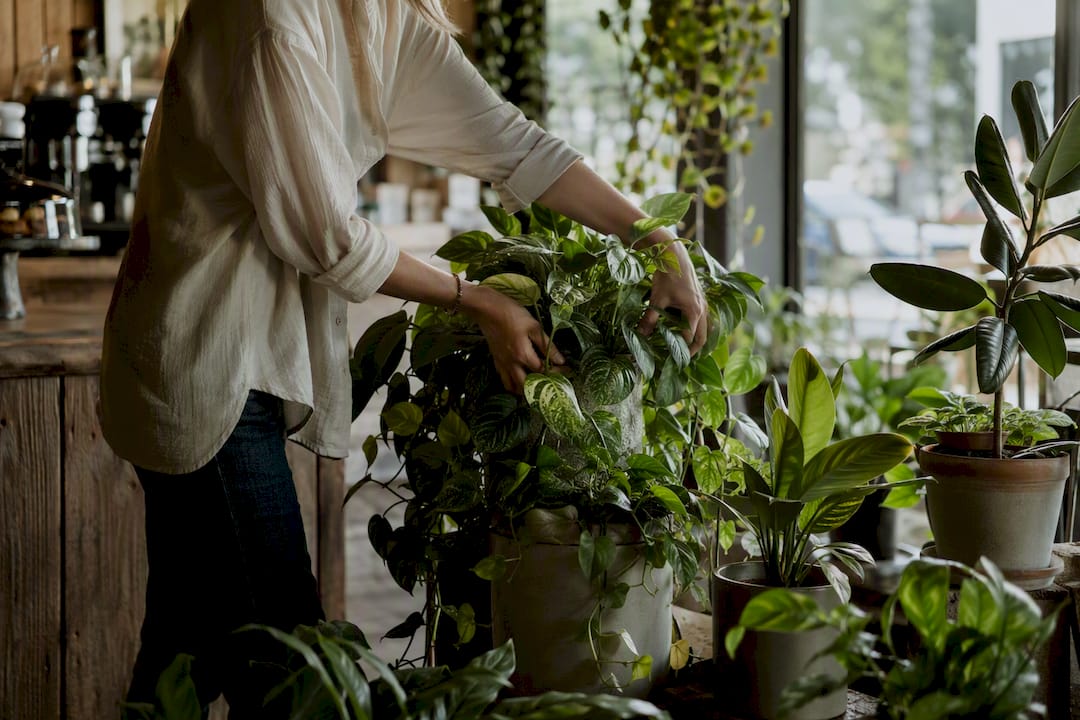
Maintenance is where the sustainability story either holds up or falls apart. In-house care sounds cheaper on paper, but it competes with service staff's actual job, and a wilting fern near the host stand undercuts the very signal you installed it to send. Learn more about the operational side in our guide to indoor plant care in a restaurant setting.
Pro Tip: For most restaurants, a scheduled commercial maintenance contract beats DIY care. Greenspace Plants' Greenspace+ program bundles design, installation, and ongoing care, including replacements, under one fixed monthly fee, so a struggling plant never becomes a health-code or brand problem.
What a Plantscape Costs and How to Measure the Return
Budget tiers roughly track the coverage levels above: minimal entrance-only greenery, mid-tier coverage through the dining room, or full biophilic integration including a living wall. Design consultancy guidance suggests time-at-table and average check as the two most reliable before-and-after metrics, since both are already sitting in most POS systems.
Track these before and after installation:
- Average dwell time per table
- Average check, especially dessert and drink attach rate
- Social media mentions or geotagged posts
- Return visit rate over 60 to 90 days
Pull a baseline for at least two to four weeks before installation, and watch for confounders like a menu change or a seasonal shift that could muddy the comparison.
Your 30/60/90-Day Plantscape Rollout
- Days 1 to 30: Audit the space for light levels and HVAC airflow, finalize a concept design, get budget sign-off, and install quick-win greenery at the entrance and waiting area to start shaping first impressions immediately.
- Days 31 to 60: Install the main features, planters, partitions, and a living wall if that's part of the plan, train front-of-house staff on basic plant care awareness, and start tracking baseline KPIs like dwell time and average check.
- Days 61 to 90: Put a formal maintenance schedule in place, run a performance check against your baseline numbers, adjust placement or lighting where the data shows a gap, and plan the transition to seasonal patio plantings if you run outdoor seating. Our outdoor dining area setup guide covers that seasonal handoff in detail.
Why We Think Full-Service Plantscaping Wins for Busy Operators
Restaurant operators already juggle inventory, staffing, and service quality. Adding plant health monitoring to that list rarely goes well, plants get watered inconsistently or ignored during a rush. A guaranteed, professionally maintained plantscape removes that risk entirely. Our Greenspace+ model handles design, installation, and ongoing replacements for one fixed fee, so the greenery stays as sharp as the day it was installed.
Ready to Bring Your Dining Room to Life?
If you've read this far, you already know plants aren't optional décor anymore, they're a functioning part of how millennial diners choose where to eat. The gap between reading that and having a healthy, photogenic dining room is smaller than most operators think.
Greenspace Plants designs and installs indoor and outdoor plantscapes specifically for restaurants across Toronto, Vancouver, and Calgary, and our Greenspace+ program covers design, installation, maintenance, and replacements for one predictable monthly fee, no upfront cost and no long-term lock-in. That matters most for restaurant operators, because a wilting plant near the host stand does more brand damage than no plant at all, and our healthy-plant guarantee means that never happens on your watch. Whether you want entrance greenery, a full living wall, or seasonal patio plants, you can start with a scope that fits your budget and expand later. Browse real installs in our client look-book or explore outdoor patio plant services to see what a rollout could look like for your space, then request a site audit to get a scoped design and quote.
Sources
- Nature-themed ambience field study (MDPI Foods, 2022)
- Effects of indoor plants on satisfaction and loyalty (IJCHM, 2020)
- Multifunctionality of gardens in restaurant interiors (LKSN, 2025)
- Biophilic design for rooftop restaurants (Buildings, 2025)
- Greenery and the guest experience (Modern Restaurant Management)